

Disclaimer: The contents of this article are industry best practices which were sourced from StreetEasy data and interviews with real estate agents, unless noted otherwise. Any scripts provided are only meant to act as examples and are not required. Nothing in this presentation is intended to be legal advice. For specific questions about any duties or obligations arising out of a real estate transaction, check your local and state licensing laws and regulations, contact your broker, or an attorney.
The first call is crucial to building a relationship with a potential client. Consider these optional best practices for a productive first call.
Call within 5 minutes of receiving the inquiry
“Speed to lead” is one of the keys to success in converting leads to clients. We recommend calling new connections within five minutes of receiving the inquiry, which allows you to reach them while they’re still in home-search mode. Learn more about speed to lead.
Prioritize a phone call
Early in the process, we suggest prioritizing a phone call. Calls allow you to build rapport and gauge the buyer’s wants and needs in a way that can be challenging through other contact methods. Respond to new connections on StreetEasy (via desktop or the Agent Tools app) right away, then follow up with a phone call.
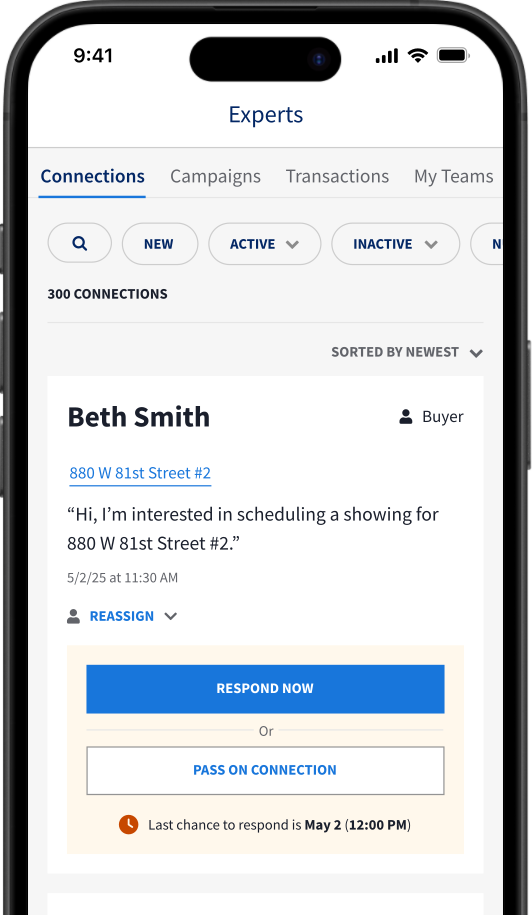
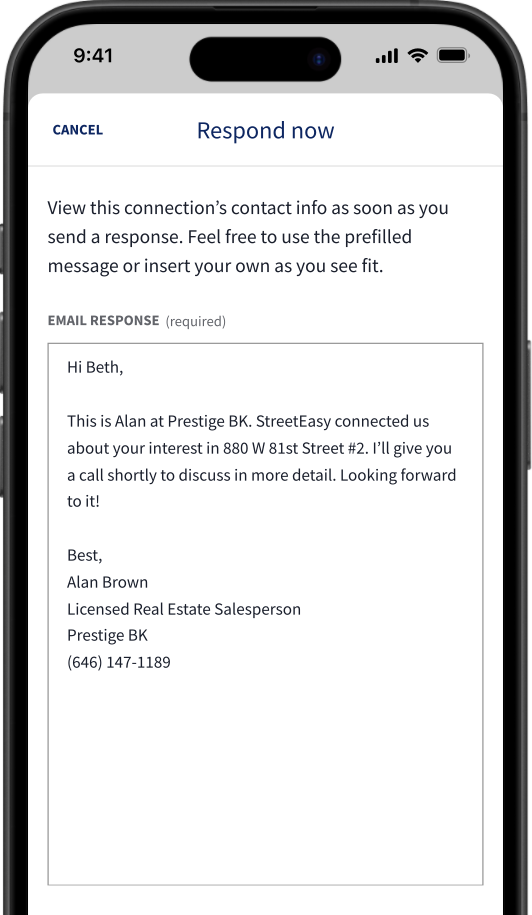
Screen images simulated
Follow the ALM framework
There’s a way to structure the first call with the goal of getting an in-person appointment, while also helping you build rapport and learn more about the buyer’s needs. We call it ALM: Appointment, Location, Motivation.
Appointment: Ask the buyer when they’d like to see the home they inquired about.
Location: Elicit other homes or buildings the buyer may want to see.
Motivation: Find out the “why” behind the buyer’s search for a new home, and what interested them about this particular property.
Learn more about ALM and how to apply it to the first call.
Use the Connections page to learn more about the buyer
Before or during the call, navigate to your Connections page on desktop or the Agent Tools app. Find the connection and click See More Details. If enough information is available, you’ll see a Profile tab containing search insights based on the buyer’s activity on StreetEasy, such as price range and neighborhood. You may also see the buyer’s responses to questions about their search, such as whether they’re a first-time buyer, where they are in the search process, and their financing plans.
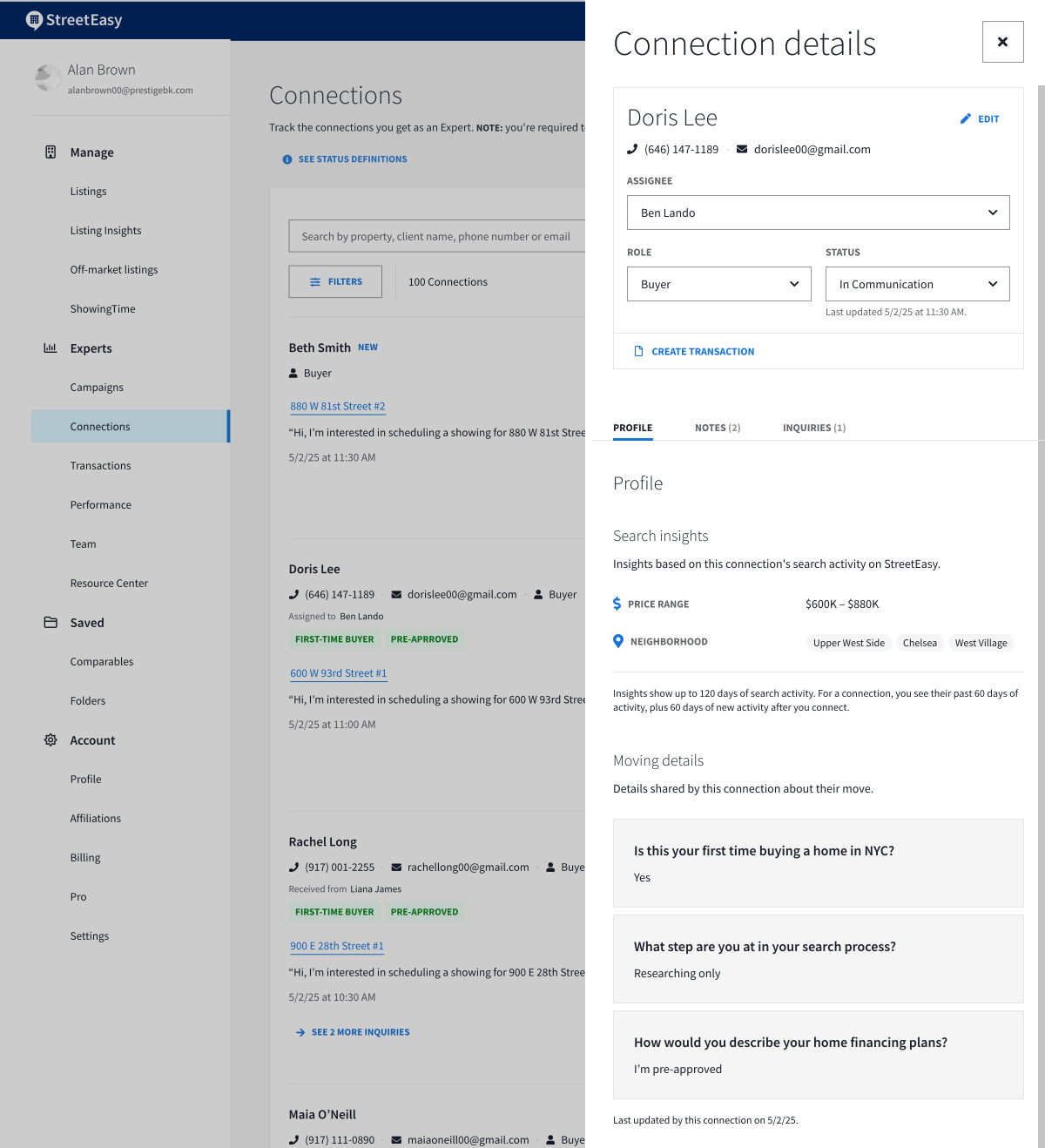
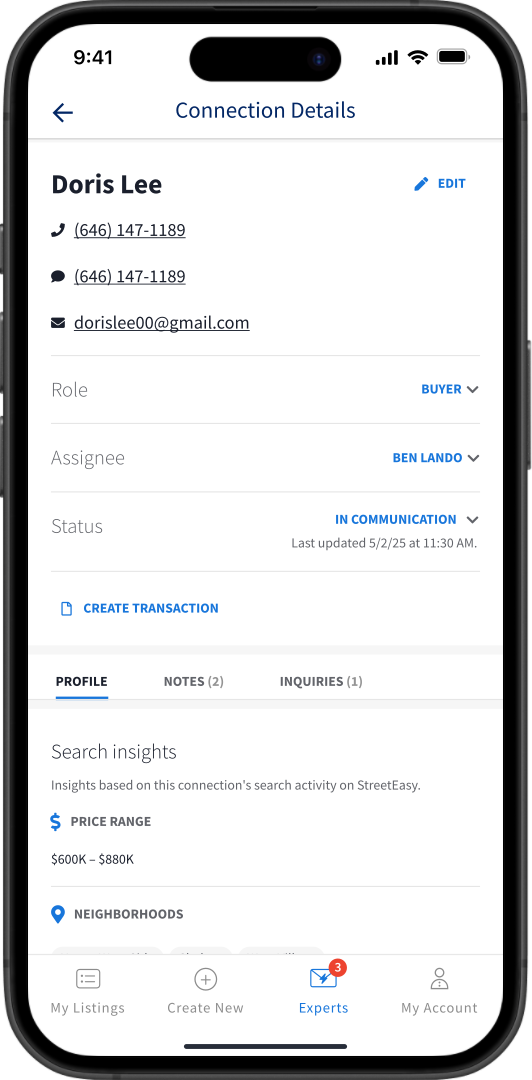
Screen images simulated
You can use these insights to build rapport during the first call, and to help you find additional properties that may interest the buyer.
Focus on the person, not the property
The first call with a buyer can present unique challenges. The home they inquired about could be in contract, or they may have hyper-specific questions about a property you’ve never seen. Your natural reaction may be to focus on the home in question, but we recommend focusing on the person, not the property.
Most buyers won’t transact on the first home they inquire about.In the first call, focus on learning more about the buyer and their wants and needs in a home. It’ll help you be of service for their entire home search, not just the initial listing.
Know how to respond to common objections
Objections happen, but you can be prepared by knowing how to respond to them. A few common ones you may face:
- “Are you the listing agent? I’m looking for the listing agent.”
- “I already have an agent.”
- “My [friend/family member] is an agent.”
- “I don’t plan on working with a buyer’s agent.”
See Responding to Common Objections for scripts and best practices for handling these objections.
Avoid sharing “bad news”
You want to avoid sharing “bad news” on the first call, e.g. the property is in contract, their budget is too low for the neighborhood, the building doesn’t allow pets. It can kill the relationship before it starts. Instead, tell them you’ll check with the seller’s agent, which also gives you a reason to reach back out to the buyer. Then pivot to talking about what they’re looking for in their next home, and why.
Avoid saying you’re not the listing agent
You don’t have to assume that the buyer wants to speak to the listing agent. It’s important to disclose your role, but you can do so in a way that stresses who you are, not who you are not. For example:
StreetEasy connected us because I’m an Expert buyer’s agent in this [building/neighborhood], and I’ve helped clients here in the past.
Don’t immediately ask about financing
Asking questions like “are you pre-approved for a mortgage?” during the first call can be off-putting to buyers. It may (unintentionally) imply that if the answer is no, they’re wasting your time. These questions are better asked in person, so save them for the first appointment.
Don’t try to answer every question about the property
If a buyer asks numerous questions about the property over the phone, don’t try to address all of them during the first call. Focus instead on gathering their questions, and assure them you’ll have the answers at the first appointment.
Confirm next steps
Each interaction with a buyer should end with you confirming what the next steps are. Ideally, by the end of the first call, it’s an in-person appointment. Repeat your information (name and brokerage) as well as the day, time, and location of the appointment. Tell them you’ll follow up with an email to confirm.
This is also a good time to mention you’ll be sending the buyer a touring agreement to sign before looking at homes. StreetEasy provides a non-exclusive Touring Agreement for agents to use with their prospective clients, or you may use one provided by your brokerage.