building at 22 Renwick Street

Started by cgeorge
almost 19 years ago
Posts: 1
Member since: Nov 2007
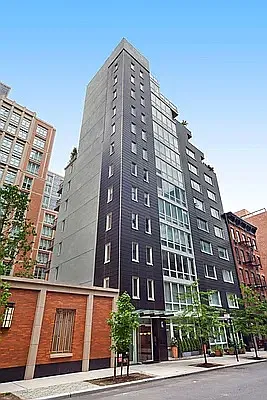
Discussion about Renwick Modern at 22 Renwick Street in Hudson Square
Add Your Comment
Recommended for You
-

From our blog
NYC Open Houses for November 19 and 20 - More from our blog
Most popular
-
8 Comments
-
2 Comments
-
72 Comments
-
81 Comments
Recommended for You
-
From our blog
NYC Open Houses for November 19 and 20 - More from our blog
Are there any 22 Renwick contract holders out concerned about the present market conditions and the fact that prices have dropped
I am aware of two such contract holders, myself included, who have those concerns. Why do you ask?
urgent - the developer of this project has just sent out letters saying they intend to begin closing units "on or about" may 15th. corcoran is saying that this building won't be remotely ready until mid-july at the earliest. any other contract holders concerned about this?
Are there any contract holders out there that have been able to renegotiate?
It looks like we are starting to get a few interested parties. NYCScout, erol and now JoJa. Perhaps we should all meet?
Anyone tried to renegotiate? What do people think about the drop-dead date of June 1, 2008? Does the rescission right kick in if they can't close ANY unit by the date, or if they can't close YOUR unit in particular?
Would also be interested in meeting and discussing options w/others. Given that presently 25+% of the units are not in contract, perhaps if some of us are willing to work together we can effectively renegotiate.
My lawyer said any unit can be closed on to get past that rescission date.
I think Mort might have the right idea. NYCScout, erol, JoJa are you willing to meet and compare notes?
I think before we meet and discuss collective action, each contract holder should email the sponsor's lawyers (Steve Ganfer at Ganfer & Shore) and Corcoran (Jim.Brawders@corcoransunshine.com) to ask questions about timing and price reductions. Put them on the defensive and make them realize that they may have to make slightly less of a profit on all of us than they originally anticipated. Who can even get a mortgage at their original purchase price, without putting down another 30%+?
I respectfully disagree. The power would be in numbers and with a lawyer familiar with and who has already represented both developers and contract holders in Manhattan. Their lawyers would not have the least bit of respect for anyone other than someone totally familar with "the industry"
Without first discussing our positions among ourselves, I think it would be difficult to put the sponsor, their lawyers or Corcoran on the defensive. I'm not sure that they would necessarily blink first, although given current market conditions they might grimace if they knew that there is a large contigent of contract holders that share similar concerns and expectations. It doesn't necessarily advance our interest if we talk first with them without first knowing e.g. if one contract holder is happy with x% reduction but another really needs Y% to make it work. There may also be some that are simply willing to walk away altogether. Again, I would be willing to meet before I approached the sponsor or Corcoran.
I think something that has been brought up elsewhere that is very correct is that at this time many developers, given their financing arrangements, don't have any room to negotiate. It is a sad fact of development that it often continues apace until bankruptcy stops it in its tracks. Think about it, a developer has little to lose right now. Bankruptcy for a project is hardly the same as someone losing a large chunk of change, in some cases their life savings. At the end of the day, people (and banks sometime down the road) will say, oh, gee, who could have guessed? No one predicted the downturn, they're fine businesspeople. And so it goes, which is why Trump can afford a new wife every so often.
But, I don't know if you should not have any hope if your negotiation efforts don't bear fruit. I would imagine that if and when the property does so badly as to be taken over, you may be contacted first and offered your deposit toward what you won't think is a bargain-basement price, but is quite a bit lower than today's. So, if you can afford to close and would like to, do so. If not, it may or may not work depending on how far along the construction process is and how far along the bank take-over processes are. Good luck.
Aboutready - if the developer has no room to re-negotiate or if they are on the brink of bankruptcy, I'd like to know that. Personally, buying into such an arrangement wouldn't sit well with me. Are you a 22 Renwick contract holder? Are you "in the industry"? Perhaps associated with the developer?
Mort's last point brings up a few critical issues: (a) what % reduction are people thinking they would like in order to move in; and (b) is everyone willing to walk from their deposits? As far as I can tell, there isn't a true alignment of interests among this group unless (a) is an agreed upon percentage (within range, at least) and unless (b) either everyone is willing to walk or not.
baba123, you bring up some very good points as it relates to aboutready's posting - I'd like to know the same info and I think given the current economy, the developer should be more forthcoming about the building's status and their financing. While they are not required to, some common courtesy would be nice.
Obviously no one is going to post on this thread his/her specific requirement or expectation although we are all wondering if we can align our interests to move forward. Why don't we attempt to meet and I will just throw out there meeting at the site perhaps this weekend and going to a cafe. I recall there is one on Greenwich just south of Spring. If anyone wants to meet, name a time or if this weekend is not good, another day.
How about the following weekend?
The following weekend works for me. Hopefully we get a few more on board and then we can determine the day and time.
Sounds good Mort.
baba123, I have no insider knowledge. There are others on this board who know more about the financial arrangements of these companies than I do, but I think most new developments now that are not already closing (and many that are) are potentially toxic for buyers. The list of things that can go wrong is quite ugly. Bankruptcies can and will happen, and I'm not trying to foment fear to bring down anyone or the market. It's just a business reality.
aboutready, thank you for your insight. Yes I agree there is potential for alot to go wrong in this present downturn in the economy and specifically in the NYC real estate market.
Mort, NYCScout - I'm in for the following weekend. Hey Mort why don't you suggest a time and place on Saturday March 14th
Joja - can you also make it?
Saturday, March 14th is perfect. Anytime.
maybe, my husband isn't quite convinced that doing this as a group would be in our best interest. let me work on him.
Interesting comment from another discussion. This gentleman is also a lawyer:
"Someone (407PAS) who says "a contract is a contract" doesn't have any idea what a contract is. A contract sets forth parties' expectations, and sets forth what will happen if they do not fulfill the expectations.
In the case of a buyer who signed a contract on a unit that has declined 20% in value over the past year, they can walk away from the deal and lose their 10% deposit. This would make good financial sense, and the Developer would be short-sighted to simply pocket the 10% and put the unit back on the market. That would make no financial sense. Therefore, if both parties are sensible, they will negotiate a new price.
As a lawyer, I see this happen in every business context imaginable, including real estate. People default on contracts all the time, and the other side comes to the table to work something out. Saying "a contract is a contract" is nonsense."
Joja - tell your husband "power in numbers!" If 5 parties band together, that represents 7 to 8 million dollars. I am sure we will get the developer's attention. Having to put 5 condos back on the market in these conditions? Think about it.
Sat March 14 is good -- shall we say 11:00am.
I'll be there at 11:00 a.m.
11:00am it is.
"In the case of a buyer who signed a contract on a unit that has declined 20% in value over the past year, they can walk away from the deal and lose their 10% deposit. This would make good financial sense, and the Developer would be short-sighted to simply pocket the 10% and put the unit back on the market. That would make no financial sense. Therefore, if both parties are sensible, they will negotiate a new price."
This is true, but most developers simply don't believe purchasers who have signed contracts are going to walk away from a couple hundred thousands dollars or more. Sure, it happens on occasion, but I think developers' general attitude on this is "prove it."
I think usually people wouldn't necessarily walk. I think it's the decline in market values combined with the uncertainty of the employment situation, and the fairly reasonable certainty that you couldn't turn around and sell if you had to (for who knows how long), further augmented by the fact that liquid assets have probably tanked. It's a powerful combination, in an environment that is becoming more risk-averse by the second.
billshiers - I can't say for certain whether the general attitude of developers on this point is "prove it," but I do believe that if half of your very small building is willing to do this, it gives that group a lot more leverage than they otherwise would have should only one person threaten it. If the NY condo market is down 20%-30% in value as of today, and could possibly even go lower, then it seems to make sense to walk. The question is - how much value has this building lost? Seems somewhat difficult to discern at the moment, given that few apartments are actually moving, so getting numbers on actual purchase prices is a challenge.
"I do believe that if half of your very small building is willing to do this, it gives that group a lot more leverage than they otherwise would have should only one person threaten it."
I agree with you. Because the developer already has your 10% though, you are starting 10% in the hole, and the developer is starting 10% ahead. If the market is already 20% - 30% down (which I think is closer to 30%, actually), the developer does have incentive to make a deal. But the developer's incentive is only to give you 10% - 20%, because the developer already has the first 10% no matter what. Considering that both sides have something to lose if a deal can't be worked out, it would make sense to meet in the middle at 5% to 10% off the current contract price. That's not bad, but probably not quite what some are looking for.
agree completely - but given that we haven't hit bottom yet and are likely already closer to a 30% decline, I think the starting ask should be closer greater than you've set forth above. If the bottom is 40%, which is extremely likely, then the only question the developer needs to ask is "am I better off negotiating with these people and giving them an across-the-board discount, or better off keeping their collective 10% and going back out to the market?"
Keep in mind, when the developer goes back out to the market, it will cost them a good amount per month to operate an empty building and cover its costs.
This is why in order to truly proceed as a group, it appears that either everyone is committed to walk or not.
TBD in person.
Joja - we'd love to have you at least join us in conversation next Saturday even if you do not want to join forces
NYCScout - About 1 month ago you mentioned that you knew "two such contract holders, myself included".
Is the other person a 22 Renwick contract holder? I ask because the more people we get involved, the stronger our position - thanks
MUST READ - NY TIMES RE Section!!!!!!!!
http://www.nytimes.com/2009/03/08/realestate/08Cov.html?_r=1&ref=realestate
baba123 - yes, the other person is a 22 Renwick contract holder.
Great article - thanks NYCScout
My husband and I are 22 Renwick contract holders and would like to join your conversation this Saturday at 11am. Our intention is to learn more but we won't be ready to commit to collection action until we meet with our attorney. At this point, we are planning to walk unless the contract is renegotiated.
typo above - "collective action" (rather than "collection")
hello everyone. - I was on vacation so I am just joining this discussion. My husband and I are contract holdera at 22 Renwick and will be there this Saturday at 11a. Here are my thoughts so far: my husband was nervous about meeting too, I spoke to our attorney a few weeks ago and he said that the more people that approach the developer the better our chances are at negotiating, so I think meeting and agreeing on a framework/range is important. Jola, you are right that all the developer needs to do is close on one unit to negate the rescission right, but my laywer said that pushing through one closing to get out of a rescission right makes the developer vulnerable to claims of fraud, so that shouldn't be too much of a concern.
Looking forward to meeting everyone this Saturday.
I'm still working on my husband, he has some issues with the group approach. I should know by later in the week if we will be joining y'all. one question that might help me, what kind of discount do you really think is possible here? my husband went through some numbers and he doesn't see how the developer could even be able to reduce prices by the %s some seem to think they should be asking for without losing money. never mind "make slightly less of a profit on all of us than they originally anticipated" as someone stated earlier. I think that is why he'd rather us go at it alone. others have hinted at this as well, if a group goes in asking for 25-30% discounts, he doesn't see how that could work to our advantage when it cannot happen. He also has an issue with the fact that we probably all paid different amounts from each other and the fact that some people might not intend to live there. any suggestions?
JoJa et al - I don't think anyone is 100% committed to the "collective action" approach at this point. From my standpoint, I am in complete agreement with ebrooks - our intention is to learn, but we are also prepared to walk unless the contract is renegotiated.
With respect to people's concerns about what the developer may or may not be able to do - it doesn't seem that anyone here is looking to get the developer to do this at a loss or thinks they are renegotiating for the steal of a lifetime. The reality of the market is that if this developer wants this group of people to live in this building, they may have to make slightly less money on each of us and the group as a whole as they had previously thought. I work in a transactional field, and I can tell you that nearly 100% of the deals I have worked on have been re-cut after contracts have been signed - either the parties want to move forward and close a deal at a price and under conditions that works for both sides, or they don't.
Regardless of how we all approach this (individually or collectively) or what number or % off each person may want, I think it is still worth meeting in person and discussing.
Jola - my husband thinks the same thing as yours re: collective action, but he also feels that we should all meet, discuss, and just learn what we can. In the end, everyone is going to have to negotiate the deal that works best for their own individual situation. But meeting and discussing will help us all make an informed decision on how to proceed - we don't want to operate in a vacuum.
As for how much people want off the purchase price, I agree with you husband that the developer - if they are even willing to negotiate - won't go down too low, especially considering that they already have our 10%. But assuming they can't close by June (I saw the building yesterday - it only has insulation on the A side, no windows, the B side is almost entirely open, etc) we do, by law, have rescission right and that will hopefully give us leverage.
Overall, I think all of the contract holders are in the name boat, regardless of whether we want to act as a group or individually. Things have fundamentally changed since we signed our purchase agreements in 2007/2008. It's a completely new, scary and unfamiliar financial world and hopefully we can all reach a reasonable deal with the developer that reflects this.
I don't think the purpose of the meeting is necessarily to force some kind of collective action but rather to provide an opportunity for us to discuss ours concerns privately rather than through this format. I know there is a lot of talk and speculation about renegotiation and how much room the developer has to engage in it or if in fact, he could or would even consider it. And it would be great if he can and would renegotiate. But short of that, I think it is also helpful to know how many will walk away. I believe the developer is responsible for the monthly payments on all the unsold units. So the loss of revenue from unsold apartments coupled with the prospect of having to make those monthly payments could negatively impact the financial condition of the sponsor and hence the building. It could potentially create a difficult financial situation and quality of life for those who do decide to close. Further, in the event of a developer bankruptcy, are not the unit owners then on the hook for the entire building's costs?
to add to Mort's comments on why the meeting will be helpful in light of who is willing to walk away, it will also make getting a mortgage THAT much more difficult the longer more units sit unsold.
Does anyone know why it appears that Apt. 3B has been sold, according to this website?
Looks like the developer's strategy (or should I say game) has begun
Please, let's limit what is discussed here. All parties involved are monitoring this forum. Looking forward to meeting the group on Saturday.
My husband remains on the fence, a little less so than at first, but either way, we would be unable to meet this Saturday since we have his neice's birthday party out of town. I would love to be kept in the loop if possible. I can be reached at joja3232@gmail.com. We do look forward to meeting all of you, hopefully as neighbors...
Anyone know anything about progress here? Have closings begun? What about all the chatter above - anything come of this?
Your screen name seems to indicate that you should know more than anyone else concerning this project.
No, I don't. Was just looking for some additional info - appears that not much progress is being made - was wondering if the bank has foreclosed here.
22 Renwick buyers question first closing, demand money back
June 30, 2009 10:30AM By Candace Taylor
In the type of dispute likely to become more common in the rocky economy, buyers at West Soho condominium 22 Renwick are demanding their money back amid claims that the first closing at the building may be a sham.
At least six purchasers at the 19-unit condo have filed claims with the attorney general's office requesting their deposits back from the developer, Manhattan-based Orange Management.
Buyers, who requested anonymity because they are still in negotiations with the developer, say construction delays at the site have triggered their right of rescission, and the first closing -- which would, if legitimate, require buyers to close on their units -- doesn't count because it is a commercial space, according to claims filed with the AG's office (a cheaper but legally binding alternative to filing a lawsuit). They also say the commercial buyer may not be a bona fide purchaser, but be part of an attempt by the sponsor to avoid giving them their money back. The AG, whose office did not return phone calls for comment, will determine the legality of the first closing.
Orange Management, which also did not respond to requests for comment, told buyers the commercial owner would be an art gallery, the buyers said. Instead, the purchaser is Next Block Over, a company with ties to the developer, according to documents filed with the city.
"This was likely some ill-conceived tactical move in order to get people to have to fight for their deposits back," said one buyer of a residential unit at 22 Renwick.
By law, if a sponsor does not close at least one unit in a new condo within a year of its original projected date of completion of the building -- known as the outside date -- all of the buyers must be offered the right of rescission, meaning that they may opt to be released from their contract and get their deposits back. Recently, this occurred at Upper West Side condo Linden78 and at condo conversion project at 45 John Street in the Financial District. The outside date at 22 Renwick was June 1.
Seven of 14 buyers who are in contract to purchase apartments at the building have spent months discussing their sales contracts after finding each other online on real estate Web Site Streeteasy.com, they said. Of those, six have filed claims with the AG's office.
In an environment where more and more buyers are attempting to get out of their contracts, developers facing construction delays are increasingly pulling out all the stops to ensure they can close a unit — any unit — before the outside date, said Robert Braverman, managing partner at law firm Braverman & Associates, who is not involved in any cases at 22 Renwick. And since commercial units often require less of a build-out than residential units, developers may increasingly look to close them first, he said.
"If that's what [developers] need to stop the clock, of course they will," he said.
Fourteen units have gone into contract at 22 Renwick, a luxury condo project on Renwick Street between Spring and Canal streets. There have been significant delays at the site, and buyers say they don’t expect to be able to move in for several months.
"It's a construction site that looks at least three months off," said one purchaser.
Buyers told The Real Deal they suspect the developer also realized this, and decided to focus on completing the commercial unit as quickly as possible, so as to avoid triggering buyers' rights of rescission.
"The building is nowhere near completion, or near getting a temporary certificate of occupancy for a residential unit, which is why they quickly got the [temporary certificate of occupancy] for the commercial unit," said another buyer, who also requested anonymity.
On April 16, an amendment to the offering plan alerted buyers that the first closure would likely be the commercial unit.
Then, just a few days before the outside date for 22 Renwick, Next Block Over closed on the commercial condo unit for $150,000, according to city documents.
According to the Department of State and city documents, newly-formed company Next Block Over shares employees and an address, 487 Greenwich Street, with development firm Blue Zees Real Estate.
Meanwhile, Blue Zees is the "development consultant and owner's representative" to Orange Management at 22 Renwick Street, according to the Blue Zees Web site. Next Block Over and Blue Zees were also given a significant discount on the space.
According to city documents, Blue Zees and the seller entered into a purchase agreement May 28 in which "the seller has agreed to reduce the purchase price of the unit from $450,000 to $150,000 to reflect current market conditions."
Buyers said they suspect the ties between the developer and Blue Zees may constitute a violation of state law, which requires that the official first closing in a condo must be a legitimate purchaser.
"It can't be anything other than a bona fide sale," explained Vincent Hanley, a partner at law firm Hanley & Goble, who has not worked on cases at 22 Renwick. "It can't be a member of the sponsor's team."
In other words, "you can't have a sham first closing," Braverman said.
Such improper ties would be hard to prove, Hanely said.
"It's very difficult to establish if it's a 'friendly sale,'" Hanley said.
However, financial ties could be a factor in determining whether a friendly sale had occurred.
"If the buyer was affiliated with, or somehow economically beholden, to the sponsor, it might not be viewed as a legitimate first closing," Braverman said.
Buyers and their attorneys are also claiming that the Next Block Over closing doesn't nullify their right of rescission because it is a commercial unit, not a residential one.
Residential units take longer to build out, since they require fixtures like bathrooms to be completed before buyers can move in, purchasers argued, while commercial unit owners often prefer to build out the spaces themselves to their unique specifications.
Braverman said the validity of their claims depend on the wording of the offering plan, and it will be up to the AG to make the call.
But a buyer suggested the case could have far-reaching ramifications in the current climate.
"The policy implications of this are absurd," the buyer said. "If it were the case that a developer could simply close on a commercial unit and have that constitute the first closing, then the entire purpose of the outside date and rescission rights would be frustrated and completely useless."
Latest Refund Battle Brewing at Hudson Square's 22 Renwick
Tuesday, June 30, 2009, by Joey
Poor old Renwick Street. There it was, content to live out its days as a mostly forgotten glorified alley sandwiched between Canal Street and Holland Tunnel traffic. But the development boom came calling, and soon the block became a hotbed for luxury condos like No. 22 Renwick pitching tenuous connections to Soho and Tribeca. The high-end thing never seemed to fit the little guy, and maybe others are starting to agree: The Real Deal reports that a group of buyers at the 19-unit building designed by Philip Johnson/Alan Ritchie Architects are trying to get their deposits back. They argue that the sponsor tried to sneak in the closing of the building's commercial unit ahead of the project's delivery deadline, but the storefront (which was supposed to be an art gallery), was purchased by a company with ties to the developer. The attorney general will now look into the legality of that closing, and whether No. 22 Renwick will share the same fate as 45 John, Linden78, and other recent projects where buyers are allowed to walk.
· 22 Renwick buyers question first closing, demand money back [Real Deal]
· No. 22 Renwick coverage [Curbed]
Things don't look good for his project:
22 Renwick developer refutes buyers' claims about sham closing
July 24, 2009 10:30AM By Candace Taylor
22 Renwick
The developer of 22 Renwick is refuting buyers' claims that the first closing in the building was a sham.
"We're not doing anything tricky here," said Andrew Bradfield, a principal at Orange Management and the developer of Renwick along with Helix Partners.
Buyers in the building have filed applications with the attorney general to get their money back, saying they're entitled to a right of rescission because of delays at the site.
Bradfield says their applications have no legal merit and some buyers are merely looking for steep discounts from the originally agreed-upon sales prices.
"They're treating it like they can close at that price [only] if they feel like it," he said. "That is not the idea of a contract."
Buyers at 22 Renwick have said that the first closing at the building doesn't count because it was a commercial unit rather than a residential apartment.
But Bradfield dismissed those claims.
"The law is very clear," he said. "It doesn't specify residential or commercial."
Buyers also said the sale of the commercial unit violates a law requiring the first closing in a new condo to be an "arm's length" sale, meaning that the buyer is not related to the sponsor by a family or business relationship.
Bradfield said the transaction is a bona fide sale.
"We don't have any interest in the purchaser," he said. "Yes, we knew them, but we know lots of investors. It's not even going to come up as a question."
The buyer of the commercial storefront, Damon Craig, is an employee of Blue Zees, a company that claims on its Web Site to be the "development consultant and owner's representative" at 22 Renwick Street.
To buy the property, Craig formed an entity known as Next Block Over May 28, 2009, according to documents from the New York Department of state, and received a $300,000 discount on the purchase of the storefront space.
It now falls in the hands of the attorney general to determine the validity of the sale.
In the meantime, Bradfield said, buyers are simply trying to draw attention to the building in a "desperate move" to get their money back. "They're fomenting as much noise as possible," he said.
The principals of Helix Partners — Matthew Brown, William Lozito and Joseph Lozito — declined to comment.
Closings of residential units are expected to begin in August or September, Bradfield said. Sales began in October of 2007, and according to the offering plan, the condominium was slated for completion in June 2008. Bradfield said residential closings are taking place later than expected because of his decision to take on a partner, Helix Partners, which in turn led to construction commencing eight months later than planned.
"The plan was written for a construction date that was eight months ahead of when we started construction," he said. "We didn't update the plan at the time we started selling to reflect that timing."
The building, designed by Philip Johnson/Alan Ritchie Architects, is located on Renwick Street between Spring and Canal streets.
According to several of the buyers, who spoke to The Real Deal but requested anonymity, at least six of the 14 purchasers of apartments in the building have filed requests with the attorney general's office to get their deposits back. There are 19 residential units in the building in addition to the commercial unit.
By law, if a sponsor does not close on at least one unit in a new condo within a year of its original projected date of completion — known as the "outside date" — all of the buyers must be offered the right of rescission, meaning that they may opt to be released from their contract and get their deposits back.
The outside date at 22 Renwick was June 1, 2009, and the first closing in the building, the commercial unit, took place May 29, according to city documents.
While construction delays often went unnoticed in the past, there's much more at stake in an environment where construction lending is tight and property values are declining. Recently, buyers were given rescission rights at the Setai on Broad Street, Upper West Side condo Linden 78 and Financial District condo conversion project 45 John Street.
A quick factual question for Renwick 22 purchasers about your offering plan. The plan has two important dates -- the first operating year in Schedule B, and the estimated first closing date.
I'm in contract for another building, and I'm just trying to learn a bit about the actual facts in some rescission cases and how the AG might be applying the s.
reg
So --
What were the exact dates for the first operating year (Schedule B)? I assume from the article that it was June 1, 2008 - May 31, 2009.
What was the precise first closing date promised in the plan and was it expressed as a particular date (e.g. "June 1, 2008")or a month (e.g. "June 2008")?
Many thanks for the info, and best of luck to everyone!
Remorseful buyers, part two
Some seek escape, but through AG's office rather than courts July 31, 2009 05:57PM By Candace Taylor
Much attention has been focused lately on the flurry of lawsuits filed by unsatisfied apartment buyers hoping to get out of their purchase contracts.
But attorneys say there is another, under-the-radar group of buyers looking to break their contracts and get their money back. Instead of suing, these regretful buyers have chosen to pursue the cheaper, more streamlined option of having their disputes mediated by the state attorney general's office.
The number of buyers selecting this route has exploded in the past year, leading to a backlog of paperwork in the office's real estate finance bureau, with buyers and developers waiting long periods of time to find out if they will get often-substantial deposits or down payments back.
"There's been a huge increase in the number of these escrow complaints," said Robert Braverman, managing partner at real estate law firm Braverman and Associates, adding that one of his clients has been waiting for more than a year for a decision by the AG.
According to data obtained by The Real Deal under a Freedom of Information request with the AG's office, the bureau had received some 310 such filings by July 21 of this year. That's almost double the number received in all of 2008 — 168 — and more than five times the 57 filed in 2007.
While these figures represent an exponential increase, the number is still too small to have much of an impact on the city's real estate market as a whole, experts said. However, the outcomes could significantly impact the fortunes of individual projects such as 22 Renwick Street in Soho, a small building where a number of buyers have already filed applications with Attorney General Andrew Cuomo's office.
The project has roughly 75 percent of its units in contract, so it appears to be safely beyond the 51 to 70 percent presale requirements now mandated by most lenders. But that may change if the AG's office sides with buyers who have filed for permission to terminate their sales contracts. If that happens, it could mean more headaches for the developer and financing trouble for the rest of the buyers in the building.
These days, "just because people are in contract doesn't mean they're going to live there or close," said a purchaser at 22 Renwick, who asked to remain anonymous, but was one of six buyers in the 19-unit apartment building who say they've filed with the AG to get their deposits back.
Helix Partners, the co-developer of the Renwick, had no comment for the story, and representatives from Cuomo's office did not respond to requests for comment by press time.
In situations where a buyer feels that the seller has breached the terms of the offering plan and thereby triggered the right to terminate the contract, the buyer may file what's known as an "application for a determination on the disposition of down payment," explained real estate attorney Jeffrey Reich, a partner at Wolf Haldenstein Adler Freeman & Herz, who represents both buyers and developers.
"If the developer hasn't returned the money or if there's a question, the attorney general gets involved," said Reich, who has recently filed several of these applications on behalf of clients. A relatively simple process, it requires sending in a form along with documents backing the buyers' request.
The AG's office then contacts both the buyer and seller, evaluates the case and issues a decision.
If either party disagrees with the result, they could sue, but the AG's determination would "carry a lot of weight" in court, said Steven Sladkus, a partner at Wolf Haldenstein Adler Freeman & Herz, who said he, too, has filed several applications to the AG's office on behalf of clients.
Sladkus noted that the recent construction boom has created many more opportunities for these kinds of disputes.
"The attorney general is inundated with these things," Sladkus said. "I have seen a significant increase over the past year in disputes over contract deposits."
One reason for that is that filing an application with the attorney general, as opposed to suing, is a cost-effective alternative to litigation, which is especially appealing for buyers whose deposits are less than $100,000.
"You could easily go through $40,000 or more litigating one of these cases," said Reich. "Filing a claim with the attorney general is a very inexpensive way to go forward."
As a result, the attorney general's office is being bombarded with these requests, and often takes a long time to respond to them, buyers and attorneys said.
"The office is not really staffed and built up and prepared for that type of interaction," said Josh Guberman, president and CEO of Core Development Group and the developer of Lux 74 on the Upper East Side. "They don't have the human resources to address the myriad concerns that people are having around contract disputes."
Many buyers are simply looking for a loophole to get out of their contracts now that prices are falling, he said, and are squandering public resources in the process.
He said some are even using the application as a negotiating tool with developers.
"My observation has been that the vast majority of buyers that have contacted the AG's office are trying to dispense with an otherwise perfectly legal and honorable contract," he said. "It's a little disingenuous, and it's problematic for the [AG's staff members] who are trying to keep the wheels turning. It's unfair to the industry."
However, many buyers have legitimate reasons to be displeased with their units, attorneys said.
"We discover at walk-throughs that there are huge discrepancies in square footage or ceiling heights," Sladkus said. "There was one circumstance where an entire window was boarded up and missing."
For wealthy buyers, or those who stand to lose a lot of money, these discrepancies often lead to litigation rather than an appeal to the AG's office.
One of Sladkus' clients, Linda Bloch, for example, sued the developer of the Laurel at 400 East 67th Street, asking for the return of her $481,250 deposit and claiming that the floorplan showed a large window in the living room, which was "walled up with sheetrock." She also claimed that the unit was 48 square feet smaller than it was supposed to be, and that the condo's recreational facilities were not finished on time.
Sladkus said Bloch decided to sue rather than file with the AG in part because she wasn't willing to face a long delay in getting her money back.
Buyers with more limited resources, however, may have no choice but to wait or to renegotiate with the sponsor, especially if they've sunk their life savings into the down payment.
"If you only have $50,000 at stake, you may not have any money to splurge on a lawyer," Sladkus said.
Braverman said one of his clients has been waiting since June 2008 for the AG's decision on the return of his $95,000 down payment for a condo unit at 20 Bayard Street in Brooklyn after the client said mold in the apartment wasn't properly remediated.
"For a client like mine, it puts their life in limbo," Braverman said. "Their money is being tied up by the sponsor."
The pileup of applications could have an adverse impact on the fate of some projects like 22 Renwick.
At that project, 14 units, or more than 70 percent of the building, are in contract. But buyers told The Real Deal that at least half-a-dozen of those purchasers have filed with the attorney general claiming their contracts — and those of all buyers in the building — are invalid due to construction delays.
While the applications wend their way through the AG's office, the project is in a sort of limbo: If the AG requires the developer to release some or all of the buyers from their contracts, that could make it harder for the remaining buyers to get mortgages. Moreover, if a large number of buyers are allowed to terminate their contracts, it could force the developer to restart the sales process virtually from scratch — this time, in a much more difficult economy.
The situation also raises questions about how much sellers are required to disclose to potential buyers.
"They could still portray us as 14 committed buyers," said the anonymous 22 Renwick buyer, who mentioned waiting six weeks for a verdict from Cuomo's office. "If the developer is selling based on those numbers, they're lying."
Andrew Bradfield, the developer of 22 Renwick along with Helix Partners, did not respond by press time when asked if brokers at the project were telling potential buyers about complaints to the AG.
But Bradfield said buyers' attempts to get their deposits back are meritless and based on a desire for lower prices.
"They signed a contract, they made a deal at a certain price and they don't feel they should have to live with it," he said. "It's a familiar story."
has this building had its first residential closing yet?
What's the story with this building? Have the above issues been resolved? Are the buyers in contract going to close?
I got a right to recission and took it.
Looks like they offered it to all buyers.
http://therealdeal.com/newyork/articles/buyers-can-get-refunds-at-22-renwick-street-like-other-developments-including-linden78-one-madison-park-and-the-setai
does anyone know how many buyers got out of their contracts? or what is going on with this now?
http://www.crainsnewyork.com/article/20110119/REAL_ESTATE/110119835
"Bank moving forward with plans to take back No. 22 Renwick after picking up the $19 million mortgage from failed lender it bought from FDIC last year."
I wonder how long it will take for this project to get back to market...
What Bank holds the $19 million mortgage? Any idea of how much they bought it for from FDIC? I might be interested in buying the property.
The building is listed in evacuation Zone A. Does anyone know if there was damage from the hurricane? Has anyone had access to the building during or after the hurricane who can verify independently? Thanks
Any thoughts on how this building has ended up?
Thks
is andrew bradfield still involved? because it will be a sh*t show if he is...
Can anyone comment on how their contract negotiations have been? Any leeway in pricing, closing costs, etc. when neogtiating with Sponsor? And also, are they letting people tour the units or are they not yet finished? Walked by a few weeks ago and while it looks near completion, it also still looked like much interior construction was going on.