SALE AT 101 West 23rd Street...WHAT IS THE DEAL HERE?

Started by er1to9
over 18 years ago
Posts: 374
Member since: Mar 2007
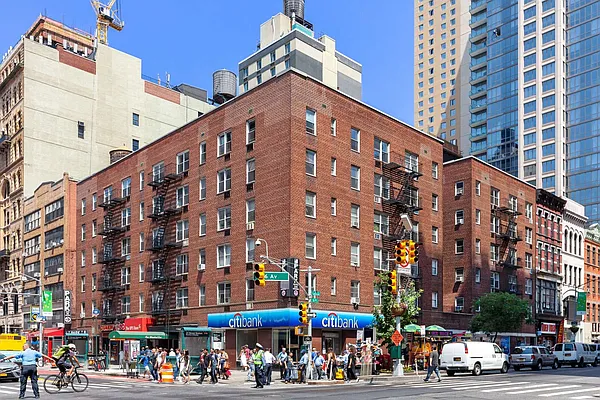
Discussion about 101 West 23rd Street in Chelsea
Add Your Comment
Recommended for You
-

From our blog
NYC Open Houses for November 19 and 20 - More from our blog
Most popular
-
3 Comments
-
1 Comments
-
7 Comments
-
16 Comments
-
8 Comments
Recommended for You
-
From our blog
NYC Open Houses for November 19 and 20 - More from our blog
i hear its land lease hence high maintenance
landlease with 35 or so years left on the lease which means the co-op will have to 1) renegotiate and the maint (which isnt tax dedectable) gets even higher or 2) not renegotiate but once the lease term is less then 31 years no bank will finance with 30 year fixed mortgage so a large pool of buyers is gone.
The apartments are huge for the money and while it seems like a great deal it really isn't when you calculate the risk of owning nothing in the end and the lack of appreciation potetnial relative to other buildings. If you're interested I know a lwayer who has done a handful of closings in the building and can walk you through the pluses and minuses.
I think the landlease has even less time on it--maybe expiring in 31 or 32 years? Other posts have talked about this property if you do a search.
Who's the lawyer, NBA? I'm curious.
Something awful seems to be going on at this building. Not a single apartment is listed for sale and many which had been for sale are "temporarily off the market." Evidently, the land lease issue is not resolved, and the fact that the coop has not been able to get the issue resolved for a very long period of time does not bode well for the shareholders.
What happens to the coop if the land lease is not extended? I know no one can get a new mortgage, but what happens as time goes on to those who already live there?
I own an apt there, and took it off the market six months ago.
Something awful is going on. The landlease issue has not yet been resolved, and to prevent a flood of owners selling out at rock-bottom prices, the board put a moratorium on sales, prohibiting all shareholders from selling. The worst part is that they did not, in turn, ease sublet restrictions, which is really cruel.
No one knows how the issue will be resolved. That's why I was curious to get NBA's contact for a lawyer who has done business with the building.
I am so sorry to hear you are caught is this difficult position. Are things at a deadlock between the board and landlord? Is anything in the works?
I'm out of the loop. The board doesn't want people talking to the lawyer because he bills them every time he speaks.
It's a bit of a mess. It'll be sorted out whenever the landlease situation is sorted out, but until then, I and all other shareholders are in a state of limbo.
John E Donnelly is the lawyer I spoke to when I considered buying in that building. I am sorry to hear that current owners are having issues; the reason I stayed away was b/c the deal seemed to good to be true (large 2 bed on top floor w/ private roof space) until we looked into the details. Good luck.
Thank you, NBA. I'll reach out. Much obliged. Donnelly is the guy who you said has handled a number of transactions in the building?
Someone may want to ask whether a co-op board has the legal right to impose a sales moratorium. They have the right to approve / disapprove applicants, but I don't think they can impose a sales moratorium - it goes beyond the "business judgment rule," it seems.
And disapproving all applicants - even those willing to take the risk - to prop up prices would open them up to litigation.
I, for one, would file a derivative lawsuit against the corporation for their actions, ask a court for an emergency restraining order, and file a complaint with the Attorney General's Office on the fitness of the board to hold office.
That should get things moving.
Steve - Excellent insight.
The thought crossed my mind more than once about the board's not having the right to impose a moratorium. It's even more applicable in my case because I have sponsor rights.
For a while I considered a challenge to the board before ultimately deciding that with or without a moratorium, the apartments are unsellable until the landlease issue gets resolved anyway. No point in stirring up a fight for no reason.
I'm just curious -- what's the earlier history of this building, which appears to be prewar. When did it convert to coop, was it landlease as a rental before that, else why the unusual decision to landlease at conversion, has the landlease been held by the same party the whole time, etc. etc. etc.???
If you have sponsor rights, they probably can't do anything to stop you.
You might get a speculator.
We took it off the market in the Spring and have it rented out at present. Can't imagine anyone would want to take a flyer in that building until the problems get sorted out.
Very, very frustrating. Shareholders really getting shafted by this mess.
Just FYI, I'm selling a co-op and would never buy one again - the boards are nuts. And I recommend never buying a ground lease unit again, except if the city / state are the lessors where the rent is in lieu of property tax.
There are a lot of landleases out there, and even more co-ops. it's not really practical to give a general advisement not to touch anything in those types of buildings. What is prudent is to ensure that when you buy anywhere 'unconventional', especially a landlease, that you make a strident, diligent effort to really do your homework.
And by the way - I'm no fan of co-ops. They are truly the bane of my existence.
However - you have to hand it to them in one respect. It is precisely their 'nuttiness', their intricate review of buyers' financial profiles and seemingly capricious tendencies to reject that absolutely, positively, insulated apartments in all five boros of NYC from a wave of foreclosures, subprime loans, and the nationwide decline that has stamped out property values in the rest of the country over the past two years. Wall Street may indeed be the beast that brings NYC to its knees (and let's hope it doesn't!) but to this point, co-op boards and their rigidly insane policies have been the bulwark against unqualified buyers and speculators artificially driving up demand and financial problems for the NYC RE market. Don't underestimate the impact.
SomeonewhoKnows - Donnelly has done a number of transactions in the building and should know the situation. Not all land leases are a bad deal; this one has something to do with the property owner is some old guy and the family wants to use the land for something else b/c it is a prime spot. I do know that there are rent stabalized tenants in the building and as long as at least one of them holds out and doesnt move the property owner cannot really do anything other then not renegotiate the lease which in turn kills resales.
Alan - The building BTW isn't prewar- it is one of those six story red brink buildings probably build in the 50s/60s.
Does anybody know the update of this coop?
The co-op borrowed some money in 2001, so filed a memorandum of the 1999 lease. The 1999 lease wasn't filed. The 1999 lease is up on 12/31/2039.
So, if you buy there, your proprietary lease ends in 2039 as well. Take the purchase price, divide by 30, apply whichever PV/FV calculations you want, and that's the annual premium for the right to live there.
Unless you want to assume that the co-op and the landowner will enter into a new lease in 2039.
Is this bldg on the north or south side of street?
NW corner of 23rd and Sixth.
This is a sad example, but people on these boards sing the praises of coops. Okay, a well established coop with wealthy shareholders, and either few RS/RC tenants, or a wealthy sponsor, is not ever going to be a problem. But a condo that is fully sold, in a building that is primarily owner/occupiers is the way to go in NYC. A condo cannot have a land lease issue. And in any market you are fully covered in a condo, you can live in your deeded real property, sell it or lease it. In time, maybe the condo rules will allow fractional ownership, and you can sell your property multiple times for two or three times as much profit. That will never happen with a coop.
If you want fractional ownership, then correct, it's not going to happen in a co-op. Equally unlikely that the owners of a condo would vote to allow it. The "two or three times as much profit" is just plain wrong and not worth addressing.
It doesn't matter whether your "deeded real property" is owned by you outright, or by you as a shareholder. Every condo and every co-op is regulated by governing docs. Some condo rules are co-op-like, and some co-op rules are condo-like.
Before buying one or the other under the assumption that one is this and the other is that, it's a good idea to do your homework.
NWT, what happens if a condo owner violates a condo rule in her deeded property? Can the board evict her like they can in a co-op. No. Don't give me "some condo rules are co-op-like" nonsense. Some people turn their noses up at condos exactly because condo rules cannot be enforced effectively, and because all types of people can buy them, and therefore you cannot keep "undesirables" out. Has any board ever evicted a condo owner from her deeded real property? Or ever forced her to sell? I love to hear some examples.
I'm only making the point that this is a really sad co-op story--15% of the units are for sale, and there hasn't been a sale in over a year. Can buyers finance in this building--I doubt it from the recent sales history.
Co-op evictions are rare. I don't know whether a condo board has succeeded in forcing a sale for reasons other than non-payment of CCs. Again, if a condo works for you, great. Just don't delude yourself into thinking that that kind of ownership is unfettered.
It's not a sad co-op story because it's a co-op. I can't imagine anyone buying co-op shares without knowing that all the co-op had was a lease. Those owners paid less than they would have had the co-op owned the land. Whether less was too much was up to them.
PMG: I think you are coming up with the solution to the wrong problem: the issue isn't the eviction, it's the money. And as far as that goes, when things really head South, Coops are better protected than Condos since they are first lien holders rather than subordinate to a first mortgage. When Condos get foreclosed on, the Condo loses thousands of dollars in wiped out CC's. Not so with Coops. The VAST majority of Coops which had problems in the worst of times with Sponsor defaults came out the other end in fine shape.
"Has any board ever evicted a condo owner from her deeded real property? Or ever forced her to sell?"
Plenty. It just has to be a Judicial Foreclosure just like when you Foreclose on a mortgage on a Condo, as opposed to a non-judicial sale, like when you foreclosure on a share loan in a Coop.
Anyone have an update on this coop's expiring landlease issues?
I live in a building in Brooklyn Heights which also has a land lease and is in a similar state as 101 West 23rd Street. The land lease goes through 2043 and because of this, nobody has been able to sell. Attorneys immediately tell their clients it is too risky and to stay away. There are presently 5 apartments on the market, some for many, many months, and not a single apartment has gone into contract because the land lease issue is not resolved. Anybody have any suggestions for how to move the coop board to engage the land owner and get things resolved?
What is the status with 101 West 23rd street's land lease? Has that been resolved?
the land lease was resolved with a five year extension. That is why there are now a lot of units on the market.
Thank you so much danielsmi. While it is a temporary fix, it at least helps the current shareholders. If you know, can you tell me who the attorney was who negotiated this extension on behalf of the coop shareholders?
Seems like that's giving methodone to a heroin addict. It's better than it was, but not by much. I can't imagine who in their right mind would buy into this situation.
The attorney that represents the coop is Kevin O'connell. The land lease negotiation took so long partly due to the land lords representation acting slowly. The number of apartments on the market represent largely a block of sponsored apartments that have been renovated and additional units from tenants that were waiting for a resolution. The extension allows banks to mortgage within a safe window. Emigrant handles allot of the mortgages.
Thank you so much for that info! Much appreciated!!
Interesting...I didn't realize there were land leases involved with Coops. I learn something new every time I log on.
So it looks like the Sponsor agreed to give not much of anything except to allow himself to dump a bunch of units he wants to sell and have the buyers be able to get financing.
the sponsor is profiteering on the back of the coop. This means good deals for buyers but affects the price point for those that are selling at the same time in an already soft market. The sponsor owns bulk and can dump allot of them for lower than selling coop members paid for equal shares.
note the sponsors are not the land lords that control the land lease. The sponsors had to wait out the negotiation like everyone else. Don't want to confuse anybody.
Good info: but who did the negotiation? If the Sponsor controls enough of the building that they had the majority say in accepting this extension........
LuchiasDream, a co-op doesn't have to own the land. It can hold a lease instead, like anybody else. Most do own the land, though. Lots of leaseholds in London, where you're buying the unexpired term of the lease, so price on resale goes down and down as you approach the end of the lease. Same thing here, except land-lease co-ops often try to accumulate enough money to buy the land. Lots of other permutations.
To expand on NWT's point: in London, there's lots of land-lease situations, so people aren't shocked when they come across one: they just factor it into the equation. In NYC, there used to be lots more Land Lease Coops (like 1 Fifth, 2 Fifth, 24 5th, 29-35-45 East 9th, just in the prime Village). Now, there are many less Land Lease Coops, partly because over time many Coops bought their land, and secondly because most new conversions are Condo's rather than Coops and those can not be on leased land 9unless in the special case of BPC). Off of the top of my head, the only notable "new" Land Lease Coop is the Marais at 520 West 23rd St. When it was built, all sorts of similar buildings were being built as Condos instead since they weren't on leased land. Part of the result of this diminution of the number of coops which are land leases, in my opinion, is to even further erode value because it's the opposite situation of London: there are so few that it becomes a huge negative because it's something bad AND rare.
Yes, and that perceived huge negative can make for a good deal for a buyer who factors everything "into the equation."
Just for clarification - There is no more "sponsor" position in this building. There area cople of investors who own several units each and have the status of "holder of unsold shares." The owner of the land, Treber Realty, does not and never did owm any units in the building.
"Yes, and that perceived huge negative can make for a good deal for a buyer who factors everything "into the equation."
As long as they factor in the risk premium: in general, these are apartment which will go down more in value than the market average in busts, but if purchased "at the bottom" will probably go up more than the market average in a boom.
Oh, and to answer the OP's question:
"whats the deal w/ the building? why is it so cheap?"
What's a good deal on a lime green leisure suit?
"As long as they factor in the risk premium: in general, these are apartment which will go down more in value than the market average in busts, but if purchased "at the bottom" will probably go up more than the market average in a boom."
So if the land lease negotiation goes well, there is an upside to investing in these units "at the bottom"? by risk, you mean the risk you would have to take in advance not knowing if the unit you just bought will survive, or it will lose it's full value when the lease is up. Whatif the building has already went into renegotiation, and the units in general are selling cheaper than before, would you say the insiders already know something has busted and know they won't recoup anything when the lease is up? And also will the high maintenance ever go away depending on the renegotiation?
The high maintenance is definitely not going away. There was a 30% increase in maintenance earlier this year which is why these units are having such a hard time selling. It's not the prices that are the problem, it's the high maintenance. The huge increase was due to the new rent the co-op is paying for the land which was agreed upon earlier this year.
LRP hit the nail on the head. I just came across these and while a couple of the studios were right in my price range I nearly fell off my chair when I saw the maintenance was the same as a mortgage payment, sometimes more depending on the price.
Who the hell would buy into something like that?
nyguy7 - its not that outlandish to buy here and you are not going to find anything else in this neighborhood if that is your price range... the maintenance is what is keeping the prices low, true, but it still averages as a better deal. The other buildings in the area have a difference maintenance point but the outright cost (thus mortgage) is significantly higher. If you want to spend more each month knowing that the majority of your money is going to the mortgage than find a more expensive apartment in the neighborhood. The one advantage to the portion of maintenance being what it is is that a large part of it is write off. A nice silver lining.
Not sure what your point is danielsmi. virtually 100% of a mortgage is deductible for many years on a 30 yr. What percentage of the awful maintenance is deductible in this building? Certainly not nearly the amount of the mortgage deduction. So why would someone want to sign on for high maintenance? It makes no financial sense. And that maintenance will only increase further! Mortgage payments are steady. The only way this building can be argued to make sense is that you wouldn't qualify for a higher mortgage but do have the montly income to handle the maintenance. Not too many people fit that bill.
Why have you resurrected this thread? Do you have a stake in the building? What is the land lease situation? It is fully resolved? What terms?
A little off-topic, but I think the attorney's name might be Kevin McConnell, not O'Connell.
http://www.hmgdjlaw.com/mcconnell.asp
kylewest- I thought it made sense to buy here because the buildings with lower maintenance in the area had such costs that the mortgage and maintenance added together was cheaper here. To get an apartment with the same square footage may be 3/4 the maintenance but the mortgage way higher. Comparative listings put some nearby buildings at 30% higher. If someone has the money to pay cash it's a simple choice. I am in the scenario you described which makes this building affordable to me.
danielsmi: I'm glad you found what works for you. Can you say what portion of the maintenance is deductible? And what exactly is the land lease situation? When does it expire and when is it due to be renegotiated? I think those are key questions no one ever seems to answer about 101 W 23 and it keeps people feeling like something is being hidden.
The co-op's lease is up in 2039. The garage's lease is up in 2035.
If the co-op's lease was extended, the memorandum of it wasn't filed.
There're a couple of open houses there today. A smart seller would have the 2008 financials there for perusal, if only to avoid time-wasting.
So that would mean there are 29 years left on the lease. Obviously, no bank will give a 30 yr mortgage to someone for a purchase here. I'm not certain, but would a bank give ANY mortgage? The pool of buyers ostensibly gets smaller and smaller with each passing year, and if the bank foreclosed on, say a 15 year mortgage or 7 year ARM, the bank could well get stuck with a property it couldn't resell to cover it's loan. I would think that as a result no bank would loan here. Am I wrong?
See, this is the type of chatter that I think is very bad for the building. I don't understand why no one from this building has ever just posted the reality rather than have rumors and speculation circulate and pop up everytime someone googles the address. Certainly the truth is better than a thread like this serving as the only information from an internet search.
The lease was extended 5 years and now expires in 2044.
No, not wrong at all.
There's quite a tangled ACRIS history. Speculators buying blocks of unsold shares, etc. At one point it looks as if the co-op itself was lending money to buyers.
Right, a current owner should just post the details of the mortgages and leases, rather than let us speculate.
So let me get this: lease expires 2014. Between now and 2014, any labor cost increases, capital expenses, fuel surcharges, RE tax increases will obviously result in maintenance increases in the building just as any coop. Then, in 2014 the lease gets renegotiated which can only result in higher costs to rent the land which means a real hit to maintenance that other coops will not experience. If d-day is in under 5 years, how can a current purchaser expect to resell the unit being purchased today? There are lids for every pot as danielsmi demonstrates a couple of posts ago, but it would seem to me that the buyer pool for such a situation is small and would seemingly get smaller each day that passes. I don't see how values in this building can possibly do anything but diminish for AT LEAST the next 5 years and after that it is a huge question mark. I just don't see how this can be an investment I'd counsel anyone to take on. Renting or buying a smaller place in a more stable situation has just got to be better in the long term, no?
2044, not 2014
2014 would be when the time remaining on the lease drops below 30 years again disqualifying the building from bank loans so for all intents and purposes, 2014 is the "drop dead" date for resales.
And why on Earth would someone IN the building bump this thread if they weren't going to explain something about the finances to relieve all this speculation? How does that help the people with open houses today and the building in general?
Typically with these long-term leases the rent is reset periodically (e.g. every 5-10 years) so as to conform to the changing value of the land. You'd have a third-party appraiser come in to do that, since neither lessor nor lessee could be trusted.
The recent jump in the rent might be partly due to that, and might also be part of the concession made by the co-op to get the lease extended for a lousy five years.
Bottom line is you've got a little six-story co-op paying for land on a prime corner that should be occupied by a high-rise.
kw, i know it sounds crazy, but i heard that loans were available from Citi. don't know the terms, and don't know if my source was correct, but that is what i was told.
101 West 23rd Street #4H Co-op Chelsea
$429,000
850 ft² $504 per ft²
3 rooms
1 bed, 1 bath
Maintenance: $1,617.......but, that is with a $400/month credit for one year.....the maintenance is really $2,017 / month. Figure another $2000/month mortgage - who would buy vs rent?
Some background on 101 W 23rd's lease: http://tinyurl.com/yc3yjcq
The co-op does have a mortgage and shareholders do in fact deduct a portion of the maintenance.
Can you explain the mortgage LRP? The linked lawsuit indicates the coop doesn't even own the building. You can't have a mortgage if you lease the building. Something isn't clear here. What percentage of monthlies are tax deductible? No one on here ever seems to answer that. I don't get why it would be such a secret. Most RE ads for coops plainly state this. It isn't like it's secret inside info.
The co-op does own the building. It leases the land. I don't know exactly what the percentage is. I imagine it changed with the increase in ground rent this year. Not only is there mortgage interest that is deductible, but also real estate taxes which are part of maintenance as well.
First off Kylewest needs to check his/her facts before mouthing off on something that he/she knows NOTHING about. This building does indeed have a mortgage that the owners do get tax deductions for. As for not owning the building: any intelligent, thinking person would realize that it makes zero sense.
Do you really think the IRS would allow these owners to declare a mortgage interest deduction on their taxes if they did not own the building? Also, do you think mortgage banks would refi. any of these apartments if that were the case? I know for a fact that banks have refinanced apartments and approved mortgages in this building in 2008 and 2007 and prior.
Now, there is a 35 year land lease here, that is true. But this is not the only building in NYC that leases their land. Lease negotiations go on all the time. Successfully, I might add. If you have a dilligent board, no problem.
So, PLEASE, PLEASE all you people who have no idea what you are talking about please BE QUIET.... and let the the sellers sell in peace and let the buyers buy in peace and avail themselves of great lower prices do to a poor economy.
So, drakeskid25, what do you have to say about the legal brief that was linked by NWT (above)?
Here it is again: http://tinyurl.com/yc3yjcq
OK all- this is a very complicated situation. The legal decision referred to above was the result of a protracted legal action among the land-owner (Treber Realty), the cooperative, and the corporation that sublet all the commercial space. This all was resolved in 1999. The result of all the actions was that the land-owner, Treber Realty, gained control of the commercial space in the building, and a new cooperative was formed that now leases the residential portion of the building only. The current land-lease expires in 2044, and has various step-ups built in. Real estate taxes paid by the coop and mortgage interest (the mortgage is held by Carver FSB and self-liquidates in about 9 years) are fully deductible by shareholders, as permitted by law. The building has a new boiler, is well maintained by an excellent staff, and has some nice amenities - among them bike storage, video security, a live-in super and laundry facilities in each floor. There are a few units owned by holders-of- usold-shares, but the bulk of the apartments are owner-occupied. I suggest that anyone seeking to purchase a unit in the building ask the seller for a copy of the offering plan and amendments as well as the audited financial statements which are produced each year. You, your lawyer and/or broker should read everything carefully and come to your own conclusions, not based on gossip, but on facts. There are no "secrets" here - just a complex situation that is well and fairly documented, but may require your time to understand.
Because of the highly desireable location of this building there is a chance that a developer might want to build on the land this building occupies before the end of the lease. If that is the case there is a possibility that the land owner might offer to purchase the building.
Also Trebor, the owner of the land, is getting quiet old (mid 90s). So there is also a possibility that his hiers might want to sell the land to the building simplifying the inheritance process.
As such, the terminal value of the apartments in the building should not be considered as zero.
http://muralsuperstore.com/UNICORNPRINCESS.htm
megre, thank you for the explanation. I'm surprised that in the 2 years this thread has existed no one before you just posted the info to answer questions and put this to rest.
drakeskid25: I don't think I stated any facts about the building beyond the basics about there being a landlease. I haven't gone back over all my old posts here, but I think I and others repeatedly asked the same questions and got no answers, partial answers, or evasive answers. Transparency is usually the best policy, but that was not followed here, and thus the thread labored on. There was a link to a lawsuit above that described a very convoluted situation and my prior post posed question based on the link--I did not claim special knowledge or weigh in on the complexity of this building's history. Were I to do so, I'd tell you that life is too short for me to get anywhere near this messy headache.
Transparency's good, and even better when there're ... issues.
The best example I've seen is 350 Bleecker, which'd gone through lots of lawsuits between sponsor and board a while back, so was in danger of being labelled a problem building. They've put everything up at http://www.350bleecker.com for all to see. Besides the financials, even the court documents are in there somewhere.
reposting Megre's comment from above:
OK all- this is a very complicated situation. The legal decision referred to above was the result of a protracted legal action among the land-owner (Treber Realty), the cooperative, and the corporation that sublet all the commercial space. This all was resolved in 1999. The result of all the actions was that the land-owner, Treber Realty, gained control of the commercial space in the building, and a new cooperative was formed that now leases the residential portion of the building only. The current land-lease expires in 2044, and has various step-ups built in. Real estate taxes paid by the coop and mortgage interest (the mortgage is held by Carver FSB and self-liquidates in about 9 years) are fully deductible by shareholders, as permitted by law. The building has a new boiler, is well maintained by an excellent staff, and has some nice amenities - among them bike storage, video security, a live-in super and laundry facilities in each floor. There are a few units owned by holders-of- usold-shares, but the bulk of the apartments are owner-occupied. I suggest that anyone seeking to purchase a unit in the building ask the seller for a copy of the offering plan and amendments as well as the audited financial statements which are produced each year. You, your lawyer and/or broker should read everything carefully and come to your own conclusions, not based on gossip, but on facts. There are no "secrets" here - just a complex situation that is well and fairly documented, but may require your time to understand.
blizenrath, So, you're saying in 1999 the land owner took over the commercial space from the tenant/cooperative. That would make residential tenants/co-op owners justifiably nervous. The land owner taking over property is the worst outcome for co-op owners in a land lease situation. And what you are saying is that this has happened to the commercial space of this building. The other outcome is no loss of leasehold interest (that is what a co-op is) but a rise in the ground rent, thus higher maintenance.
I visited one of the studios for sale today. It's basically too good to be true scenario in my book. And too many units are for sale currently. If there was a light at the end of the tunnel you would think the current owners would not be so eager to sell. Also, land represents most of real estate value. This is true everywher but especially in NYC. So in my personal calculation, buying an apartment for $250K w/o the land is really like buying a house or condo for $500 - $700K.
Buying a studio apt on a land lease is not much different from buying a 'manufactured home' in a trailer park. It may be a cheaper way of getting into a small home, but it may not be cheaper in the end because of payments for the land use. The land value of a Manhattan studio is probably $150-200K today, but that is irrelevant to the prospective buyer here, since the key variables are when the land lease expires and what the renewal terms are.
Best I can determine, the problems are not settled because the landlease's expiration of 2044 effectively means that 2014 is D-Day. On that date, less than 30 years will remain on the lease and from what I hear no bank will lend to a buyer of a coop with less than 30 years remaining on the landlease. So, before 2014, the coop will have to renegotiate an extension of the lease. Until that is completed, the picture will not be clear here and red flags will remain.
This is great learning about coop and land lease -- sounds like something to stay away from, unless you are one of those Wall Street quants good at guesstimating time and risk premiums.
Thanks!
Any recent developments on this building?
Anything new on this? - I just looked at a 2BR unit today.
Would prices be even lower in 2014? Would it make sense to buy one and rent it out?
evgal - put the question another way -- if you give me a couple hundred thousand dollars and I'll pay you 4 or 5% a year interest on it but I get to keep the principal -- what would you do?
Hmm... so what about the people who already own and can't sell in the next few years. Will they start renting out or just forfeit on the apartment and essentially lose it but not have to pay the maintenance? And would that in turn cause the remaining shareholders to pay?
I know people say to stay away but I wonder if there is any positives that a patient person may benefit from buying here.
As West34 said, think of it as buying an annuity with term of 32 years and a payout of $x per month. Then you can calculate the net present value. The difficulty would be in predicting what x would be over the 32-year term. E.g., rents may not increase as fast as maintenance. After you guess at that, you have to figure what the discount rate would be, or what you could get on the money if invested elsewhere.
It's like any rent-versus-buy calculation, but without one factor to guess at. That is, you already know your shares will have zero value in 2044.
The offering plan, amendments, details of lease, 2008-2010 financials and 2012 budget are now up at the invaluable www.offeringplanet.com.
The co-op's paying ground rent of about $760,000 this year. It increases yearly by a complicated CPI formula. Back in 1982, when the co-op was formed, ground rent was $78,000.
So we're getting closer to the 30 year mark on the remaining lease, has there been a renegotiation? Are there plans to do so? If the lease was not renegotiated, would the coop consider being bought out by the landlord or is this not likely? Any insight from an owner would be appreciated.
At every extension so far, e.g. that last one for five more years, the co-op has had to agree to a higher base rent. God help them next time.
If the co-op were to agree to terminate the lease early (before it ends naturally in 2044) then it'd need to pay off its $800,000 underlying mortgage before divvying up what's left among among the shareholders.
The budget for 2012 is among all the stuff at www.offeringplanet.com. The whole thing is a bit shy of $1.8M, of which $681K is RE taxes, $757K ground-lease rent, and $106K mortgage interest.
All that for a ratty little shit-box building that should be torn down and replaced with a high-rise.
Yeah I was inquiring both because I get a lot of inquiries about the 'super cheap apartments' (nobody bothers to look at the monthlies before wasting my time) and also because I am working with a couple buyers interested in the Stratus. I looked up air rights, I have a feeling a pretty big building could go in if it was ever torn down. Should purchase high floor in the Stratus I suppose.
Thanks NWT!
Does anybody know how to contact Treber Realty directly? Phone numbers found online are disconnected.
Just got off the phone with Kevin McConnell to ask for more information on this co-op. Even considered asking him to represent me in case this was even worth attempting to make a deal on. His response to every question was "nope, can't tell you.". They can't even talk about the legal situation nor provide any insight at all, not even to say that a resolution *might* be underway and it's okay to purchase here. Or, even to say, wait a bit, we're still working on it. Nothing. He doesn't want to say a word on anything.
According to this listing for the building, the land lease expires in 2044:
http://streeteasy.com/nyc/sale/768643-coop-101-west-23rd-street-chelsea-new-york
The listing says "no board approval" which suggests it's a sponsor unit.
The 2044 date is confirmed by another listing in the building:
http://streeteasy.com/nyc/sale/762093-coop-101-west-23rd-street-chelsea-new-york
With a 2044 expiration of the land lease, no bank is likely to provide financing to a purchaser beginning on 2014. That will make units unsellable to anyone seeking to finance. Toxic.
Yes, but people keep getting led on by the asking prices, imagining that the situation will somehow resolve itself and turn the shares into a bargain.
Many of the horrific details are in the docs at www.offeringplanet.com.
Note the co-op's name change several years ago. Apparently/allegedly the co-op tried to get out of its sweetheart sublease of the commercial space by defaulting on its lease with the landowner, which'd also end the sublease. That default triggered a default of the underlying mortgage, too.
The co-op then reformed itself under a new name. The former sublessee and the bank (Dime) of course sued the new co-op for allegedly conspiring with the landowner in order to screw the sublessee and the bank.
I don't remember the gory details of how it all ended, but they're there in the documents and ecourts. I can see how a lawyer wouldn't want to wade through all crap for the kind of money he'd get for a bottom-feeding client's two-bit co-op transaction. It all reeks of bad news, and that's enough.
Any new information on and updated expiration of the land lease?
Yeah its 5 years less then it was when this thread started.
The day it's renewed you'll see a 100% jump in asking prices.
Since they are still at $500 a foot, beyond safe to assume no change.
I'm told they are in the middle of a lease renewal.