
Renting in NYC: The Ultimate Guide
Key Takeaways:
- NYC landlords typically expect renters to earn 40x the monthly rent, aligning with the common wisdom to spend no more than 30% of income on housing.
- Some landlords may be flexible with renters who have strong credit and savings, while others require stricter rent-to-income ratios like 50x rent.
- Renters who don’t meet income requirements can use a guarantor — either an individual or a third-party service — if the landlord allows.
- Beyond rent, tenants should also budget for upfront and ongoing costs not included in the monthly rent, and be cautious of rent concessions that may lead to higher costs upon lease renewal.
If New York City is notorious for one thing, it’s the cost of living. While discounts can be found, it’s always smart to pause and ask yourself, “How much can I spend on rent?” In essence, the key to understanding affordability as a renter is knowing your rent-to-income ratio. This will help you create a sustainable budget that leaves cash left over for emergencies, and of course fun things like travel, dining out, and multiple streaming services. In this article, we share tips for securing your dream rental in NYC — affordably.
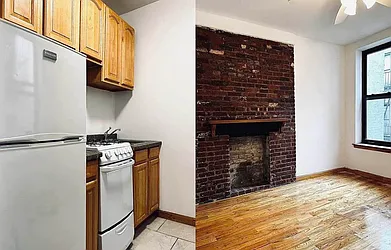
Manhattan Rentals Under $3,500 on StreetEasy Article continues below




How Much Can You Spend on Rent? The 40x Rent Rule
How much of your salary should go to rent? Many NYC landlords and property managers subscribe to this rule, and renters should too. Typically, your gross annual income should equal 40 times your monthly rent — that’s your rent-to-income ratio. The following example crunches the numbers: for an apartment that costs $2,500 per month, the renter’s gross income should be $100,000 per year. If you’ll be signing a lease with a roommate, the landlord typically expects each person on the lease to make 40x their share of the rent. And of course, you’ll need to prove your income using pay stubs or other documentation.

Still a bit fuzzy about the numbers? You can also take your annual income (before taxes) and divide it by 40. That’s your simple answer to how much rent you can afford.
Here’s another way to look at the math: you should spend no more than 30% of your income on rent. To calculate, multiply your gross annual income by 0.3 and then divide it by 12. You will end up with the same number as the 40x rule.
Are There Exceptions to the 40x Rent Rule?
If you have an excellent credit history, some landlords are willing to bend the 40x rent rule. On the flip side, some buildings require an even higher income, sometimes 50 times the monthly rent.
“If an apartment is independently owned, or owned by a smaller entity, there may be some flexibility,” says Ivana Tagliamonte of Compass. “For example, I’ve seen many instances where perhaps the tenant does not meet the income requirement of 40 times the rent but has excellent credit, no liabilities, and a solid amount of money in the bank. Often, with smaller landlords, applications are viewed case-by-case.”
That said, just because you can bend the 40x rent rule doesn’t always mean you should. Think carefully about your financial ability to spend more than this rule-of-thumb amount, which is commonly recommended for a reason.
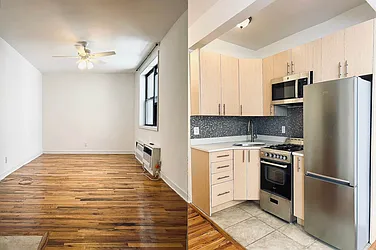
Brooklyn Rentals Under $3,000 on StreetEasy Article continues below








Consider a Guarantor
What else can you do if you don’t meet the 40 times rule? It might be time to find a guarantor. What is a guarantor, you ask? A guarantor is someone who is legally obligated to pay your rent if you cannot.
First of all, not all landlords accept guarantors, so find out if yours does before reading any further (you can also filter StreetEasy rental listings for “Guarantors accepted” under Amenities). Renters commonly use a relative or someone close to them as their guarantor; it’s not a requirement, but generally they need to reside in New York State. The guarantor will need to meet the 40x rent rule, but keep in mind that some landlords require a higher rent-to-income ratio for guarantors than for renters. If you need a guarantor but can’t think of anyone to use, look into third-party guarantor services, but check with the landlord first to see if they accept such services.
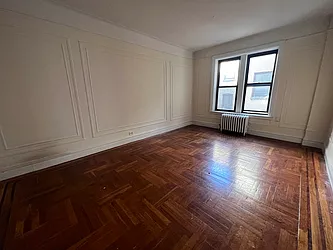
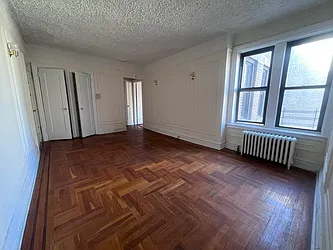
Queens Rentals Under $2,500 on StreetEasy Article continues below


Other Costs to Consider
Monthly rent isn’t the only cost to consider when determining how much rent you can afford. For most NYC rentals, you’ll need to pay a few upfront costs before moving in. The Housing Stability and Tenant Protection Act of 2019 (HSTPA), as well as the Fairness in Apartment Rental Expenses (FARE) Act, limit these costs* — but they can still add up. They typically include:
- Application fee (no more than $20)
- Security deposit (equal to no more than one month’s rent)
- First month’s rent paid in advance
*May not apply for rentals in co-op or condo buildings.
Note that under the FARE Act, you cannot be charged a broker fee unless you hired the broker. Visit our resource hub to learn more about your rights as an NYC renter.

Additionally, there may be monthly or annual costs not included in your monthly rent that you should take into consideration:
- Utilities (electricity, gas, water) — Are any of them included in your rent? If not, find out how much they typically cost per month.
- Renter’s insurance — Does your landlord require it? (It’s a good thing to have regardless!)
- Internet — Find out who the local internet providers are and contact them for a quote.
- Pet fees — If you’ll be living with a pet, some rentals charge “pet rent” as a monthly or annual cost on top of your regular rent.
- Amenity fees — There may be mandatory or optional fees for the building’s amenities; for instance: a required annual fee covering all amenities, or optional fees for things like parking, private storage, etc.
- Laundry — Does the unit or building have laundry facilities? If not, factor in this cost too.
All of these potential costs should go into your calculations of how much rent you can afford every month.
“I would also consider transportation costs, especially if you find a great apartment that’s far from the subway,” Tagliamonte adds. “An affordable studio may not actually be affordable if you’re spending a fortune on Ubers.”
Rent Concessions
Something else to watch out for? Rentals that offer discounts on the first lease term, such as one or two free months of rent. These discounts, also known as rent concessions, are used to calculate what is called net-effective rent: the total rent for the first lease term (typically between 12 and 24 months) with the discounted months included, divided by the number of months in the lease term. On StreetEasy listings, you’ll see this amount as the “net effective base rent” indicated below the regular base rent.
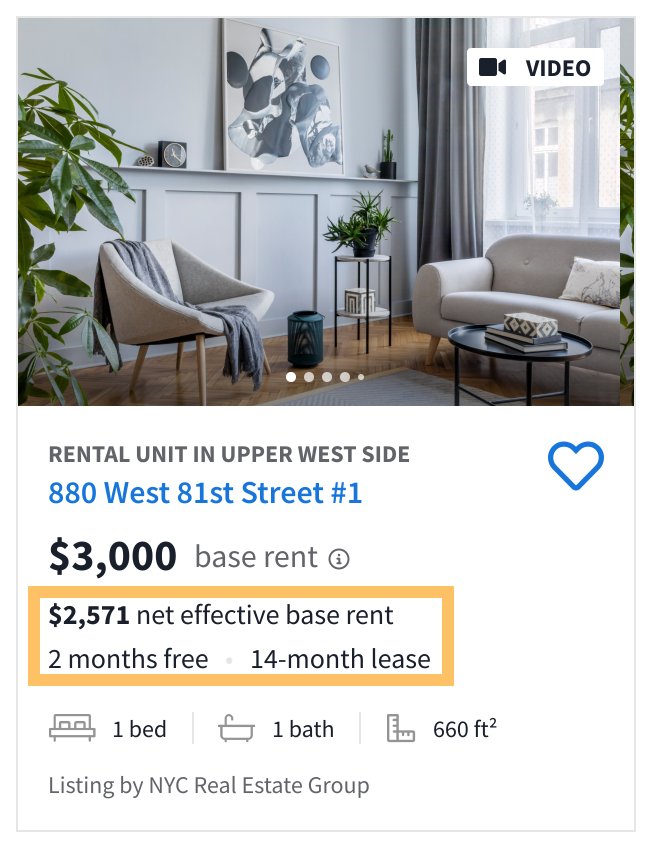
For example, if a $3,000 per month rental is offering two months free on a 14-month lease, your net-effective rent is approximately $2,571. To calculate, multiply $3,000 by 14, subtract the two months of free rent ($6,000), then divide the result by 14.
While these apartments initially seem like they’re within your budget, the second lease term can provide an unfortunate reality check for many renters. Before considering one of these rentals, if you plan on staying in the apartment for more than one lease term, figure out if you can afford the normal base rent.
Taking all of these factors into consideration should help you determine the right amount of rent for your budget, this year and beyond. When you’re ready to start your search, you can find thousands of NYC rental listings on StreetEasy. Use the price filters to narrow down your results to what you can comfortably afford.