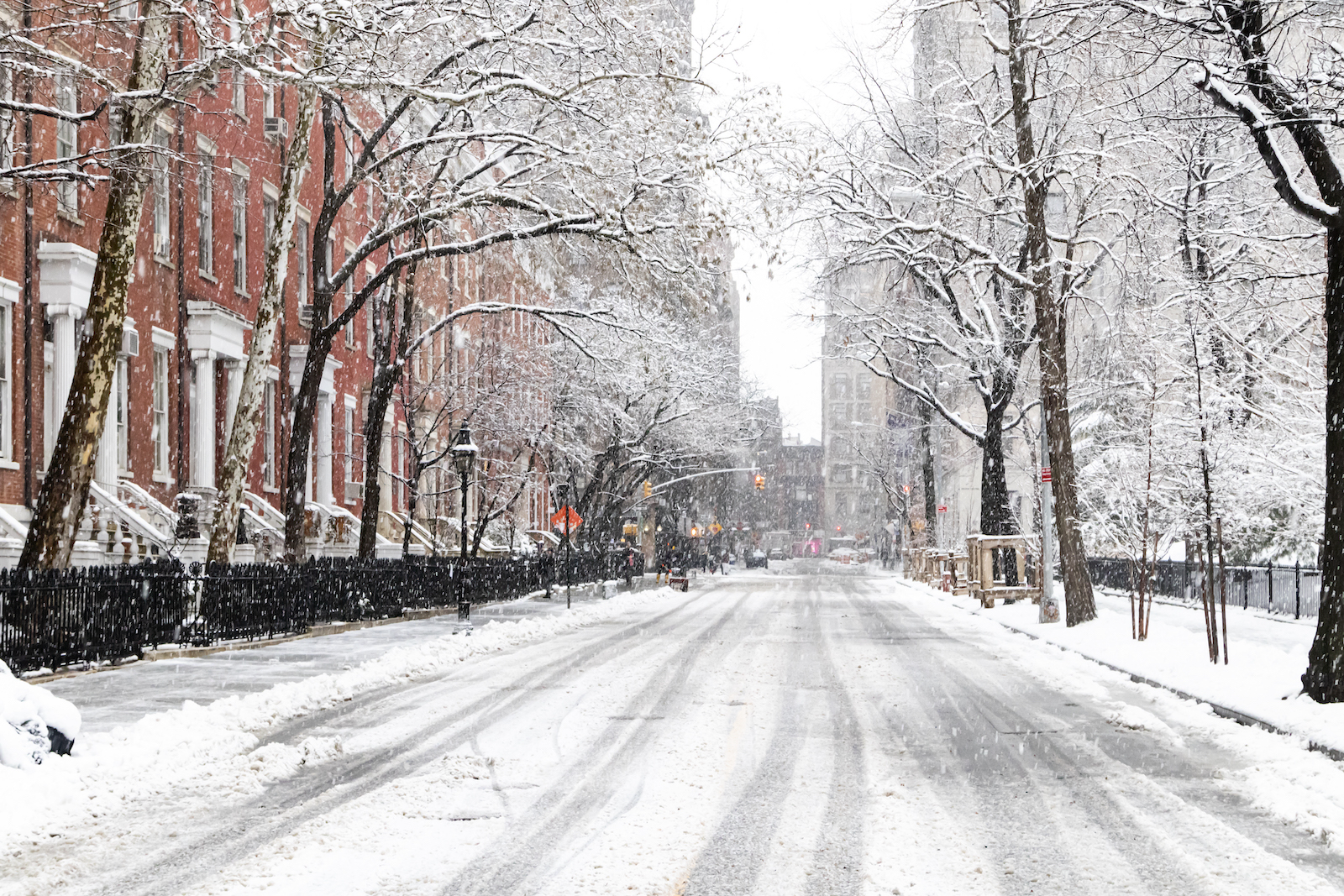
It’s that time of year again: There’s snow in the forecast for NYC. Every winter, that raises a question that strikes fear into many New Yorkers’ hearts: “Do I have to shovel?” When the white stuff piles up on city sidewalks, especially in residential areas, who is responsible for snow removal in NYC? Is it tenants? Landlords? The city? We reveal who is responsible for what.
Brooklyn Rentals Under $2500 on StreetEasyArticle continues below
Flatbush
158 Lott Street
$2,400base rent
Studio |
1
Crown Heights
466 Albany Avenue
$2,500base rent
1 |
1
Bushwick
311 Evergreen Avenue
$2,080base rent
Studio |
1
Flatbush
115 Erasmus Street
$2,468base rent
1 |
1
Bushwick
1066 Halsey Street
$2,300base rent
Studio |
1
Midwood
1122 Chestnut Avenue
$2,465base rent
1 |
1
Farragut
880 East 45th Street
$1,800base rent
1 |
1
Stuyvesant Heights
686 Hancock Street
$2,500base rent
1 |
1
Weeksville
1539 Park Place
$2,124base rent
2 |
1
Gravesend
2337 84th Street
$1,799base rent
1 |
1
Prospect Park South
650 Ocean Avenue
$1,750base rent
Studio |
1
Midwood
1890 Ocean Avenue
$2,350base rent
2 |
1
Rules for Snow Removal in NYC
Landlord-tenant law isn’t always perfectly clear about who is responsible for specific tasks. And that’s certainly true in the case of ice and snow removal in NYC. According to one local landlord-tenant lawyer, the final word on tasks like shoveling snow is the landlord-tenant lease agreement.
“In certain settings,” says attorney Steven Smollens, “a tenant may become the responsible party for maintaining the sidewalk. The lease should state this responsibility.”
Often, large buildings with multiple tenants will use a property management company to take care of work like fixing appliances and leaks. They are also often tasked with clearing snow from the property. Be sure to check your lease to see if this applies to your building.
NYC’s sanitation rules and regulations outline who is responsible for maintaining the sidewalks in front of buildings. They’re published by the New York City Department of Sanitation. The regulation states, “Every owner, lessee, tenant, occupant, or other person having charge of any lot or building must clean snow and ice from the sidewalks adjacent to their properties.”
Whoever is named responsible in the lease agreement should clear sidewalks of snow and ice without delay if at all possible. If ice is too hard to remove, you can sprinkle sand or rock salt on top to make it safer to walk on.
Manhattan Rentals Under $2500 on StreetEasyArticle continues below
Two Bridges
52 Henry Street
$2,500base rent
Studio |
1
Yorkville
232 East 81st Street
$2,500base rent
Studio |
1
East Harlem
2175 Third Avenue
$2,000base rent
Studio |
1
East Harlem
1797 Lexington Avenue
$2,000base rent
Studio |
1
South Harlem
2166 Frederic Douglas Boulevard
$2,300base rent
Studio |
1
East Harlem
1955 First Avenue
$2,486base rent
Studio |
1
Central Harlem
1856 Park Avenue
$2,333base rent
Studio |
1
Central Harlem
1856 Park Avenue
$2,250base rent
Studio |
1
Central Harlem
1856 Park Avenue
$2,413base rent
Studio |
1
Central Harlem
10 West 132nd Street
$2,350base rent
Studio |
1
Carnegie Hill
1598 Third Avenue
$2,500base rent
Studio |
1
East Harlem
217 East 116th Street
$2,295base rent
Studio |
1
What’s the Penalty for Not Shoveling?
The rules are a bit complicated. How quickly snow must be cleared depends on what time of day the flakes stop falling. If the snow stops falling in the daytime, after 7 a.m. and before 5 p.m., it must be cleared within four hours. If it stops in the evening, between 5 p.m. and 8:59 p.m., it must be cleared within 14 hours. And if it stops overnight, between 9 p.m. and 6:59 a.m., it must be cleared by 11 a.m.
Failure to comply with required ice and snow removal in NYC can result in a fine for the owner of the building. This is true even if shoveling is spelled out in the lease as the tenant’s responsibility. If this is the case, Smollens says, the landlord can sue the tenant for the amount of the fine. City fine amounts are spelled out in the regulation as follows:
$100–$150 for a first offense
$150–$350 for a second offense
$250–$350 for third and subsequent offenses
Queens Rentals Under $2500 on StreetEasyArticle continues below
Briarwood
141-04 Pershing Crescent
$1,985base rent
Studio |
1
Forest Hills
105-49 63rd Avenue
$1,995base rent
Studio |
1
Maspeth
59-15 Maspeth Avenue
$1,850base rent
1 |
1
Rego Park
97-12 65 Road
$2,363base rent
Studio |
1
Long Island City
25-05 40th Avenue
$2,500base rent
2 |
1
Corona
98-23 Horace Harding Expressway
$2,000base rent
Studio |
1
Rego Park
64-54 Booth Street
$2,150base rent
1 |
1
Sunnyside
45-34 47th Street
$2,495base rent
1 |
1
Jamaica Estates
177-16 87 Drive
$2,383base rent
1 |
1
Sunnyside
41-18 43rd Street
$2,450base rent
1 |
1
Briarwood
85-02 139th Street
$2,495base rent
1 |
1
Woodside
40-14 62nd Street
$1,895base rent
Studio |
1
What if Someone Slips and Falls?
In terms of personal injury, accidents due to snowy, icy sidewalks are a serious liability. If someone is seriously injured after the 4-hour time limit has expired, the responsible party could be liable for hefty damages. In addition to being fined, they might also be sued by the injured party.
Smollens recommends that a tenant responsible for an entire building — i.e., they rent an entire townhouse — discuss liability issues with an insurance agent. If the tenant is not identified as the responsible party per the lease agreement, then the owner is liable for injuries, he says.
A building with multiple tenants might employ a superintendent or property manager who is responsible for clearing the sidewalks. Even if the building is serviced by a property manager, the city will likely fine the owner of the building. But, the owner could then pursue legal remedy from the management company.
Thus, any person who is injured may make a personal injury claim against both the owner and the management company for damages, Smollens says.