
March 2026 NYC housing market report
Key takeaways:
NYC sales market
- Pent-up demand from colder-than-usual weather earlier this year led to a 27.3% monthly increase in homes entering contract in March.
- Each degree the average daily minimum temperature falls below historical norms is associated with a 0.8% decrease in NYC homes entering contract.
- The NYC sales market remains balanced, but competition is warming up as the share of homes selling over last asking price increased 2.1 percentage points from last year.
NYC rental market
- As competition remained high, the median asking rent in Manhattan jumped 7.5% year-over-year to $4,750 in March, the highest on StreetEasy record.
- Rental inventory in Manhattan fell 1.8% year-over-year in March, extending the two-year streak of inventory declines as of February.
- The Brooklyn rental market may be turning a corner, with the first annual inventory growth in eight months and the highest share of rentals offering concessions in March since 2020.
NYC sales market
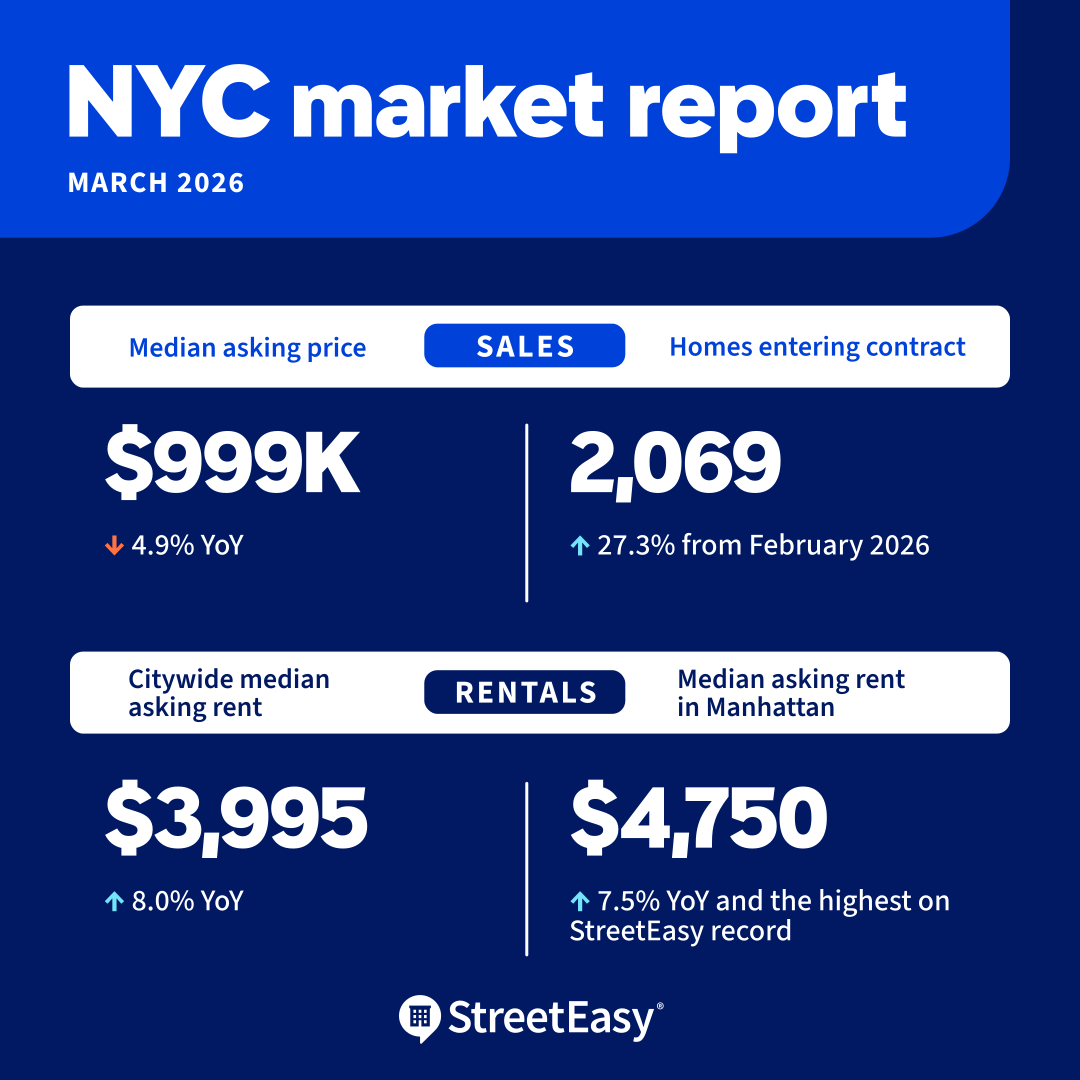
New York City buyers and sellers sprang back into action as the weather warmed in March with 2,069 homes entering contract, a 27.3% jump from February and the strongest monthly gain from February to March since 2023. The surge follows a cold-weather-driven slowdown in February, when temperatures 3.4°F below normal suppressed contract signings by an estimated 1.7%.
Analysis of StreetEasy® and National Oceanic and Atmospheric Administration (NOAA) data indicates each degree the average daily minimum temperature falls below historical norms is associated with a 0.8% decrease in NYC homes entering contract, after accounting for seasonality and mortgage rates. In February, the city’s average daily minimum temperature was 25.5°F, 3.4 degrees below the 30-year average for the month between 1981 and 2010. This cold spell likely lowered contract signings by 2.6%.
February was cold in NYC, but it could have been worse: February 2026 was only the 10th coldest month in NYC since 2010. The coldest was February 2015, when severe winter storms blanketed NYC and the eastern half of the United States. The average daily minimum temperature fell to 16.0°F, 12.9 degrees below normal, reducing new sales contracts by 9.5% according to our analysis.
Coldest months since 2010 and their impact on new sales contracts in NYC
| Month | Avg. daily minimum temperature | Deviation from 1981-2010 average | Weather impact on new sales contracts |
|---|---|---|---|
| Feb 2015 | 16.0°F | –12.9°F | –9.5% |
| Mar 2014 | 29.9°F | –5.3°F | –4.0% |
| Jan 2014 | 21.9°F | –5.0°F | –3.8% |
| Nov 2019 | 37.2°F | –4.4°F | –3.4% |
| Dec 2025 | 27.7°F | –4.3°F | –3.3% |
| Mar 2015 | 31.0°F | –4.2°F | –3.2% |
| Dec 2010 | 27.9°F | –4.1°F | –3.2% |
| Nov 2012 | 38.0°F | –3.6°F | –2.7% |
| Mar 2017 | 31.7°F | –3.5°F | –2.7% |
| Feb 2026 | 25.5°F | –3.4°F | –2.6% |
The NYC sales market remained solid in March as the weather warmed, with 1.2% more homes entering contract than the previous March. As sellers reentered the market, new listings increased 1.3% year-over-year to 4,404, outpacing new contracts. As a result, inventory rose 5.1% year-over-year to 15,615 units.
Manhattan saw 1,032 new contracts in March, up 1.2% from a year ago as activity in the borough’s co-op market surged. Co-op contracts rose 3.8% to 599, while condo contracts dipped 2.6% to 413 from last March. However, more expensive homes in Manhattan significantly outperformed the remainder of the borough, as the top third of homes by asking price saw an 11.8% jump in new contracts.
In Brooklyn, new contracts rose 0.5% year-over-year to 558 in March. While Brooklyn’s condo and co-op markets saw sharp increases in new contracts, rising 10.1% and 12.8%, respectively. The rest of the market, including townhouses and other single-family houses, remained 16.1% below a year ago. Queens saw the strongest increase with 366 homes entering contract, up 2.5% from a year ago. Co-op contracts in Queens surged the most at 10.1% year-over-year.
NYC Homes Under $1M on StreetEasy Article continues below





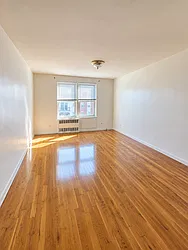
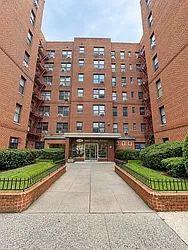



Modestly improved affordability conditions are a likely cause for the rise in buyer activity. Despite recent increases in mortgage rates, the 30-year mortgage rate averaged 6.2% in March, about half a percentage point below a year ago. As sellers joining the market price their homes more strategically, the citywide median asking price slipped 4.9% year-over-year to $999,000. As such, a buyer looking to purchase a median-priced home in NYC with a 20% down payment in March would pay 9.4% less in monthly mortgage payments compared to a year ago. These affordability improvements are likely to continue supporting strong sales activity this spring.
As rising inventory absorbs demand, the NYC market remains balanced between buyers and sellers. Homes in NYC took a median of 61 days to enter contract in March, just one more day compared to a year ago. Although buyers had more fresh listings to consider, they faced slightly fiercer competition with 18.6% of homes selling above their latest asking price, compared to 16.5% last March.
NYC rental market
The citywide median asking rent rose 8.0% year-over-year to $3,995 in March, as inventory fell 2.4% to 29,978 units. Though affordability improved in the sales market this year, the financial barrier to homeownership remains too high for many New Yorkers. More renters are staying put due to fewer options and higher rents, keeping the city’s vacancy rate low and further increasing competition among renters looking for a new place.
Manhattan remained the most competitive borough for renters as its median asking rent jumped 7.5% year-over-year to $4,750, the highest on StreetEasy record. Amid low vacancy rates, total rental inventory fell 1.8% year-over-year to 13,608 units, extending the borough’s two-year streak of consecutive rental inventory declines. The current streak is 10 months longer than the previous longest streak of declines — 15 months between June 2021 and August 2022 — when the resurgence of demand following return-to-office policies depleted Manhattan’s rental inventory.

Unlike Manhattan, the Brooklyn rental market may be turning a corner. There were 10,939 rentals on the market in Brooklyn, up 1.3% from a year ago: the first annual increase in the borough’s rental inventory in eight months. While Brooklyn’s median asking rent still rose 7.1% to $3,750, rising inventory suggests competition could ease in the borough in the coming months.
The construction boom in Brooklyn over the past few years has increased the supply of rentals. In 2025, 12.6% of all new rentals in the borough came from new construction properties, defined as units in buildings completed in the current or prior year, considering a lag between completion and phased leasing. As a result, concessions (defined as at least one month of free rent) became more prevalent. This March, 20.5% of all rentals in Brooklyn offered concessions, higher than 14.1% in Manhattan and 18.3% in Queens. While temporary, concessions can lower the net-effective rent for these units, putting more homes within renters’ reach.
NYC Rentals Under $3,500 on StreetEasy Article continues below


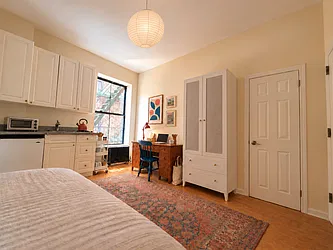



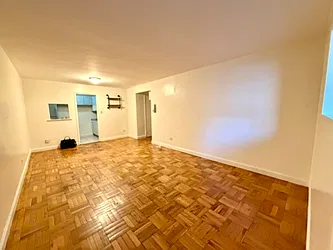


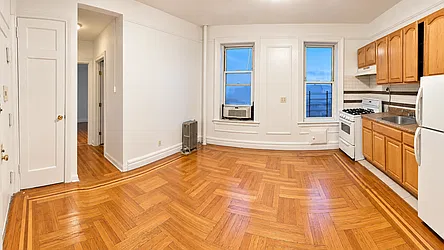


With the surge in new developments and spring leasing season now underway, Brooklyn saw 7,195 new rental listings in March, a solid 5.6% increase from last March. With limited new developments joining the market in Manhattan, any jump in new listings is a positive development for renters. The borough saw 7,844 rental units listed in March, up 5.5% from a year ago. While total rental inventory remains lower than last year, this substantial growth in new listings in the city’s two largest rental markets can help absorb pent-up demand. However, continued increases in new rental listings are needed to substantially alleviate renter competition in NYC.
NYC market data: March 2026
Sales
 NYC |
 Manhattan |
 Brooklyn |
 Queens | |
|---|---|---|---|---|
| Median asking price | $999,000 (-4.9% YoY) | $1,395,000 (-2.1%) | $1,027,000 (-5.4%) | $679,000 (+4.5%) |
| Number of homes for sale | 15,615 (+5.1%) | 7,987 (-0.5%) | 3,872 (+8.3%) | 2,917 (+18.2%) |
| Homes entering contract | 2,069 (+1.2%) | 1,032 (+1.2%) | 558 (+0.5%) | 366 (+2.5%) |
| Median days on market | 61 (+1) | 64 (-10) | 55 (+7) | 65 (+8) |
Rentals
|
NYC |
Manhattan |
Brooklyn |
Queens | |
|---|---|---|---|---|
| Median asking rent | $3,995 (+8.0% YoY) | $4,750 (+7.5%) | $3,750 (+7.1%) | $3,100 (+3.3%) |
| Number of homes for rent | 29,978 (-2.4%) | 13,608 (-1.8%) | 10,939 (+1.3%) | 4,407 (-9.3%) |
| Share of rentals with price cuts | 12.2% (-0.8pp) | 14.1% (-0.8pp) | 11.1% (-0.6pp) | 10.5% (-1.5pp) |
| Share of rentals offering concessions* | 17.8% (+3.5pp) | 14.1% (+1.9pp) | 20.5% (+6.8pp) | 18.3% (-0.1pp) |
Methodology
To measure the impact of colder-than-usual temperatures, a Bayesian structural model was estimated using StreetEasy’s NYC real estate data since 2010, in addition to the National Oceanic and Atmospheric Administration (NOAA) data measured from NYC’s Central Park.
This statistical model can control for multiple sources of variation in a target time series, including local trends, seasonality, and influences of covariates. The target time series in this study is the log-transformed monthly total of for-sale listings entering contract between January 2010 and February 2026. Besides the controls for seasonality and local trends, the exogenous covariates are the monthly average of the 30-year fixed term mortgage rates and the deviation of the monthly average minimum temperature in NYC from the 30-year average between 1981 and 2010 for the respective month. All independent variables are standardized so that each unit is equivalent to one unit of their respective standard deviation.
The coefficients and confidence intervals (5th and 95th percentiles of posterior samples) on these covariates are +0.0110 [+0.0026, +0.0236] for deviation of average minimum temperature from historical norms and -0.0451 [-0.1062, -0.0049] for the average 30-year mortgage rates. Since the covariates have been standardized, the coefficients represent the impact of one standard deviation of the respective covariate on the log-transformed target variable. After unwinding all the mathematical transformations, the coefficients indicate that every 1°F the average minimum temperature falls below the historical norm is associated with a 0.8% decline in new sales contracts, and every 1 percentage point increase in the 30-year mortgage rates is associated with a 3.6% decline in new sales contracts, both beyond its typical seasonality and recent market trends.
Thinking about buying in NYC? Chat with our complimentary, licensed Concierge to learn about the buying process.
StreetEasy is an assumed name of Zillow, Inc. which has a real estate brokerage license in all 50 states and D.C. See real estate licenses. StreetEasy Concierge team members are real estate licensees, however they are not your agents or providing real estate brokerage services on your behalf. StreetEasy does not intend to interfere with any agency agreement you may have with a real estate professional or solicit your business if you are already under contract to purchase or sell property.