Keep telling me

Started by 30yrs_RE_20_in_REO
over 6 years ago
Posts: 9903
Member since: Mar 2009
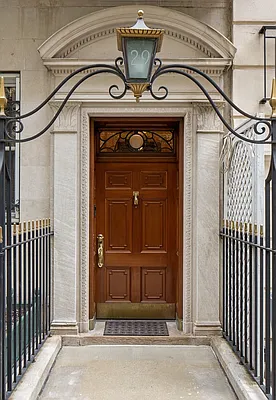
Discussion about 29 Beekman Place
Add Your Comment
Recommended for You
-

From our blog
NYC Open Houses for November 19 and 20 - More from our blog
Most popular
-
38 Comments
-
3 Comments
-
33 Comments
-
9 Comments
Recommended for You
-
From our blog
NYC Open Houses for November 19 and 20 - More from our blog
https://streeteasy.com/building/102-prince-st-new_york/2
Beekman looks more like an estate sale than a bankruptcy sale.
They started at $28M in 2017. I personally really like the Beekman and Sutton neighborhoods. An anecdotal observation, this neighborhood doesn't rise as much as others in bull markets and falls more in Bear markets. They're relatively small niche neighborhoods with a small buyer pool.
I'm the first to admit I'm certainly no expert in this neighborhood, however the buyers that we have assisted with purchases there wouldn't live anywhere else. One poster here on streeteasy that we assisted, spent about two years looking for just the right place on Beekman.
Wonder if some foreign government might pick this up now?
Keith
TBG
All those industrial refrigerators/freezers! Is there where Nancy keeps her stash of east coast ice cream treats?
They started at $49.9 million.
https://ny.curbed.com/2017/4/28/15477876/midtown-townhouse-for-sale-nyc
At that price, I could be tempted to put in a lowball bid. 30 & Keith, how low could I go?
You know where to reach me Nada.
Keith
But for those bathrooms, this is a pretty great space. But that is too much space for me.
Nada - Come be our neighor!!!! I could see you guys in that space easily, and the history may have extra meaning for you.
Truth be told, we are more into glass towers. The amount of space is daunting too: we can barely make use of a fraction of that space. And now that we’ve been doing our own cleaning since the lockdown, I shutter to think about how many hours that place would take us to do.
I was assuming you meant to say some sort of 'investment'. Definitely doesn't seem to be your style.
You heard it here on this forum before it was in TRD: https://therealdeal.com/2020/05/01/midtown-east-mansion-with-ties-to-shah-of-iran-gets-another-steep-price-chop/
102 Prince closed at $7.6 million!
https://therealdeal.com/2020/05/20/jho-lows-former-soho-condo-sells-at-a-discount/
https://therealdeal.com/2020/06/03/inside-the-battle-over-an-iranian-princess-midtown-mansion/
In contract as of today.
https://therealdeal.com/2020/06/18/walker-tower-condo-board-opposes-heavily-discounted-sale-of-1mbd-unit/
The 6,000-square-foot penthouse at the Walker Tower sold for $50.9 million in 2014, a downtown record. It went into contract last week for $18.25 million, according to the Wall Street Journal.
Nada: you may have missed an opportunity to make a pretty good deal here! Although it looks like the condo board is going to try to exercise their rofr.
I think there's a reasonably good chance of a lawsuit here when the condo doesn't close on a timely basis.
This is real estate spectator sport gold. I cannot wait to see how this ends.
I wonder who the buyer is. It would be too goid if ti was a “Friend of Bill” with the “Bill” du jour having the surname Barr as opposed to Clinton. Amazing how real estate transactions where USG is involved have been known to result in a really good deal for a connected individual and a really bad deal for the U S Taxpayer. No idea what is going on with this transaction, but I look forward to finding out either when sale closes via ACRIS or via potential litigation suggested by 30yrs. If it comes back on the market quietly without condo board’s needing to come up with the cash to close, that will be the most interesting.
Keith, nice find: I could see myself stretching out my legs there. Can you sniff around to see how the board is going to try to finance it? I’d pay more than the Friends of Bill price; not much more, but perhaps enough if they don’t have the cash to close & wait while it lists.
You have to wonder why if they were willing to accept this price they kept the ask at $35 million and who knew how negotiable they were.
MCR,
This is the type of thing which happens with pocket listings, or in this case pocket information. How many brokers out there had buyers who potentially would have gone somewhere in the mid-20's on this but didn't even bother because of the previous sale and current asking prices?
Re:USG sales back in the 1990s when Small's Paradise got foreclosed on Charlie Rangel (who had a curious deal on 4 Rent Stabilised apartments https://ny.curbed.com/2008/7/11/10565580/rent-stabilization-war-charlie-rangel-is-so-busted) had Resolution Trust sell it to Abyssinian Baptist Church for about half what others were willing to pay but no one was allowed to bid on it. Conversely when they were forced to actually bid on properties they lost out on Renaissance Ballroom.
Nada, you can thank 30 for the find...
To 30's point on inside information, Not too long ago I had a recent experience with an oceanfront condo in Jupiter, FL.(much different valuation of course!) I met a broker who had inside information regarding the condo sellers, I presented an offer I never would have thought of presenting without such information, bingo it got accepted.
That said I'm very liberal minded with clients that want to present 'low-ball' offers. Occasionally some of the guys on my team will cringe have they seen my email go off to the listing agent ; ) however nothing ventured, nothing gained.
Keith
The 2017 listing and the 2019 price cut seem to have come from al Qubaisi according to this article:
https://www.google.com/amp/s/therealdeal.com/2019/01/24/owner-of-record-breaking-walker-tower-penthouse-looks-poised-to-take-a-frightening-loss/amp/
With criminal conviction later in 2019:
https://www.google.com/amp/s/www.wsj.com/amp/articles/alleged-1mdb-co-conspirators-sentenced-to-prison-11560677550
Followed by civil forfeiture settlement in May 2020:
https://www.justice.gov/opa/pr/united-states-reaches-settlement-recover-more-49-million-involving-malaysian-sovereign-wealth
It kinda seems the $18.25M sale was already baked into the civil forfeiture settlement. MCR, can’t you put your amazing powers of USG lawyering to good use here and dig up the details?
It is still slightly over $3,000 a square foot....
And sorry on misdirecting the “nice find” credit to Keith rather than where it belongs, with 30yrs.
>> It is still slightly over $3,000 a square foot....
I can live with that. And if you count the outdoor space at 50%, you get to slightly below $3K ppsf.
I consulted for a group in 2006 that specialized in picking up assets that USG was ostensibly using best efforts to sell at FMV. Quite a bit of money to be made in this area, particularly if you know the right people. With respect to whatever is going on with this sale, as noted elsewhere, I gave up all tenuous claims to being an insider a fee years ago, but I will definitely be following this and be curious to see what one might be able to piece together as we get more information.
@30yrs - Exactly. I suspect you have more than a few war stories involving such transactions.
I could think of another only slightly far-fetched scenario:
given past prices in this building someone who's in insider (both Government and this building) wanted to buy the unit at a deeply discounted price but was worried about the optics. So they set up a straw buyer to purchase it at the current price and everybody involved knew that the condo board would exercise their right of first refusal and then flip it at a higher price to this person. Everybody wins - except of course the American taxpayer.
BTW the concept that the Board is "preserving value" by exercising their right of first refusal is flawed anyway. What happens that is different when the Board closes on the unit at $18.25 million which is different than if someone else does the same thing? So unless they flip the contract the premise is somewhat mooted ...... Unless they already know who they are selling it to ....
Back in the 1990s there was a building in Chelsea with what at the time was considered very high maintenance. This made the foreclosed studios very hard to sell and banks couldn't move units so they had to be heavily discounted. The Board set "floor prices" well above what the market would bare. And then Coop Board members would buy the units at less than half those floor prices and rent them out. NB The Coop had a strict "No Investors" policy.
>> except of course the American taxpayer
I think it’s the Malaysian taxpayer in this instance.
On your far-fetched scenario: why would the board publicize the issue? They stand to make the flip amount, so they should stay quiet about it right?
To note their "umbrage," because no one knows when to STFU anymore, because people do stupid shit to call attention to themselves when they are guilty and think they covering, etc.
More Jho Low stuff hitting the block
https://therealdeal.com/la/2020/07/06/viceroy-lermitage-is-latest-jho-low-property-feds-look-to-unload/
Judge rules against Condo Board.
https://therealdeal.com/2020/08/03/walker-tower-condo-board-fights-low-ball-sale-of-1mdb-linked-penthouse/
https://therealdeal.com/2020/08/04/billionaires-townhouse-sale-is-a-window-into-pandemic-era-luxury-deals/
I came up with nothing on Vinder. Systematic/professional-grade low profile.
Another penthouse reduced 50%.
https://streeteasy.com/building/508-west-24-street-new_york/pha
$15k a month in carrying costs rivals the Carlyle.
https://therealdeal.com/2020/08/12/iranian-princess-midtown-townhouse-sells-at-deep-discount/
Bought at $13.1M w/ a 2014 contract & 2017 closing. Went into contract with a $9.5M last ask and closed a few days ago at $9.3M:
https://streeteasy.com/building/30-park-place-new_york/sale/1417380
So down about 30%.
Yeesh. And about 12k monthlies.
@30yrs - I know you are committed to NYC, and I agree that the city is in for some bumpy years ahead. Will you tell us when you think prices have hit the bottom so those of us who might want to trade up should bid on whatever properties we've been watching?
$12K in monthlies is very typical for apts at that price point.
30yrs, as long as you are putting out predictions, when do you think bottom rents will occur for the top end of the market?
inonada,
I think that's somewhat dependent on vaccines, 2nd waves, WFH, etc but currently if there is oversupply vs Demand in any market segment it seems to me it is currently high end rentals. And if some of the new construction Condo projects (5,000++ units worth?) shift to renting unsold units that could get worse. Perhaps it's confirmation biad
bias, but I seem to be noticing a bunch of "for sale or rent" listings recently in the resale market.
I am definitely seeing a lot of eye-popping listings these days in terms of the rents. I imagine the reality of having missed the summer window for finding a tenant is starting to set in, and we’ll see another round of cuts shortly.
At a personal level, my lease is up in a few months, and it’s probably time for me to make a change looking forward to the next several years. I’m leaning towards changing this year rather than renewing and waiting a year. In terms of corona, demand to actually dwell in NYC, and anxiety in general, this year is looking better than next IMO. What do you think?
Longer-term, I agree that the over-supply situation looks bleak. However, I think that’ll take many years to work out via a long, slow fizzle. A broad overlaying of many similar story lines 10-100 units at a time: building is a zombie, developer gets a lifeline loan to float them for a couple of more years, developer defaults on said loan and lender moves to foreclose, developer ties it up in courts for a year, lender takes over, lender sells to new developer, new developer finally finishes building, etc. And if you try to post anything about them, you’ll be greeted with a chorus of “Of course, the maintenance was too high! The location was horrible! The layouts were bad! The bathrooms are atrocious!”
Of course I agree. What will be interesting to see is if buildings have major reworkings and how they structure them. Could we see buildings with mostly large units (which has been driven by brokers telling developers that's where the demand is) reconfigured into mostly studios and 1 BRs (now that brokers seem to be saying that's the hot part of the market)?
Could we see these buildings with 40k to 100k SF of amenity space turn that into something else? Or make it "semi-private" amenities - assign common interest and sell it off this will lower CC/RET in the other units making them more sellable. Then some Sponsors can assign HUGE percentages to these units which can't be supported by what they are worth income/rent wise and as soon as they have sold off the last residential unit walk away from them and leave the condo holding the bag.
On another note as a renter you have to consider the stability of the owner who you are leasing from. As rents plummet they may not be able to cover all the expenses. I believe the law in NYS changed in Condo foreclosures so that a current residential lease isn't extinguished any longer, but you still won't be able to renew, plus you have the issue of maintenance of the unit, etc. I'm also not sure if there comes a time where the number of foreclosures becomes substantial that won't be challenged - especially if a quasi-governmental agency is holding a ton of foreclosed units.
As far as your personal situation while I agree there is a good chance the actual situation re: COVID-19 will be worse this fall than another 12 months down the road, I'm not as sure that the very slow to drop prices NYC Real Estate market will fully adjust in the next few months as opposed to a downward spiral as falling rents and sales prices feed into each other chasing after a greatly diminished supply of buyers/renters at (say) $12,500/month or more (which takes a $500,000 income to support and currently has 1,000 availability on StreetEasy). If we end up seeing a bunch of Sponsor units, a bunch of resales which couldn't sell, and a bunch of previously rented units where tenants left NYC all come on the market and further push down prices I don't think that all plays out in a few months time.
BTW I can never find this story when I try to search for it, but I'm sure I remember reading about a very luxurious development in Miami where one owner closed and moved in, but then the developer went bust and they were the only ones living in this highrise with unfinished hallways, no amenities, etc.
Just to keep scratching at this:
Let's say you want to stay where you are, but at what you think is the new market rent. So you offer your landlord $X less than you are currently paying. I think there are probably going to be a lot of cases where the landlord says "drop dead" and then ends up carrying the unit vacant and then ends up spending some money on painting,etc plus a broker's fee to rent it, all at the same price that the existing tenant offered.
Recently a reader of the Urban Digs forum wrote to me about a client of hers who was a tenant in an UWS rental building built circa 2000 who attempted on lease renewal back in April to renegotiate $3,500/month rent. Landlord refused and tenant moved practically next door. Instead landlord had to paint/prep unit, lost 1 month rent, paid 1 month broker fee, and re-rented unit asking over $600/month less.
By my calculations the landlord could have negotiated $1,000 off the rent and still been ahead for the year.
Thanks for all the thoughts, 30yrs.
On how the restructurings go, I don’t really see the ultra-lux segment ($4000+ ppsf) going rental in the near term (i.e., by the current developer) because the math just doesn’t work out.
Let’s say a 2500 sq ft apt hoping to fetch $10M has a $6M construction loan behind it, $2M of developer equity, and evaporated hopes of a $2M profit. Monthlies are $10K, and maybe you hope to rent at $24K. The $14K per month wouldn’t even service interest on the loan, to say nothing of expenses of running a rental and the difficulty in finding dozens of $24K tenants in any environment, much less this one. I don’t see the lender signing up for that, as compared to foreclosing.
On chopping it up into studios & 1BRs, they are also kinda screwed. There isn’t much of a market for 625 sq ft apts at $2.5M. Could you chop & rent? Still kinda screwed: even if you could manage to rent ultra-lux studios at $6K per month, the economics don’t change compared to not chopping it up.
Stability of owner is a valid concern, but in practice I tend not to come across it. More often than not, there is no mortgage at the top end. The best asking rents also tend to come from no-mortgage situations too. I figure the owner sees they can cover the monthlies plus a bit more, and they can live with that. Sure, the yield is effectively 0%, but that’s what the bank pays, and they can hope for appreciation. So they ask for 1.25x, I negotiate, we end up at 1x.
Those that have a mortgage are looking to cover the monthlies + the mortgage payment. So they ask for 1.65x to cover their nut, and I don’t bother with even seeing the apt.
I do agree that a lot of landlords will reply with “drop dead”, but mine won’t. More that it might otherwise be time for a change.
I've always been mystified by why many landlords would rather proceed as 30 describes above rather than simply accept the reality of the market? I always assumed there was something I was missing?
I've seen this with owners I've worked with on residential sales as well as small residential rentals. They turn sound down offers that would have gotten money into their pockets today, and in some cases these properties sit vacant for a year or more. I always just assumed maybe they knew more than I did? Tax write off!??
Keith
Two reasons I've seen:
1) If they give one discount, everyone in the building will demand the same or more
2) Leasing Officers in big buildings are paid for new tenants not renewals. More turnover equals more chance for commissions from new tenants coming in.
I agree that it's totally nonsensical. A friend wanted a month free to renew his 9/1 lease and sought my advice. I told him it seemed like a reasonable ask. They wouldn't do it, so he left. The building now has several of the same line available, has lowered the price to the equivalent of a month free, and is offering additional concessions.
Stuyvesant Town/Peter Cooper Village is offering new tenants lower rents plus 3 months free, but refusing to renegotiate a nickel on lease renewals. The result is hundreds of tenants fleeing.
https://www.ny1.com/nyc/all-boroughs/news/2020/07/06/stuy-town-vacancies-surge-as-residents-flee-new-york
I've heard from more than 1 tenant that there are 5 out of 8 units on their floors vacant. The are warehousing long term RS vacancies rather than renovating them and renting (even though after public backlash last year they pledged not to do so). I am currently shorting Blackstone.
A friend who owns a mover says he can name his own price right now. Tenants aren't stupid.
At this point practically every single news source is running some version of the "record number of Manhattan vacancies" story. I have a hard time coming up with the scenario where this doesn't lead to lower prices in both the rental and sales markets.
Indeed.
I think residential buildings make a business of over-charging on renewals, meaning they ask for above-market increases under the assumption that most people are too busy/lazy/etc. to move. (Yet another reason I avoid residential buildings.)
In April, I can imagine landlords continuing such behavior thinking:
1) This corona thing will be short-lived and we’ll all be back to normal soon. (Silly as such thinking was, perhaps fueled by hope and/or Fox News, which I imagine is watched more by landlords than the typical NYer.)
2) Aversion to moving during the time of corona is even higher, particularly during peak-corona. Obviously, this has not proven accurate.
Engaging in such tactics in Sept 2020 seems more about loss aversion. I.e., it puts them in a place where they have to admit financial defeat (i.e., this thing is truly a super-shitty investment) rather than continuing to stick their heads in the sand. There could be real reasons behind this (e.g., lender reasons) or just mental (e.g., their whole self-/net-worth is tied up in this thing).
I always think of tenant landlord playing a game of chicken. Tenant has moving cost (actual, emotional and possibly health in Covid ) and landlord may have vacancy. If I were to be a landlord, I will list it 2 months before lease expiry and see what I can get and then negotiate with the existing renter. From a renter’s point of view, I would low ball listings which are more than 2 months old.
I’m not sure that’d be helpful, 300. In all my years of renting, landlord first asked if I’d like to renew before going to market. If landlord went to market first, I’d get the impression that he/she didn’t want me there as listing showed up online followed by random requests to have people view. Even if I were inclined to be lazy & renew, that’d light a fire under my rear end, get me looking ASAP, and make plans to move. I.e., it’d shift me from inclined to renew to inclined to move. If at the end of all that, landlord were to come to me and say “You wanna renew?”, that’d smell like desperation.
Nada, You are correct. Landlord should offer a few percent discount to listing price to existing tenant and give them sufficient time to make up their mind while being transparent with them when they plan to list and at what price.
Of course all real estate transactions (and business transactions) should be transparent- LMFAO
I think we are seeing a lot of landlords retreat to their base instinct which is that tenants are "the enemy." A long term client of mine who is a landlord and Coop sponsor had an interesting term for it:"Stuck in the basement." It's the old school practice of pinching pennies and trying to induce as much turnover as possible so you can get Vacancy Increases on Rent Stabilised units. Today this is "pound foolish" but many landlords can't seem to help themselves, even large corporate ones. They are like cell phone companies offering big incentives for new customers but nothing to keep existing ones.
And as an example of them promoting costly turnover vs long term stable tenants look at Peter Cooper Village/Stuyvesant Town current incentive program: they are giving more incentive to rent their "flex" units (wall up converting living room to an extra bedroom). It's fairly obvious there is more turnover in these units designed to accommodate "shares" (and they even link to a room sharing service on the website). All while current tenants are being told to kick rocks rather than renew leases at current market prices. And this same thing is occuring all over Manhattan. I'm hearing multiple stories of tenants attempting to renegotiate rents on renewal, landlords refusing and then tenant moves to a better apartment for less money and the unit they left rents for TWICE the discount they asked for and was refused, not including vacancy loss, repairs, and broker's commission paid by landlord.
And as far as not wanting it getting out to current tenants that rents are down, that may have been the case back in April or May but with the current media coverage I think the only people who haven't heard the news are probably in Rent Controlled units who don't have to concern themselves with market rents.
Either way this seems to be a landlord problem, if you're a tenant you can simply vote with your feet, upgrade to a nicer apartment at a much better deal.
Or maybe the landlord's know the vast majority of tenants will simply renew(and complain) rather than move, sounds like this is what George did? He knew he should have been getting a better deal, but accepted the terms they offered rather than the hassle of a move. When I was a renter, I never had an issue moving, it was sort of part of the allure of being a renter. Finding new homes, checking out new neighborhoods and building types.
So maybe these owners are looking at their spreadsheet, calculating the cost of giving everyone a free month, v's offering renewers nothing, knowing the majority will stay. When you're a small owner, as I have been, of course I've always wanted to incentivize my good tenants to stay even if that meant subsidizing the rent a bit. Certainly this is something all my friends with brownstones do with their rental unit.
Keith
TBG
I think it’s a matter of priorities. I imagine for George, the longer-term play was not in Manhattan. It seems like there’s a disconnect between what he wants vs what he can get here, and he doesn’t seem to like it in NYC. So why go through the effort of finding a new place & movIng to save (say) $10K this year when you are not sure you’ll even be hear next year?
I my end of the market, here’s what I’m seeing.
In 2010, I got a place for 1.00x whose last ask was 1.15x. By the time I left a few years later, I was paying about 1.15x and it went to market asking 1.15x and went pretty quickly. It went out on the market last month, with an initial ask of 1.00x.
In terms of my current place, I got it several years ago at 1.00x, negotiates down from an ask of 1.25x. After a couple of lease-specified rent increases, I negotiated it back down to 1.00x where it stands today (pre-Covid).
I took a cursory look at the market, and I am seeing things like some place that sells for double my current place, with an asking rent of 1.45x. I imagine the deal would get done at 1.10-1.30x locked in for a few years.
If that is the alternative, would I stay in my current place for (say) 0.75x? Perhaps, but that’s a hard pill for the landlord to swallow, and even if you get there, you really screw the pooch going into next year.
I don't disagree with any of that. What I think about is the collective impact of what X number of relatively high market rent units losing rent, doing minor work, paying brokerage fees, and still end up collecting significantly less monthly rent. When those stories filter through to friends, etc what does that do to the market for purchasing the rather large shadow supply of new construction condos?
Well, it turns it to even more of a crappy situation than it’s been over the past 5 years.
I was thinking about this one poster from 5-10 years ago who would always get into the same pedagogical story about supply & demand. I forget the online name, but seemed like an economist IRL. Do you remember who I’m talking about? He/she’d tell the bulls that if prices go up, then profits are high, so supply would come in and meet the demand, thereby diminishing any hopes of high appreciation. Sound argument, but it never really seemed to penetrate the audience. “NY always goes up, everybody wants an apt here, they’re not making any more land in NY, etc.”
Pre-Covid, his spiel turned out to be quite accurate. I was looking at some recent small new development last week and crunched the numbers. This one started in 2015 and was fully sold by 2018, so a success story. Land purchase at $20M, construction loan at $40M, sell-out just shy of $80M. So after paying interest & brokers & whatnot, a tidy return on 3 years of risk capital and labor.
Of course, lots of other developments pencilled in the same way but didn’t sell out. In pre-Covid 2020, they’d hope to perhaps get out alive with a $65M sell-out and take a small hit on the $20M equity after paying interest, brokers, etc. Such is life, but even before Covid it had stopped making sense for developers to start anything new.
Now after Covid, it is even more game-over for new development. But it’ll eventually correct. As much as I think the super-fancy buildings are pretty, it’d be good for land / air rights prices to come down to a point where new development targeting other parts of the market becomes viable.
On whether rent horror stories change the picture, on the margin certainly, but I’m not so sure it’s the main driver. The rents on these units never made sense investment-wise. But people would tell themselves fairy tales about either how appreciation & rental yield are unrelated, or else about how rents increase at above-inflation rates indefinitely (despite inflation being 30% defined as whatever rents are). They could just as well tell themselves those same stories now.
What has changed is the following. Let’s take an $8M unit in the $80M sell-out building. In 2007, they’d pay $8M for it. Then came 2010, and they could buy it in an economic crash for $6.5M and seem clever. By 2016, they were riding high at $8M (never mind how poorly that compared to the stock market). However, by 2018 they were down to $7.5M. And by pre-Covid 2020, they were down to $6.5M. All the while, the economy / stock market / income inequality feeding this end of the market was humming along. How could it be that despite everything booming, they were down to end-of-the-financial-world prices??? You could see a bit of capitulation already, as people acknowledged the crap investment and just wanted to get out.
At this point, the wheels have come off the bus. All the stories people told themselves to back what was always poor rental yields no longer ring true to even the most clueless person:
- NY always goes up
- NY always outperforms
- Everybody wants to be in NY
- NY has no more land, and you can’t build any higher
Blah, blah, blah.
The rent story is certainly going to add to the capitulation, no doubt, but for the herd I think this has mostly been about fairy tales involving capital appreciation.
Add bullet 5 to your list:
- If there is a market, developers will overbuild it.
Are you saying that’s not true, George? We are absolutely overbuilt.
I don't think Manhattan is currently overbuilt in new construction studios. Of course at current land and construction prices I don't think you could make money building them. But all it takes is a price correction.
To add to inonada's argument I think that tax abatements to developers are actually going to be a fairly negative pressure on the market because the same people who foolishly overpaid for the units he's talking about also under discounted for the expiration of the abatement. All that these tax abatements really did was increase the cost of buildable square feet for potential development sites.
Another problem with people looking at the rise of "rental prices" usually fail to take into account that both as time goes on more of the housing stock being counted is "luxury" product so the "average" goes up even if prices remain the same and secondly there has been a rather large shift in who pays the brokerage fee so what look like higher rents don't necessarily end up as higher net income to owners (in addition to how much operating expenses have been increasing). Plus historically as Real Estate markets go down rates of return needed to transact tend to flip from lower than mortgage rates to higher than mortgage rates.
I'm seeing a lot from brokers about how unrealistic buyers are because sellers aren't desperate and how VERY few are are telling them things like "just get it sold now." I think this will end up being ironic because I'm willing to bet the "desperate" sellers who are taken "low" offers will end up doing better than the ones who wait and end up chasing the market. I know I recently said it seems to me that lately there has been a rise in the the amount of units available for either sale or rent. Well now I've seen numbers and it's skyrocketing. Why does that matter? Because to some extent it's the Real Estate version of whistling past the graveyard. It is sellers telling themselves they aren't desperate, but on the other hand they don't want to carry the property until it can sell. But as rents go down...... It's the rare situation that when you have found that you have dug yourself into a hole that the solution is "more digging."
Inonada-you think these people buying $8M+ new development condos to rent out thought they were making a good investment? I don't have any experience with this type of client, I assumed these are people that fit into the it's simply a 'rounding error purchase'.
Keith Burkhardt
TBG
What do you think someone's net worth would have to be for $8 million to be a "rounding error"?
I guess I give people too much credit. I assume if you can afford an 8 million-dollar apartment as an investment, you can do simple math. These are certainly buyers with a significant net worth. Though most of the units that nada typically references are above 20M, so perhaps the tongue and cheek reference to rounding error would be more apropos at this price point.
Keith, I think don’t see how the “rounding error” hypothesis could hold. Let’s say at $100M, an $8M apt is a rounding error. I think there are only ~20K households in the US with that kind of net worth. And not all of them are interested in an apt in NY.
Meanwhile, there are ~1000 apts listed for $5M+ as we speak, excluding new development. There are 670 apts for rent at $15K+, and 376 at $20K+. So clearly a sizeable fraction of the $5M+ market thinks it’s a good investment, why else would they want to play landlord? And that says nothing of the purchasers who think it’s a good investment.
Keith, I agree that the $20M+ price points are harder to think about. I too would think whomever can be buying those apts probably has better uses of their their time than to play landlord. Unless, of course, they think it’s a good investment.
It turns out the sell vs rent listings numbers seem even more skewed towards rentals, though. At $20M and up, 118 listings for sale excluding new dev. At $40K and up, 72 listings for rent. Roughly says that for every non-occupied apt, the owner is just as likely to think playing landlord is a good investment / use of their time as not.
Maybe that’s a wrong interpretation of the data? But it sure makes one scratch their heads.
These are great stats. Proves the point about "if there's a market, developers will overbuild it.". You can love NYC all you want, there's no more land, it's an island, blah blah. All true, but when supply overshoots demand, prices will correct. Or they won't and you get a market like we have now, a multi-year stand-off between buyers and sellers that has been broken by buyers instead going everywhere from Westport to Tahoe.
As for people buying $8 million condos to let... you can be clever enough to raid the treasury of a small country, but that doesn't mean you have any real estate sense. It's not New Yorkers paying those prices.
I also think we are finally seeing the folly of building a large percentage of units which can only possibility be purchased by a very small portion of the entire world's population. When the new construction bubble burst after Black Monday 1987 buyers were defaulting on contracts on studios, 1 BRs, etc at a couple of hundred thousand dollars. So after some price correction there was still a huge market for those units. But now when we're looking at thousands of multi million dollar units, what kind of buyer pool is there going to be even at 50% off peak prices? And if they don't make sense as rentals how much of a discount do you need to attract institutional investors to buy blocks of them looking for rental returns? Especially when they have take into account high monthly CC/RET, vacancy loss, brokerage fees, managing the units, etc? What type of discount off peak prices do you need in world where the rents on these units has dropped even further but you need a 5% return after accounting for all the actual expenses?
What do people think is going to happen at buildings like Central Park Tower https://streeteasy.com/building/central-park-tower and The XI https://streeteasy.com/building/the-xi
So nada, I guess you're telling me that even people with the brains to generate an income and a net worth to be able to afford and $8M+ property they won't be living in, may not be the sharpest tools in the tool box? Well at least they should have called me, besides what I believe would have been a reasonable opinion on the property itself, we would add the tangible financial component of a commission rebate of $134,000 (2.5% comm.). Certainly a more useful closing gift then say a Tiffany keychain?
Keith
While there may be correlation between being rich, being smart, being successful, and being a good investor, you may be attributing a much higher link between the four than there actually is.
Pretty sure the finance guy who bought one of the more expensive apartments in our coop thought he was making an investment. In an unfortunate “reply all” to an email on a chain about building business (I meant it to go just to my husband), I wrote “I find it hard to believe X was CEO of anything, let alone CEO of Y).” To X’s credit, he took it in stride; super nice guy whose success is likely due as much or more to his people skills than to anything else.
And he is taking a bath on the “investment.” He doesn’t live there and can’t rent it and the carrying costs are STEEP. It will be interesting to see how it turns out. I am keeping my fingers crossed for him. I think his thinking is that he’d rather pay $250K in carrying costs for an empty apartment in 2020 than recognize a $2.5 million loss. The $250K I suspect is pocket change to him; $2.5 million, not so much.
Keith -- a third of the members of the Forbes 400 own fortunes derived from companies that were founded by earlier generations. I think you're overlooking the # of purchases made of dad's / grandpa's / great grandpa's money in this class of apartments.
Right, inheriting money doesn't mean you are smart, have professional success, or are a good investor.
Take my example from https://streeteasy.com/talk/discussion/45922-crappy-rental-yields. The couple making the purchases are no doubt rich, have professional success, and have business acumen. But nothing in their background would indicate they are smart (in an academic sense) nor good investors. Why should we just assume they are good investors?
All those Reality TV Real Estate shows have made people think it's easy to make money in Real Estate. I wonder when someone is going to start some whacky lawsuit against one of them after losing money and then finding out they are highly fictional.
MCR, your story intrigued me enough to browse the records. Was there an expensive renovation on the place?
To digress back to the original subject:
https://streeteasy.com/sale/1456678
MCR,
What happens if he carries it at a $250k loss for 5 years and he still has to take a $1.5 million loss?
@nada - yep.
@30yrs - I think he will dump it after carrying for two years if things don’t start looking up. At this point he recognizes that it is in his best interest to reform building management because the apartment is awesome, but only much better-run coops (few and far between) are going to attract buyers at anything close to a break even point for the apt in question.
And he knows he is playing with fire to the extent that he may look back and think “why didn’t I just take the $2.5m loss.” FWIW, I would do the same were I in his shoes with full knowledge that I might get burned, but I believe in both our neighborhood and our building. If I didn’t, we’d dump our new apartment, but the thought alone is blasphemy.
But to be clear, I don’t think we or X are ever going to break even. I personally renovate to our personal taste and don’t ever expect to get that back. Much easier to absorb on our modest purchases; I don’t think X expected to lose reno money, but I think he’d do a jig if he could be assured at this point that that is all he will lose if/when he sells. This is pure speculation on my part; I don’t know what X is actually thinking.