is this a land lease building?

Started by 10065nyc
over 16 years ago
Posts: 13
Member since: Dec 2008
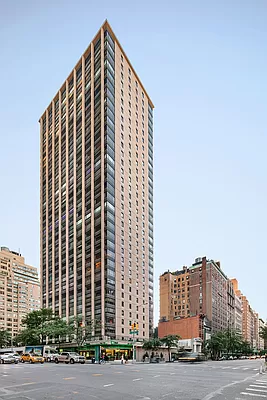
Discussion about 190 East 72nd Street in Lenox Hill
Add Your Comment
Recommended for You
-

From our blog
NYC Open Houses for November 19 and 20 - More from our blog
Most popular
-
22 Comments
-
9 Comments
-
1 Comments
-
45 Comments
-
17 Comments
Recommended for You
-
From our blog
NYC Open Houses for November 19 and 20 - More from our blog
The Goldmans and the co-op amended the lease back in December, and the memorandum has just been filed.
Term extended to 2107.
Previously, the annual rent from 2010-2035 was to be either $200,000 or 6% of the unimproved value of the land as of 5/2009, whichever was higher. The memorandum doesn't say what the newly-negotiated rent will be.
Hwo do you check NYC building records for land lease issues?
In ACRIS, search by the block-and-lot, and scan for Lease and Memorandum of Lease. Mortgage docs for the co-op will also specify "leasehold interest". Between those and the deeds you can get a rudimentary idea of what the story is.
NWT that sounds like an awfully small rent number. Also am I reading it correctly that the lease goes for another 97 years with a set amount for another 25? I love this building and the apts there, but I have noticed that the prices are not as bad as I would have assumed it being a land lease building. Not like Trump Plaza on 61st where the prices are low.
The history of apartment 9A seems to illustrate the special downside risk associated with a purchase in a land-lease building:
02/18/2009 Listed by Warburg at $1,695,000.
05/18/2009 Price decreased by 6% to $1,595,000.
07/08/2009 Maintenance increase from $2,759.83 to $2,994.94.
12/06/2009 Price decreased by 6% to $1,495,000.
02/23/2010 Maintenance increase from $2,994.93 to $5,282.00.
02/27/2010 Price decreased by 13% to $1,295,000.
03/30/2010 Price decreased by 15% to $1,095,000.
http://streeteasy.com/nyc/sale/385381-coop-190-east-72nd-street-lenox-hill-new-york
skippy, the $200K was a minimum. The 6% of the value of a blockfront at that location would be much higher, and is pretty standard. I don't see why the Goldmans would take much less than that under the amended lease, or why the co-op would pay more, but we'll never know unless some kindly Tower East shareholder tells us.
Right, 25 years is unusual. The other leases I've seen reset the rent every 5 or 10. Those negotiations must've been interesting.
It is nice that they signed a new lease, but the rent must have gone up a ton. The maintenance on 9A is now $5282, up from $2759 last year. And 19D is going from $3900 to $7000.
It seems that some of the apartments like 9a and 19a have dropped their prices with the increase, but 19D seems to be priced for the old maintenance fee.
What should you use as the discount factor on maintenance? Mortage rate? So in theory, if 9A was $1.5M and maintenance went up $27K a year, the new price should be $27/.06 = $450 lower? So they should be at $1.05 now to be in line with their $1.5 before the increase?
Just updating this train wreck, 9A closed on 8/11 for $925,000. Using toast's methodology, the calculation for pricing the impact of the maintenance increase ($570k off the $1.495mm pre-increase ask) works at about a 4.75% implied mortgage rate.
Landowners are not under any legal duty to renew or extend leases under Coop buildings, unless they
have committed to doing so in a contract with the Coop or one of its predecessors-in-interest. They generally make a poor investment, even for personal use.
A landlease is fine if it's for 99 years. You'll be long gone by then. Problem is with short term LL bldgs
Any thoughts on buying at 2 Tudor City Place coop with reported "99 yr lease'?
ccharley: completely and respectfully disagree. 99 year land lease or not, it's not 'fine,' and certainly may not be to the end user you try to sell to, as they will be worrying about who they can sell to after they decide to leave....
depends - what happens after the 99 years? One Brooklyn Bridge Park is on a 99 year land lease from NYC/NYS. After 99 years, the building, in its sole discretion, has the right to purchase the property for one dollar.
Does 2 Tudor City Place have the same option? If not, someone is going to have to deal with the renewal of the lease after 99 years. That person is going to want a discount for the purchasing of the property, the closer they are to hitting that point.
Are there any real examples of land lease buildings whose leases expired and were denied renewal?
Yes, Manhattan has a long history of lots being redeveloped when leases are up.
For many land-lease co-ops, though, that may not happen. E.g., those built in the 1950s-1960s whose zoning/landmarking/etc. doesn't allow effective redevelopment. You can't really build much more at 303E57th or 190E72nd than is already there. They'll always have to pay a rent corresponding to the current value of the land, though.
The exception would be something like 101W23rd, a six-story semi-fireproof at what is now a major intersection. That co-op will always have to pay the landowner what she'd get if she redeveloped for a high-rise. At some point it's not going to be worth it for the co-op. I'd say that's already arrived, but the co-op is sticking it out and paying through the nose.
Thanks, NWT. But what I don't understand about these situations is how the leaser could be in any kind of position to negotiate the ground lease. It's not like the coop could just pick up its foundation and move to another lot across town. So what would happen if the land owner demands, say, $95,000,000,000 per year. What recourse does the coop have at that point? If the coop refuses the land owner's demands, then what happens to all of the shareholders?
Right, when the lease expires they have compete with other buyers for the land. Take a co-op on underutilized land like 101W23rd. The lease is up, there's no provision for renewal, and the landowner has an offer from a developer for $50M. The co-op can't match that, so has no leg to stand on.
The shareholders own shares in a co-op that has no assets, so the shares have no value. (Unless maybe they'd built up a reserve fund in hopes it'd be enough to buy the land.) The co-op dissolves and the shareholders go live somewhere else.
Or take the small co-op at 86th and WEA that was bought out for 535WEA. The shareholders got paid for their shares because the co-op owned the land. Had it been a leasehold at lease expiry, they'd have been out on the street with squat.
The lease at 2 Tudor City was renewed in 2000 for 150 years. Landmarked building.
These number are scare the bejesus out of me. As a (first time) buyer, how do you do due diligence on stuff like this? Is there an easy way or is this something that falls under broker/legal?
anyone have any advice on 575 Park Avenue that you can give me. what happens if they dont renew their lease in 2020? what happens when they do?