SALE AT 101 West 23rd Street...WHAT IS THE DEAL HERE?

Started by er1to9
over 18 years ago
Posts: 374
Member since: Mar 2007
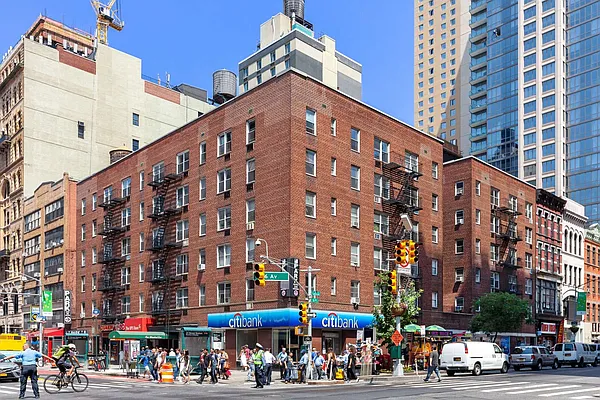
Discussion about 101 West 23rd Street in Chelsea
Add Your Comment
Recommended for You
-

From our blog
NYC Open Houses for November 19 and 20 - More from our blog
Most popular
-
8 Comments
-
17 Comments
-
8 Comments
-
3 Comments
-
9 Comments
Recommended for You
-
From our blog
NYC Open Houses for November 19 and 20 - More from our blog
Were you told how much it's going to cost the co-op to extend the lease? The landlord's certainly not going to do it gratis and for free.
My building in Brooklyn is in a very similar situation with a very close timeframe to this building. The landlord has no obligation to negotiate until you approach the end of the lease term. And even then the landlord is not obligated to negotiate, but has the option to let it return to a rental building where shareholders lose all equity. We've been researching this issue for the past few years.
Wow. That must be nerve wracking for you and the other owners. Could the landlord evict you or would you be entitled to stay in your unit indefinitely as long as you pay your maintenance if he/she turns the place into rentals? Does the landlord own the land and the building or just the land?
The building becomes the landowner's when the lease ends.
The shareholders' proprietary leases would end when the co-op's lease ends. The co-op would lose its main asset (the lease) and would be dissolved, with the remaining cash divided among the shareholders. There they'd be, leaseless tenants until the landowner evicts them.
Maybe the landowner would sell the co-op the building and lease them the land again. Or sell both land and building to the co-op. But there'd probably be better offers from developers, and the co-op would have to undertake a huge mortgage to do either one.
>The building becomes the landowner's when the lease ends.
Who gets the fixtures? http://www.nytimes.com/2013/08/25/realestate/how-fights-over-fixtures-can-derail-a-closing.html?pagewanted=all
From our research and from what our attorneys say, there has never been a building in history that has returned to rental. Even if it is at the hour, the coop and landowner come to some agreement to either buy the property or extend the lease. So, if it did happen with either my building or 101 West 23rd, it would be the first building to do so. A similar instance occured at a building on East 61st street a few years ago and literally at the last hour, they came to an agreement, but it took years of negotiation to even get to that point of consideration. In the end, the coop bought the land and maintenance went through the roof, but at least it is now tax-deductible for shareholders and they OWN the property.
And yes, it is extremely nerve wracking for me and the other shareholders.
What about an innovative solution, like the co-op corporation committing the building to rent stabilization at a low rate before return to landowner's hands? Not sure how that works. As a bonus in 30 years everyone will be over 65 and impossible to evict anyway.
The issue isn't about eviction. The landlord will not be able to evict anyone even if it goes to rental because it reverts to rent-stabilization, which is what the building had before it went coop. The issue is that everyone is losing the value of their apartments, which we all paid considerably for.
Going back to the prevalence of leasholds in London. Generally speaking it's a pretty poor analogy. The main and critical difference is that in London leaseholders have a legal right to demand a lease extension. In some cases this legal right can trigger up to 70 years prior to the lease expiration. The landlord generally has no "nuclear option" of letting the clock run out on the lease and taking back the building. The leasholder can sue the landlord if they fail to negotiate with the current leaseholder. This dramatically shifts the power of negotiation towards the leaseholder and helps to explain why "Ground Rents" are typically based on how much it costs the landlord to maintain the common parts of the property + a small profit margin.
@Jio, the LL can evict everyone for holding over after the termination of the lease.
@Pier, I bet there is a way to come up with something creative. The issue IMO would be getting every shareholder on board and willing to commit to this creative situation. The coop corporation cannot commit past the last day of the lease. They cannot give a way a interest that they don't possess themselves.
Picture it like a life estate with a definitive date of DEATH. You can give away your life estate but not more than that.
Rent stabilization will not work because of the statue involved.
They need to stop messing around with a lease renewal every 5 years. Come up with something that solves the problem (even if it cost a bunch) or bite the bullet and lose the building.
Every 5 years there are a bunch of costs involved, every 5 years you are setting up another negotiation, every 5 years you are only temporary resolving the issue.
Where was everyone when there was 50 years on the lease? Probably not caring at all about the situation.
Also, I am not familiar with the terms of the lease.
Can the Coop Corp purchase the land at FMV? Is there a set price?
101 is an ugly stumpy building. knock it down and start over.
Two that recently bought the land were 301 E 63rd and 2 Fifth.
At 301, the same apartment before and after the co-op paid $45,000,000 for the land:
04/17/2007 Previous Sale recorded for $735,000.
07/16/2013 Sale recorded for $369,000.
At 2 Fifth, the co-op paid much less, maybe because the landowner and sponsor were the same party, and the sponsor still owned lots of the shares. The relative bargain may've had to do with taxes or something.
Oxymoronic is generally right re London but it's actually more favorable to tenants there than he / she says. The leaseholders can compel the landlord to sell the freehold to them, if the holders of 50% of the total apartments agree, with price negotiated, but based on an assessment by a third party valuer.
http://www.lease-advice.org/publications/documents/document.asp?item=11
I participated in one of these a long time ago.
Anyone know if the general rental rules are relaxed in this building? Since everyone is in dire straits, I was told the 1 out of 3 year rental rule has been generally done away with.
Considering renting in the building but this thread is giving me pause as we don't want to be kicked out by the co-op board or in the event of a sale of the building. Anyone in the building have insight here?
Are there any updates with the status of this building that anyone knows of ? Any information will be greatly appreciated thanks so much
Looks like the sponsor is trying to bail - not a great sign.
http://streeteasy.com/nyc/sale/1063530-coop-101-west-23rd-street-chelsea-new-york?email=true
It's 5 rent stabilized apartments that combine for $17k a month maintenance.
That averages $3400 a month per apartment.
I dont think you could give away these apartments for free.
And that's another interesting legal conversation.
What are those tenants rights if the sponsor just bails and close the corporation.
Or what are the tenants rights come 2045 and the land lease is lost?
Are they forced to leave?
If the sponsor defaults, then the co-op takes the shares.
In 2045, the tenants' new landlord will be the landowner. Then it'd be just another building the owner wants to raze and develop, with whatever usually happens with regulated tenants.
In 2008, a Holder of Unsold Shares bought the shares for nine apartments for $945,000. Since then, that HUS has sold three of them for about $1,200,000, as tenants vacated.
I don't know whether that HUS is the same as the one trying to unload these five.
At what point does it make sense to buy in this building? I just can't see it the land lease just kills this make sense at any point. Am I missing something here??
You'd really be buying a 31-year annuity. You'd need to figure your current rent savings, then estimate how that'd change over the 31-year term. Then calculate the present value. The easy way to do that is just get a quote from an insurance company for an annuity with the same terms.
Before bothering with that, look at all the new high-rises up and down Sixth Avenue from 101, and try to imagine how in 2045 the co-op would be able to offer better terms to the landowner than a developer would.
1. current cot/buildable sq.ft. of Manhattan land sales has been $800/ft.
2. 31 years from now that number is likely to be a lot higher
3. therefore it is likely the landowner will reclaim the Coop in order
to sell the land or develop it, particularly since its location at the
intersection of two major avenues make the location desirable
How does this land lease compare to the mechanics of that which belongs to 100 Remsen Street in Brooklyn Heights? Which is a smarter (or less risky) purchase? Does one have certain characteristics that make it less financially troublesome?
As far as I know they are very similar in how the land lease is structured. 100 Remsen's ends in 2043 and 101 West 23rd ends in 2045, but there is no plan for what comes next in either lease, which means it reverts back to the owner unless the coop buys the land/building or gets an extension on the lease.
1. unless there are options or a right of first refusal in the land lease,
which is not uncommon, LL possesses unconditional right to not
renew the land lease
2. in that event all improvements on the property become LL's
3. including every apt in the Coop
Just curious - are there recent examples of coops being taken over by the land lessor? Or is the concept too young to have precedents?
Also, on the mechanics of this - assume the land lord does claim the property at the end of the lease -then all the current tenants will have to pack their bags and find a new place to live?
In which case, years with heavy land lease expirations will either result in mass migrations out of Manhattan, or a massive jump in demand )
I've spoken with several real estate experts and this instance has never actually happened where a landlord took back the space and kicked out the tenants. In the next 20-30 years will be the first time these cases will come up. Even in similar situations where there was no plan beyond the lease term, both parties eventually agreed to some compromise and it was worked out. Either the coop bought the property or the landlord extended the lease. However, nothing compels the landlord to do anything until the very last minute. He/she gains more power as time goes on and the shareholders lose power as time goes on.
@jio7171,
The Owner/LL can't just evict everyone. If there is a RCT, they can stay. The Owner/LL can evict the regulars if they holdover after their lease expires.
@boxer1,
Theoretically YES. At the end of their current prop. lease, they lose the right to occupy the apartment.
1. land leases have been around for over 1000 years
2. when their terms end the LL becomes owner of all buildings on the land
3. unlsss a lease confers rights on a tenant to either extend ite duration
or buy it, the tenant has no rights or interest in the lease after it ends
Consigliere:
1. in 31 years there are not likely to be any rent-stabilized tenants in the Coop
2. and even then they might be forced to leave if the land lease had already been
recorded at the time that they rented
rb345,
I was speaking in general, not to this specific building/situation. As for 31 years, I don't know what will happen or what the tenant pool will look like at this building.
Does anyone know if this is the Co-op purchasing the land? $95M... egads...
http://streeteasy.com/closing/10213280?origin=recorded_sale
1. lot size seems too large for an 80-unit building
2. also, price of $1,200,000/apt would not be sustainable
3. financing that amt/apt even interest only would results in maintenance increase of
almost or over $5,000/apt/month, which is somewhat on the high side
Lot too large for 80 little units is the co-op's problem. They can't pay the freight.
This sale is to a new landowner, so the co-op has a new landlord.
If that corner has a FAR of 10, then the $95,000,000 comes to about $480 per buildable ft², which sounds about right for a development site.
This puts paid to any hope the co-op had of somehow getting the landowner to give them an enormous cash gift. When the lease is over, or they default, or they're bought out of it, they're gone.
http://therealdeal.com/blog/2014/07/21/em-pays-95m-for-land-under-cash-strapped-chelsea-building/
Thanks, NWT. It's yet another fascinating twist in the ongoing saga. I wonder if the new owner intends to renew the lease in 2044 at market rates, if they have ulterior motives, or if they are just going to wait and see.
I can't wait to see.
Up above somewhere I said the rent increases by CPI. It doesn't.
Starting in 2009, it was $700K. More than taxes and labor combined.) Every year through 2017 it goes up by CPI, with a minimum of 2% and a max of 4%.
Then there're "adjustment periods" starting in 2018, 2028, 2038 and 2040. At the start of each, new rent will be based on the value of the land. (That value is enormous, since the land encumbered by the lease is $95,000,000.)
During each 10-, 2-, or 4-year adjustment period, rent goes up annually by the same CPI-based formula it does now.
That's from http://offeringplanet.com/Building/101%20West%2023rd%20Street/Financials%20'08-'10.pdf
Based on http://www.nyc.gov/html/dcp/pdf/zone/map8d.pdf, I think it's zoned C6-3X, which permits a commercial FAR of 6, and a residential FAR of 9 (residential equivalent zone is 9X), which could get you a rather substantial building (http://www.nyc.gov/html/dcp/pdf/zone/zoning_handbook/r9x.pdf). Not quite as desirable as a FAR of 10, but desirable (and good location for commercial).
Even if the new landowner drives the co-op to foreclosure wouldn't it still have to find a way to boot the rent regulated tenants? Not sure if a co-op's non-eviction plan still applies if the co-op dissolves.
RS and RC can be evicted if the building's being demolished: http://www.nyshcr.org/Rent/FactSheets/orafac11.htm
There're only six RS, so shouldn't cost much to relocate them. I can't tell whether there're any RC.
I truly cannot imagine why anyone's lawyers allowed them to buy in this building...
Maybe the numbers worked. Take the $200K studio, with $1K maintenance, that sold earlier this year.
If we assume that annual rent savings are now $18K per year, and that that savings stays the same as both maintenance and comparable rent go up over 30 years, then that's an 8.1% return over the whole term.
There's always the chance that that annual tax-free saving will go either up or down as the 30 years go by, but that's the risk any buyer or renter takes.
There might be something that both pays 9% tax-free *and* returns the principal, but I don't what it might be.
To be fair, I should probably do the math before I conclude that it's not worth it - I'm just not sure how you factor in the potential maintenance increases during the adjustment periods, among other things. Which is probably why I'm not the right investor for this building.
In a way it's easier to figure than a plain land-owning co-op. Instead of having to guess what the value of the shares will be when you go to sell, in a land-lease you know they'll be worth $0 at the end of the lease, and so can calculate for any point before then.
In another way it's more complicated. The rent, being based on land value, will be more volatile than plain old maintenance would be, so harder to predict.
The landlord is trying to break the lease, saying the co-op is in default by not closing DoB violations and by not providing evidence of insurance.
another amazing story in NYC real estate
Thanks for that contribution JJ2.
NWT:
1. sounds like landlease LL is trying to manufacture his own default
2. the odds of his succeeding in court are somewhat below zero
3. even if his breach claim survives the many precedents concerning de minmis
breach, the Coop as tenant will have ten days tu cure ay final judgmebt under
RPAPL 753(4)
So, now the co-op wants to sell out to the landlord (i.e. give up its lease.) Here's the presentation from the board to the shareholders, saying "We were all idiots to buy here, but here's a way out.": https://iapps.courts.state.ny.us/fbem/DocumentDisplayServlet?documentId=3r4ucJLkq31DbMs1MfiB3g==&system=prod
A bunch of shareholders are suing the co-op and the indivual board members, claiming god knows what.
Here's a letter from the landowner to the shareholders: https://iapps.courts.state.ny.us/fbem/DocumentDisplayServlet?documentId=jZc6/RE7A8tvQlKGlNnU3w==&system=prod
And here's the dissenting shareholders' complaint: https://iapps.courts.state.ny.us/fbem/DocumentDisplayServlet?documentId=VE5ig0YexNi_PLUS_RT2SfYIDNw==&system=prod
I want to know more about the shareholder who did the $14K bathroom reno.
Honestly, the shareholders are getting a fair deal here. They're getting roughly what they paid for their shares a few years ago, and seeing how a leasehold is a depreciating, not appreciating asset (especially so close to a massive rent hike), I would take it in a heartbeat if I were a shareholder.
NWT:
1. some of the more recent purchasers might have viable fraud claims vs. their
sellers or the Coop and/or its Managing Agent under the First Department's
1993 and 2014 Swersky v Dreyer & Traub and Alpha Basis Yield decisions
2. being as highhanded and arrogant as the new landowner is never plays well
in court, where it often inspires a desire to smack the offender down
3 it I probably a stretch, but a bankruptcy court might have sufficient authority
under Bankruptcy Code section 105 to force a lease extension at a rent the
Coop shareholders can live with
even though she doesn't live there, I suspect aboutready might find a way to make money off this and at the same time have the rent stabilized tenants rent increase.
NWT:
1. the landowner is over its own barrel
2. based upon appellate court decisions from the Depression were followed
in the 1990's, e.g., I believe, at 7070 Colonial Road, Brooklyn, if the land-
owner forecloses on 101 West 23rd and de-converts it back into a rental
building the apt rents will be those that could lawfully be charged under
Rent Stabilization at the time 101 was converted to Coop many years ago
what if they want to convert to condos would same ruling apply
It appears that 87% sold and the building is now rentals. A majority of the 13% sued the Board. The Board's motion to dismiss was rejected and is under appeal. Seems to me that the Board did all they could, and no good deed goes unpunished.
George: your sympathy for the Board is misdirected and lacking in facts. The Board hired one of their own to secretly sell the coop, even while shareholders were buying in. This violated the coop bylaws pertaining to self-dealing. This agent colluded with the landowner to push through the sale. Much, much more. Read the legal proceedings.