Sale at 50 East 8th Street #5X

Started by Tomnevers
over 14 years ago
Posts: 97
Member since: Mar 2012
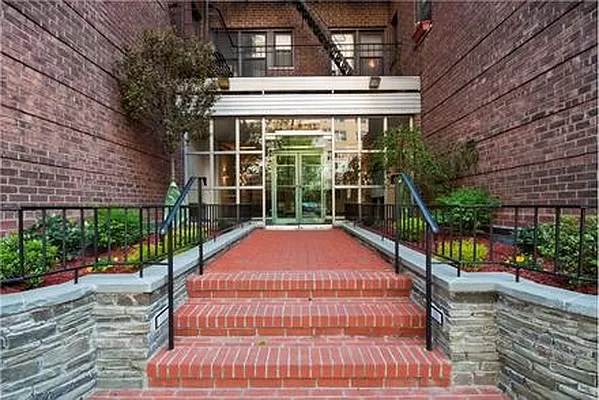
Discussion about 50 East 8th Street #5X
Add Your Comment
Recommended for You
-

From our blog
NYC Open Houses for November 19 and 20 - More from our blog
Most popular
-
9 Comments
-
1 Comments
-
8 Comments
Recommended for You
-
From our blog
NYC Open Houses for November 19 and 20 - More from our blog
It's a land-lease: http://streeteasy.com/nyc/talk/discussion/19021-building-at-54-east-8th-street
Question --- why would any landowner in his/her right mind *NOT* take over full ownership of a co-op building on a land lease, once the lease is up? Why would a lease *EVER* be extended, if the landowner can just take over an entire building, free & clear?
It's shameful that the promos for apartments like this don't indicate the term "land lease" in them. I feel sorry for all the folks out there who aren't on Streeteasy and don't learn about this right off the bat.
I'm just sayin'......
NWT, how do you find out the details of the lease like the expiration date and history? I knew this was a land lease building, but your info on these things is always impressively detailed. You said this lease is set to expire in 2049 which means as we approach 2019, the units become unsellable (no financing available) and the necessity to renegotiate the lease becomes critical. Will be interesting to watch what happens to a semi-prime piece of GV real estate in this situation. Granted 8th St. isn't the greatest, but that land has to be worth an absolute fortune.
Isle_of_Lucy, no reason I can think of why landowners wouldn't get just as much as they can when leases end. It'd be insane for a lessor to give the lessee the right to buy the land for $1, as was suggested as a possibility in another thread. Traditionally the lessor would boot out the lessee and redevelop the land, but now with landmarking and so on, it sometimes makes sense to just renew the lease. The income is already inflation-protected, so the lessor would specify a new floor for deflation protection. There're lots of interesting possibilities driven by tax consequences, etc., but the principle of preserving assets always remains. I can't imagine anybody tying her heirs to giving a gift to strangers in 99 years. The risk is that the lessee defaults, as happened with the original co-op at 2 East 67th, for instance, but of course the lessor still has the land *and* the building, subject to the mortgage the lessee took to build the building.
kylewest, a Memorandum of Lease if filed with the city. Rarely the lease itself, but in the case of co-ops the lease is included in the offering plan. The co-op has almost always borrowed to maintain or improve the building, so the mortgage will refer to the leasehold interest and specify where/when the Memorandum of Lease was recorded. It's interesting to see how the heirs of Beekmans and Moores and Cannons are still raking it in after hundreds of years.
The building is not in great of a condition and the incentive to maintain the building will reduce significantly over the coming years. Coop should work frantically on extending the lease. Other way for this situation to end is by NYU buying out every one including the landowner and rebuild as it a prime area for NYU. They still need more dorms.
Further re: the value-of-land wrinkle, you have the situation at 101 West 23rd, possibly the worst-case land-lease co-op.
There, the lease and building date back to when 6th and 23rd was a drecky corner that couldn't support more than a six-story semi-fireproof building. Now it's a prime corner, and will probably be even more so when the lease ends in 2044. The co-op is paying rent based on that enormously-increased value, and it'll be more and more as the rent resets periodically. At some point before 2044 those 80 co-op shareholders will have to throw in the towel and default, and the landowner will redevelop with a high-rise. Not defaulting would be like a shoe-shine parlor at 5th and 57th trying to keep paying a rent based on land value.
^ Very interesting point, NWT. You're spot-on regarding 6th & 23rd (and most everything else, by the way.....) :)
>NYU. They still need more dorms.
But Greenwich Village doesn't.
>At some point before 2044 those 80 co-op shareholders will have to throw in the towel and default, and the landowner will redevelop with a high-rise.
In modern history, have we seen a land owner knock a building down after the term of the lease and re-develop? Just curious - I have no idea.
Lots of precedent with retail and office tenants, but no co-ops that I can find. Myabe just not news- or case-worthy. Lots of them defaulted on leases and mortgages in the Depression, though.
In theory there's nothing to prevent the owner taking possession when the lease ends, but maybe Albany will be swayed be all the "but it's my home" whining. They probably thought rent regulation couldn't happen, either.
There is a precedent for that (though not in the U.S.). The U.K. enacted regulations that make it easier for lease holders to buy the freehold. Don't know that it would be constitutional here.