161 W. 75th 10F - what's a fair price?

Started by daisy37
about 8 years ago
Posts: 18
Member since: Oct 2011
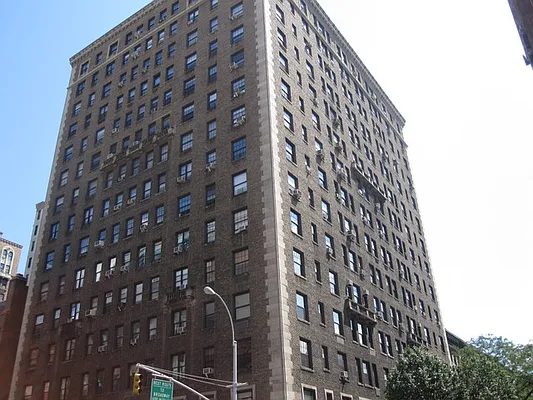
Discussion about 161 West 75th Street #10F
Add Your Comment
Recommended for You
-

From our blog
NYC Open Houses for November 19 and 20 - More from our blog
Most popular
-
3 Comments
-
38 Comments
-
28 Comments
-
33 Comments
Recommended for You
-
From our blog
NYC Open Houses for November 19 and 20 - More from our blog
This price point is highly desirable and apt seems in good move in condition. Price per sq ft is not cheap. More than 150 people saved the listing. So, I think it will sell soon near current price.
If its high, its not by much. 12F, a sponsor unit in I assume estate condition, same floor plate, was listed for $1,300,000 earlier this year but withdrawn a few months ago. Take note of the additional assessment and the 2% flip tax to be paid by buyer. 2 price drops in 2 months so maybe seller is highly motivated?
14J with a better view, but smaller bedrooms sold this year for $1.575 million so it seams to be reasonably priced.
Builder-grade Renovations aside, it's a mystery why this isn't in contract yet. Overall good condition, very good light and a nice layout for the amount of square footage. They got to market while things were still humming, currently there is a serious lull, I wouldn't expect much to happen until after Labor Day. I bet both the seller and especially the agent are scratching their heads, probably assumed multiple bids after the first open house.
No buyers want to pay 2% flip tax (especially with the current market sentiment) but perhaps that's negotiable.
Maybe This Thread will bring this solid deal to the attention of buyers.
Keith
TBG
Keith, I think you are right about 2 percent. Seller is better off paying it and charging more for sale. That way the buyer can finance the whole purchase amount rather than having to come up with 2 percent extra cash.
The need to go through the bedrooms to reach the bathrooms is a major negative.
I live in this building and am shocked that it hasn't sold - other 2br units here have sold immediately, nearly always with multiple bids. The "F" line is a solid line with large rooms, fantastic eastern exposures and a good layout. I don't think the price is particularly problematic either. Perhaps the brief attempt by the sponsor to unload 12F unrenovated at $1.3 gave some buyers pause at the initial list price. Maybe it is the 2% flip, which is typically a seller cost here, but who knows.
Dan Gotlieb
Digs Realty Group
https://digsrealtynyc.com/
Jetsfan, I agree the ensuite baths are negative but I think it's an improvement over the original layout which was a single bathroom accessible to both bedrooms from the common hallway.
Look at it from another angle. Finance 80% and your carrying costs are $9K a month. What can you rent for $9K a month?
Exactly.
Are you paying down your mortgage with $9k?
front_porch, i assume you mean you can rent something much nicer for $9k per month rather than buy this. But isn't that the case with most sales in NYC? Still a lot more outlay when you are buying (assuming financed) but part of it goes towards equity so that is supposed to be the reason to buy instead.
This is why I have been saying a market correction is coming. People scratching their heads over why appropriately priced apartments aren't selling. People asking "what could I rent for this month you outlay?" (And that question is important because the only reason someone would pay significantly more to buy than rent is if they think the market is rising)
Ali/30, Both of you are too smart to assume total payment listed on Streeteasy is comparable to the rent. It includes principal payments on debt.
Typical downpayment is 25% if not more in NYC. You need to only look at the interest portion of a say 5/1 loan. 30y mortgage is providing you some type of inflation protection. Let us do the numbers.
$1.6mm purchase long term holder
25% down $400k
Mortgage $1.2mm
3.5% interest 5/1 ARM. $42k per year. Less conservatively $7k in mortgage deduction after factoring in $750k mortgage cap. $35k. Call is $36k assuming one got a little higher rate.
1. $3k per month.
Upkeep allowance $9k per year which will include periodic updates, assessments, routine maintenance.
2. $750k per month.
Insurance difference between renter's and buyer's insurance
3. $150 per month
4. Maintenance $2300 per month.
We get $6200. I must have forgotten something - as in transaction costs say over 10-15yr hold. Make it $6500. That is the right number to compare to Monthly rent.
You can rent this crap for less money of course.
https://streeteasy.com/building/401-amsterdam-avenue-manhattan/11c?featured=1
Or get a walk up no doorman.
https://streeteasy.com/building/154-west-76-street-manhattan/3
And be afraid of rents going up or being kicked out. At the end of day, we are all work very hard for freedom. Fewer people feel freedom in rental vs ownership.
I was thinking the same thing, I felt like the buy versus rent was pretty good here, meaning in favor of a purchase, All Things Considered.
I really like the idea of owning the home I live in rather than renting it. A lot of people that I talk to feel the same way, and then you've got people that want to buy, but need to find a place they really fall in love with and they feel like they're getting a good deal on. And then you have people with spreadsheets who are really digging into the market and trying to forecast where it's heading. I like these clients, I learned a lot from them over the years. but sometimes they get in their own way and get blinded by all the math. Most of my clients were of this nature back in 2009, armed with spreadsheets and convinced that the math behind the markets indicated we would continue to fall. As the markets began to rise precipitously many of them abandoned their spreadsheets (300 Mercer was one of them) and pulled the trigger and bought. These clients that purchased in 2009, 10 and 11 have been richly rewarded. Some continued to work with me for many years as the markets marched upward and they eventually purchased with some heavy hearts that they didn't pull the trigger a few years earlier. Remember 2009-2010 there were many very smart people on the streeteasy boards who were absolutely convinced the market was going to go to $500 a square foot. Of course that didn't come to pass...
Saving money on a rental versus purchasing will only add to your net worth if you're a disciplined saver and investor with the money that you're saving by renting. However I think for most people most of that savings will evaporate into the ether of living in New York City and then you just wind up with a lot of rental receipts and having to move! That said I've met a couple of people on these boards that are extremely disciplined, have a great system for finding good deals on rentals and I know are definitely saving and investing that money. I'm sure they've got quite a good system down for the chaos of moving as well. I was very excited after being a renter for many, many years to purchase a place and feel like I had a home base indefinitely and a place I could renovate and customize to my liking.
If you can afford the payment, have additional well-diversified savings and a fairly long time Horizon I don't see how you can go wrong with a purchase. Anyway there's not really any need to argue, to each his own. There's lots of circumstances that to go into this decision.
Keith Burkhardt
www.theburkhardtgroup.com
Look, I'm strongly biased by nature in favor of home ownership. I love the forced savings aspect, I love the rootedness aspect. When people ask me whether I own a co-op or a condo in Manhattan, my standard reply, which is true, is that I own one of each.
But I also realize that we are at a particular moment in time, and at this moment in time, rent vs buy does not always work.
First, the idea that you're paying in any appreciable equity in the first few years of a mortgage is hogwash. If you borrow 80%, which this co-op allows, only about $2k/month of your payments is principal paydown. So we're not comparing to $9K a month rentals, ok, we're comparing to $7K a month rentals. You can still something get pretty sweet for $7K a month.
One of the strongest arguments for purchasing is that you lock in your costs while your income grows. And I would argue that any interest rate under 8%, that's how old I am, is a pretty good deal.
But rates are not as good as they were a year ago (300, I would argue that many co-ops are not going to let you buy with a 5/1), and your costs are not as locked in as they used to be, because property taxes have recently been increasing pretty quickly.
Now let's get to the down payment question -- Why, in a market where real estate appreciation appears to be slowing (at best) am I going to take my money out of equities, which went up 15% in the last year and 25% the year before that?
It's funny how Keith, who I think of as something of a bear (Keith, feel free to disagree with that) has turned into me, a historical bull, and how I have turned into (old poster reference here) inonada (who was in favor of renting over buying, nearly always), but it seems to be happening.
I'm active in the Manhattan market, I live here on the UWS, and rep both buyers and sellers here as well as Downtown. But contracts are down by double-digits year-over-year, and that's a fact that the market is just starting to digest. I actually think it's restarting somewhat in terms of transaction volume, but not necessarily in terms of pricing.
ali r.
Nada plays/rents in a very high end market. Rent is too cheap for ultra luxury relative to buying.
Using broad generalization, here are the winners in rent vs buy (excluding freedom, security or happiness for buying a place which varies for individuals). That is why I do not worry about under $1500 per sq ft in Manhattan decent areas crashing. Of course, it can correct 5-10%.
> $2k per sq ft : Renting big winner
$1500-$2000 per sq ft, Renting winner in most cases
$1300-$1500 per sq ft rent vs buy is comparable (this is where this apartment is).
$1000-1300 per sq ft strongly for buying.
Keith and Ali, thanks for your comments which extremely thoughtful and well-received. I only take issue with small subset of your thoughts if you will allow, as I am in general far less bullish on home ownership which I believe has risks, some often hidden in plain view.
"If you can afford the payment, have additional well-diversified savings and a fairly long time Horizon I don't see how you can go wrong with a purchase. Anyway there's not really any need to argue, to each his own."
Keith, well said but I think its takes more than this to justify buying. I would add the need for job security and enough of an income cushion to absorb increasing maintenance, real estate tax and interest payments, and whatever relatively small financial hits we may take in life. Sadly, current market prices do not allow many buyers to maintain a reasonable cushion which could result in foreclosure which for many can be a life changing event.
"One of the strongest arguments for purchasing is that you lock in your costs while your income grows."
Ali, this is a good argument but one that not all can follow over time. Life changing events occur all the time including fairly innocuous ones such as changing jobs, growing one's family or relocating to another city. For many of these people, their home ownership can be much shorter than they envision and they run the risk of selling in a weak market, risking much or all of the equity they built up.
The hidden risks in home ownership are tied in part to often irrational assumptions about the stability of one's future and the stability of the market. On average, most people do well financially when buying a home but there are I fear that the number of people living at the margins are greater than we realize.
Ximon, What you say above has always been true about home ownership anywhere. What is new? Does is make you a perma bear on housing?
Also, buying is Manhattan is not for people who are stretching to make their mortgage payments. Most people realize that which is why such a large percentage rent in Manhattan.
300, what is new is that housing affordability is much lower today so there are many more people at risk than in years past. Yes, there are many rich Manhattanites that don't worry about affordability but for many entry level buyers in particular, they are maxing out on financing and counting on job stability and the expectation that their income will continue to grow.
I am not a perma bear but a temp bear for this period of time only. I have to date only expressed caution and the need to evaluate the realities of the market. But I am now beginning to think we are nearer the tipping point than I previously thought and indeed am becoming quite concerned.
There are times to buy and times to sell and times to stand on the sidelines. Creating value in the current market is difficult and takes a lot of both real and sweat equity.
As I have said, home ownership is a good investment for most. But there are those who get caught up in the exuberance of owning a home and when they irrationally justify buying one in a market like we have now, they are risking a great deal if they are wrong.
"Also, buying is Manhattan is not for people who are stretching to make their mortgage payments."
Sorry but I cannot agree with you on this. I think there are plenty of people doing it. Anyway, it's not just about Manhattan which is not an island unto itself in spite of what many believe.
I don't know how to reconcile
"Also, buying is Manhattan is not for people who are stretching to make their mortgage payments."
With
"$1000-1300 per sq ft strongly for buying."
Because that is the segment of the market where the most people are doing the most stretching.
Ximon-I definitely agree that many people get in over their heads when they buy a home. They don't take into account all the expenses associated with homeownership versus renting. However in my small world, I don't necessarily see that happening with NYC Co-op purchases. The requirements of a typical New York City Co-op ensure that a buyer is going to be fairly well funded and qualified.
I would also say that the condo buyers we're dealing with are making smart purchases. I just truly believe the majority of New York City real estate buyers are sophisticated and understand all the risks associated with it. I honestly haven't worked with many people who were stretching.
Life is filled with uncertainty, my daughter was just diagnosed with type1 diabetes, so I'm aware better than many of the curves in the road. I guess I'm just saying, do any of us know with any degree of certainty what our actual job security is?
Ali: why I was a bear is a bit complicated. It has more to do with personal issues rather than the actual facts about owning real estate. This could be an entire blog post (:
Keith
TBG
30, There is huge difference between a 30y old with upward career projectory stretching vs someone who is 50y old at the peak of their career. I think it is only 30y olds stretching and in many cases they have some family money which will come their way. Otherwise it is pretty dumb to stretch.
I wonder if anyone who has seen 87-early 90s in NYC as an adult (you are in your mid fifties or older) and either does not have too much money by Manhattan standards (say more than at least $7-8mm net worth) or does not have a high running income has a high chance of "What? You want that for a gallon of Milk" thinking.
There are many noted Wall Street bears who are from that era and they have exactly the same mind set. It is not that different from "the child of great depression" regarding which most of us have heard enough stories.
You could also say that every time the market turns Wall Street firms did mass firings and then later hired a flock of inexperienced youngins because they didn't want anyone who had actually experienced a down Market.
The last time we saw mass foreclosures (in the early 1990s) the vast majority of those foreclosed on fit the category of young buyers who thought they had excellent upwards career projectory. But as ximon pointed out "shit happens" and when you are under water it doesn't matter what your career projectory is.
One of the reasons is that those with upwards career trajectory also have upwards expense trajectories. As someone who has done a bunch of both sales training and Sales Management training I can tell you that one of the things that we teach managers to do is get sales people to take on more and more obligations - nicer car, nicer apartment, weekend house, Etc because the bigger their monthly not is the more they will need to produce to support it. The worst sales people tend to be the ones with very low monthly needs. If I was interviewing a salesperson and they told me they were in a rent-controlled apartment with a $200 a month rent there would be a strong disincentive to hire them.
May be I just know the 30y old buying in Manhattan with rich parents. Brokers on this board will know better the financial situation on the entry level buyers and their parents in Manhattan. People on a tight budget are in Queens or BK already.
May be I just know the 30y olds buying in Manhattan with rich parents. Brokers on this board will know better the financial situation on the entry level buyers and their parents in Manhattan. People on a tight budget are in Queens or BK already.
We all seem to come from different perspectives which makes this board so fascinating to me. My background is primarily commercial real estate finance but I have lived in Manhattan on and off for over 35 years, buying & selling in the apt. market and doing lots of short and long form appraisals starting in the 1980's and I have experienced more than one cycle in my days. I have great respect for those who are in the trenches every day.
So Keith I much appreciate your perspective on the current affordability of apts. I hope that buyers remain more conservative in their investment decisions and can survive a downturn if it should come to fruition. I daresay that affordability in outer boros may be a bigger issue but I do not honestly know how that might affect Manhattan.
300, I may in fact be one of those Wall street bears you speak of. When you have been through a few of these cycles and seen the damages a downturn can cause to home buyers, you begin to think that investing in a home is a decision that requires deep thought. I never lost a property to foreclosure but owned a small coop that I could not sell for many years and could barely rent out to make ends meet. I sold it at a small gross profit but it was clearly a bad investment given the alternatives. I felt lucky.
30, you are correct about Wall Street wanting young professionals who will put their noses to the grindstone and simply follow instructions. I felt sorry for my coworkers who would go out on a limb to own a trophy property because their boss did. There was a saying on the Street that "there are no grey hairs in an investment bank". Of course, banks know better than most how to off-load risk to others including famously the US taxpayer so their formula for success was always slanted in their favor.
Ximon, I have certainly seen a few crashes from the inside in various asset classes and analyzed historical crashed professionally. I just do not see a crash in the reasonably priced properties (call it less than $1500 per sq ft) in decent areas of Manhattan. Top-end >$3k per sq ft is ripe for crash and some of it has already happened/happening. You are right about Outerboros (BK) being much more of a bubble than Manhattan in affordable segment.
But what happens when the top end crashes? You don't think it will Cascade down? The Apartments which were trading at $5,000 per square foot trade at $3,000 per square foot. Then the apartments that were trading at $3,000 per square foot trade at $2,000 per square foot. The apartments that were trading at $2,000 per square foot trade at $1,400 per square foot. The apartments that were trading at $1,400 per square foot trade at $1,000 per square foot. The apartments at when trading at $1,000 per square foot trade at $700 per square foot.
$5k is already down 15-20 percent from crazy asks. It had very little impact of the under $1500 per sq ft segment as the asks were not crazy to start with and there is no supply and buy vs rent still works either a wash or in favor of buying as per my board genralization above.
What happens when rents go up as the current new rental
supply in Bk and LIC gets absorbed?
I have friends with a small business, essentially a Little Sandwich Shop. They were the poster children for the 2008 crash, they bought one house decided they didn't love the location so they then bought another that they lived in. When the crap hit the fan, essentially abandoned house number one and barely hung on to number 2. Three months ago they were able to sell the second house(purchased 2007) which by this time they had been renting out as they moved to another part of the state.
Recently they were able to buy a townhouse with a bank statement only mortgage. All they had to do was show two years worth of their business and personal bank statements. I was convinced they would never get this type of financing, they closed last week. They both not only have a foreclosure in their rearview mirror but also bankruptcy, both about 8 years old.
Interest rate was 5. 25% for a 30-year fixed. I would be a bit more troubled by this scenario, except they do own a profitable business that they've been running for about 3 years. But still...
New York City held up well after the last crash, I'm not sure of the numbers, but it didn't seem like we saw any waves of foreclosures for co-ops. Most of these buildings require 2 years worth of Reserves and a debt to income ratio of about 25%.
Whether you're living in a rental or you own your home if you can't make the payment you're going to be homeless. And as my illustration above suggests, foreclosures and bankruptcies are only temporary disruptions.
Keith
TBG
@30 you wouldn't have hired me. I live well below my means, payed my mortgage off in 5 years and have zero debt. We do splurge on vacations, so I guess I could tell you about our trips to Vail (; perhaps you would hire me then?
Keith
I think what many are ignoring is that there are clear changes in the demand side of the market . Yes, new supply always gets absorbed eventually but its demand that has always driven this market either up or down. We are seeing pretty fundamental changes in demand due to 1) a dramatic decline in inbound foreign investment which is unrelated to a temporary oversupply in the luxury segment 2) declining affordability of homes in NYC due to higher carrying costs and fairly stagnant wage growth, and 3) declining rents which will further tilt the buy-rent decision against buying and further hurt the investment market.
Purchases of apartments from overseas buyers might represent 25% (it's 50% of the London market) or more of the overall condo market. If this demand declines by only half, this factor alone could have a devastating effect on demand the overall apartment sales market in Manhattan.
"$5k is already down 15-20 percent from crazy asks." But these asks were not considered crazy 2 years ago. That's the point. Sellers are in a weaker position than they have in a long time which is another way of saying we headed towards a buyer's market which is another way of saying that prices will decline.
Simon, if you look thought my posts 2 years back, I always called them crazy asks and wondered who would pay that.
But 300, some of these crazy asks were accepted. My point is that what is now considered aspitational was once considered reasonable, if not by you than by many others. Seller mentality has clearly changed in the last few years which is one reason listings are more frequently pulled or witnessed more frequent drops. I say all this anecdotally because I am not sure if there are any published statistics on this to rely on.
The only stat I can reference is the average number of days on market of 121 days for Q2-2018, up 13% from the prior year.
https://inhabit.corcoran.com/new-york-city-quarterly-reports-2018/
I can only speak for myself. I always wondered who the hell was buying 157 west 57th at original ask. Some of which was dirty money and others were people who had too much money. This segment is its own world. There is $2k-3k per square ft new construction in prime areas and then there is $4k plus. First one is selling and the second one has trouble. I only neutral/bullish on under $1500 per sq ft. There are big gaps in prices points hence the discontinuity in price declines. Just like gap did not get disconted that much in recession. Prada did.
The $5k and up price per square foot for new condos and some of the resales; I honestly just thought people were making numbers up, then see who would bite. When you look at some of the Uber high-end and see price chops of 10 million + there is nothing rational about the process.
To play Devil's Advocate, what's the difference if the market crashes, as long as you don't have to sell. Of course there will be people that may be forced to sell due to personal circumstances, but that would be a very small percentage of the market overall. One thing I know, markets go up and down, however prices are higher today than they were 10 years ago. Up or down, you're still going to enjoy your home and it's going to provide a needed essential element of your life.
So this gets us back to buy something that you can afford comfortably. And don't stretch yourself to the limits of your financial resources just to buy a home. And of course renting is a perfectly fine option.
Keith
TBG
30/Ximon, A good way to see what a particular market will decline on a relative basis is to do buy vs rent calculation for each category. Using fair metric, like the $6500 I used above for the true cost of owning not the $9k including principal payments, it will give you how much each segment is overvalued by on a relative basis. To make it more spohisticated, I would add a premium for ownership at very expensive properties say 50 percent as rich like to own, customize, and not be kicked out every two three years. Neither are many comparable properties available for rent. Premium should decline to zero for $1000 per square ft property.
Wondering if you guys can post some results of this analysis. Of course one can always stay bearish forever after seeing some bad stuff - and trust me I have seen plenty of bad stuff while being on the stage rather than just front seat.
Rents are falling (slowly, but it is happening and it's just the start). Interest rates are rising (which not only affects cost to carry, but makes carrying Real Estate at almost no return less attractive because there are alternative investments which produce greater return).
Example of rent versus buy:
36 Gramercy Park East #7W
Rent for 8,900 per month.
Buy at $3,500,000
$700,000 down, $2,800,000 mortgage
Monthly mortgage payment $13,000
CC + RET $3,800
Total $16,800
How much do you think the tax break is?
I think it's a tiny segment of the market who would sell their apartment and then rent for the next 5-6 years. But I think the rent-buy decision has relevance to some people relocating to NYC or considering making their first purchase. Either way, it's the trend that I am most concerned with. Does the rent-buy decision increasing favor renting or buying? Same with other reference points - what are the trends in prices, days on market, discounts to asking prices, affordability, etc.
30, This is in the expensive segment and not worth more than $3mm using $2500 per sq ft at most as it is not even renovated nicely. Renting is very favorable in this segment as per my post before. I realize there was a buyer who overpaid for a similar apartment in the building.
What mortgage rate are you using? And are you excluding principal paydown?
For 25 percent down $3mm price, I get 2.25mm mortgage (many banks would not even lend 80 percent for more than $2mm properties). $80k interest payment at 3.5 percent 5/1. Less 10k tax deduction. 70k. $6k a month. Plus $4k monthly. Plus $1k per month insurance, upkeep, periodic updates. $11k. Assuming people are willing to pay some premium to own this unique apartment over rent for the reasons I explained, 10-20 percent, the price of this apartment should be $2.75mm give or take.
Do you example of rent being much cheaper than buying in $1000-1500 sq ft price range with 25 percent down, 5/1 mortgage in good areas of Manhattan?
Do you have examples of rent being much cheaper than buying in $1000-1500 sq ft price range with 25 percent down, 5/1 mortgage in good areas of Manhattan? And please no principal payments inclusion.
Why not just use a purchase price of $500,000 and a rent of $20,000 to prove your point? I am using actual numbers.
And why you leaving out the cost of funds on the down payment?
That is an investment for which you get upside in prices.
You are being dishonest with your comment of “ purchase price of $500k”. I will leave it there.
200 East 69th Street #31A
Rent for $7700
Buy for $2,400,000
Since you have to account for the cost of the down payment $2.4 million at 3.5% interest only (which is really a stretch but I'm trying to work this) $7,000 per month.
CC+RET $4500 per month
$1,000 per month "incidentals"
Total $12,500 per month
"That is an investment for which you get upside in prices."
Or downside in prices.
Assume a can opener.
If you count the cost of 25 percent equity, you have the price in potential increase in prices. Renter does not enjoy that appreciation. So your $7k is $5250. Tax benefits $1k per months between mortgage interest deduction and property tax deduction. We are at $10k.
I can not see the rental listing for 31a. I can see another A line at $10,750 rent.
https://streeteasy.com/building/trump-palace/34a?context%5Bcontroller%5D=%23%3CBuildingController%3A0x0000564c56462708%3E&context%5Bcurrent_user%5D=1004028&hide_if_empty=true§ion=rentals
Another A line listing from a few months back.
https://streeteasy.com/rental/2165056
No one ever invests in an asset with positive correlation to the economy with expected returns which are not positive or at least do not cover inflation. A 2 percent per year inflation eqt increase in prices over a say 10 y period with give you 8 percent return in equity with 25 percent down.
"No one ever invests in an asset with positive correlation to the economy with expected returns which are not positive or at least do not cover inflation. "
Which is exactly why people have stopped buying and the market is going to tank.
Two part,
1. What did you think of the A line previous and current rental listings at more than 10k?
2. People are still buying and will keep on buying where the buy vs rent works with 25 percent down. They will even pay a premium over rent for nice properties.
It's seems like all your answers boil down to "the market isn't going to go down because people will continue to assume it is going to go up." And that is exactly my point: the only reason the market has continued to go up even though not justified by the numbers is that buyers have assumed it would. Therefore the only thing you need to change is removing that expectation. But have have more than that. We also have rising interest rates and an oversupply of both sales and rentals.
When you say:
"If you count the cost of 25 percent equity, you have the price in potential increase in prices. Renter does not enjoy that appreciation. So your $7k is $5250. "
You are using the assumption that the market is going up to prove that the market is going up. That is circular reasoning.
I could just as easily say "Since the Market is going to fall at least 10% in the next year you will lose $240,000 so the unit is actually costing you $30,000 a month."
30, I am simply showing what the math is and how many people will calculate (not perma-bears) and buy after comparing to renting.
300, short of a period over period decline in sales prices across all segments, what evidence would convince you that we are probably headed for a downturn in the NYC resi market?
I do not think of "NYC Resi Market" as one. I think in segments of price per sq ft. >$3k is already has corrected 15-20% and has another 15-20% to go. Unless there are signs of strain in the economy and bank stocks, "affordable" segment of $1000-$1500 per sq ft will remain stable and increase. This is the segment with no new supply, buy vs rent is in favor of buying if you use honest calculations as in exclude principal payments, factor in generally better finishes and typical larger square footage for the same number of bedrooms and bathrooms for apartments for sale vs for rent.
To me, new supply is the biggest metric of trouble followed by economy.
And there is a lot of noise by bears which the numbers do not back up. You can look at this thread for examples.
If you are waiting for negative numbers such as period over period declines in closed sale prices, then you have already missed the market. No seller one wants to be in that position. Again, what numbers do you need to see? You have not been specific.
Based on my experience through a number of cycles, it is market sentiment that will drive this market either up or down, once enough numbers are analyzed and publicised. I think we are at or near this point in the current cycle.
New supply is a number. Currently pretty small and will remain small as only very few new developments in Manhattan are close to 1500 per sq ft.
Economy and bank stocks are all numbers. If one wants to predict the economy and bet on it, stock market is a much better place and it is suggesting that for the foreseeable 1-2 years, things seem to be fine.
What did you think of all buy vs rent calcs where I am waiting for 30 to post the rental listing for 200 east 69th apt 31A at $7700 vs the other A lines at more than 10k.
Supply does not drive the NYC market, demand does. And rent vs. buy analyses are only applicable to a small % of potential buyers. And the stock market is not the real economy.
But the overall economy is a factor I agree. If we can sustain strong economic growth in the next 2-3 years and market sentiment does not erode, I think the NYC resi market will do OK. However, I am not optimistic of either.
You asked me for which numbers. I gave you numbers. Where are your numbers which forecast demand? My numbers for demand are rent vs buy, economy, general stock market, and bank stocks. Rent vs buy works fine for under $1500 per sq ft properties despite the fact rents have already corrected to reflect the new rental supply. Wait till the time, first year concessions expire and people are paying much higher rent after the first year.
In the 2 neighborhoods in New York City with the largest rental development - downtown Brooklyn Long Island City - rent concessions are still growing and when the concession expires all tenants need to do is move across the street to get a new round of concessions. And in Manhattan rent concessions show no sign of stopping even in older buildings which never had rent concessions before. Buildings which renters always had to pay a fee in have now become "owner pays" (OP).
All very true but no one wants to move every year except for right out of college. Every thing is owner pays brokerage already which is why I do not adjust the rent for rental brokerage payment spread over 2-3 years.
Just to nitpick, it's not every year - a large part of the concessions in new developments are based on two year leases.
And there are a number of large projects which, if the tenant is savvy enough to ask, are granting new leases with no increase because they be know the alternative is carrying a vacant apartment, paying a broker a commission and having to give a new round of concessions anyway.
All true. Is there more supply of rentals coming under $5 per sq ft per month in Manhattan except for outlying areas far away from subways?
Since most of the new stuff coming on has been over 50% higher than that, how is that a reasonable benchmark?
There has been a lot of stuff in the rental market in $5-6 range not too far from the subway. $5 per sq ft as that is the rent where buy vs rent is equal or buying is better for under $1500 per sq ft properties.
258 RSD: you can buy a very nice 3 BR, 2BA with river views and prewar details for around $2.3mm, so it will cost you around $10,700 to carry (I'm guessing you're getting a 4% interest rate on your 7/1). Or you can rent the equivalent apartment for $10K a month. You're not building equity, but you're not paying transaction costs either.
5a. So 2.275mm. 25 percent down. 1.7mm mortgage. Let us say 4 percent interest even though you can get cheaper. $68000 per year. Less 10k benefit for mortgage interest and property tax deduction. $58000. Call it 5k per month. Plus $2500 in maintenance. Plus $1k assessment, insurance, periodic renovation allowance to maintain the current condition etc. $8500. Do you agree with this?
"There has been a lot of stuff in the rental market in $5-6 range not too far from the subway. $5 per sq ft as that is the rent where buy vs rent is equal or buying is better for under $1500 per sq ft properties."
Examples of new construction?
https://streeteasy.com/sale/1274416
Maintenance is $2700. That takes up the $2k slack from $58000 to $60000 per year of $5k per month. Total is still around $8500. Guessing similar apt will not rent for less than $9k and you still do not have control over your living situation beyond a couple of years. Can not paint how you like it easily, limited customization. Forget nice custom closets or lighting. Have to find a home in the same school district or in the vicinity if you have school age children.
And the $575, 000 down payment is free because you can't do anything else with the money and we're going to assume the market is going up so you'll get a return on it. Fail.
30, Why do not you find me the rental listing for 200 east 69th.
My math is open and honest for anyone to see and make up their own mind about buy vs rent. I do not make up numbers and listings.
BTW rental apartments aren't gold chain - people don't rent them by the foot, they rent them by room count. It's been well documented that all across the US size/room count has been decreasing even as $/room count has been increasing. One of the reasons is that space available for tenant use outside of the unit ("amenities") has greatly increased - so you can't compare the rental $/SF of an apartment without such space to that of an apartment with it (unless you want to come up with some square footage adjustment for amenities).
Imagine you are in 2007. Real estate is expensive and spx is 1500. I think I can better returns in spx than buying real estate. Come 2009. You got scared and sold spx at 900 if not 666 and ended up without downpayment for an apartment. Or you stayed in cash as all assets were overvalued. If you bought an apt you wanted to live in and keep enough extra liquidity to survive job loss etc, you just lowered you payments in 2009 and 2013 again by refinancing. Of course, you can be nada, and short spx in 2007 and cover and buy at the bottom. Most mortals would have been the first case unless they bought real estate.
So much for alternative returns on downpayment.
So now you are arguing that both the stock market is going to tank and the real estate market is going up.
30, Just work on your 200 East 69th east rental listing. Your emotions will get in the way of logic.
BTW as far as 258 RSD is concerned, the $10,000 rental was vastly superior to 5A, so if you want to do a rent vs buy comparison you need to use a number more Like $2.8 to $3 million and a couple of hundred more in maintenance.
Imagine you are in 2007 and have $3 million in the bank. You are going to put it all in the SPX and rent an apartment or buy a $3 million apartment. Which one put you in a better position today?
If you were all cash in 2007, you were bearish and you would not buy either. I know more than 1 person like this, and they bought real estate during downturn with substantial amount down and the rest $2mm is still in cash. Finally they are starting to make more than 1 percent on their cash. They have good careers and are very happy.
There are also people who have enough invested in spx say 50-60 percent and downpayment is coming from a reduction in cash allocation of their portfolio which after paying 45 percent all-in taxes still makes less than 1 percent. So alternative return is 1 percent after being close to zero for a long time. And we are not even taking about the freedom and enjoyment of your own home. The richer you are, it means more to you over a rental and someone making $150k family income can not afford to buy in Manhattan without other sources of money.
Imagine some one working in finance with their career , bonuses, unvested stock heavily correlated to SPX. They do not put a substantial portion of their savings in stock market or related investments. What is their cost of capital for an apartment downpayment? Nothing as they would have keep substantially in cash.
Imagine wealthy parents gifting downpayment for their newly married or soon to be expecting a child children. The gift is coming only if an apartment is purchased.
Imagine wealthy parents gifting downpayment for their newly married or soon to be expecting a child children. The gift is coming only if an apartment is purchased.
What does some one think of as their car lease payments? Lease payments plus cost of capital on the initial $3-5k initial payment. No.