77 Greenwich

Started by justchecking
over 4 years ago
Posts: 0
Member since: Apr 2018
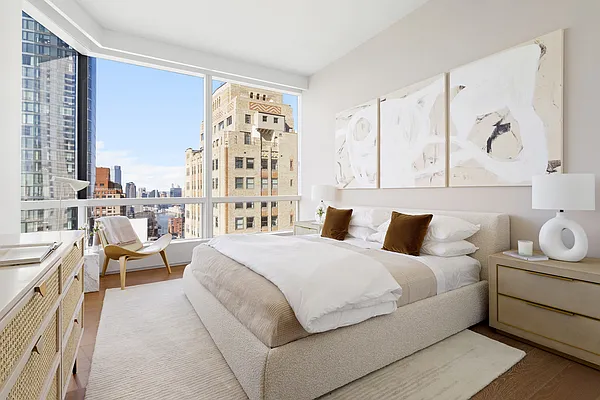
Discussion about 77 Greenwich at 77 Greenwich Street in Financial District
Add Your Comment
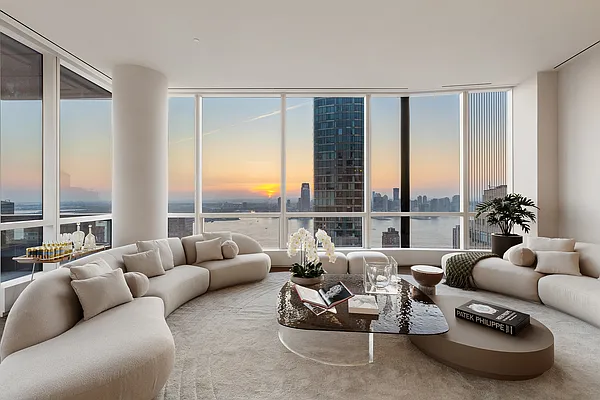
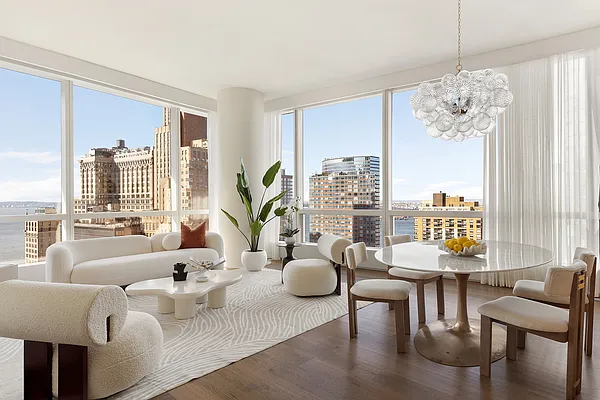
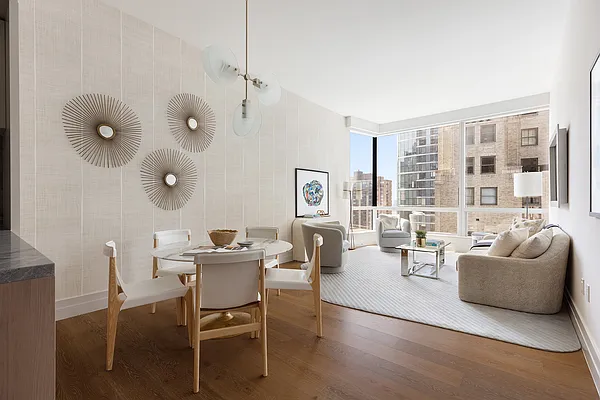
Most popular
-
11 Comments
-
2 Comments
-
7 Comments
-
33 Comments
-
9 Comments
Any idea about the developer of the building?
I parked right in front of this building last Thursday night. Still kind of shocked how almost every street there is "No Parking/No Standing Anytime" but still packed with parked cars.
Having worked down there before/after hurricane Sandy - that is absolutely a flood zone,
In fact Zone 2 looking at the official NYC map, not Zone 3 as Streeteasy listing claims.
Further - it is surrounded on 2 of its 4 sides by Zone 1.
I'd be VERY curious what pro-active design decisions were made to minimize impact of basement/lobby flooding on the building mechanicals. If the response is "huh?", then the answer is "run".
Location is a bit weird as it's across the street from a parking garage, and a sort of "transitional" area. Great if you work in FiDi, OK otherwise. Not a lot to do in immediate area, as the Fidi parts that are residential-izing are more towards the water. A bit boxed in by the tunnel exit traffic & permanent street closures post 9-11 related.
Another aspect of new devs that gets under-reported is that the monthlies are always artificially low at launch while sponsor controls. Given the building is loaded with amenities, they will escalate quickly.
The developer is Trinity Place Holdings (TPHS) which is a publicly listed company.
Any concerns about their financial ability to complete the building?
From Yahoo Finance:
Chuck
2 days ago
Stock price in March 2022 was 2+
Now down to 1.04
Drop of 51%
S&P500 dropped 7% over the same time...
What gives? What is the market telling us about TPHS...
Also, check latest SEC filing about TPHS.... they have to restate financials because they overcapitalized construction costs. Net loss is higher than previously stated. Will the financial viability of TPHS affect the development of other units at 77 Greenwich, the flagship development of TPHS?
Kinda scary! Perhaps that's why it's fallen about 51%?
There are so many other places to live -
The units in the building are really impressive.
Excellent design, finishes, and workmanship - cannot recommend highly enough
but developer financial status is somewhat concerning.
% of building yet to be completed poses uncertainties.
Early purchasers are taking somewhat of a risk?
Remember you want the developer to survive not just through construction but through sales so they continue to pay maintenance on unsold units, and ~5 years out so that they can cover any construction defects found within the post-construction claims window.
There was a BK condo that the developer folded and the building had a 40% budget whole due to all the unsold units no longer paying maintenance.
Steve123. Thanks for your insights. BTW, doesn't the developer have to set aside funds in an escrow account to complete essentials in the building before getting OC to begin selling a single unit?
@bobnay - I don't know about escrow, but how enforceable/protective is that?
Who estimates the required $ figure, who decided what are essentials.. the developer I'm sure.. what are the odds the $ amount in escrow is even 1/2 of real needs?
Further - there was another Brooklyn case where a developer went bankrupt post construction, so another firm bought them out as sponsor and proceeded with sales.
Years later, board went after this new sponsor for defects. Sponsor refused, original dev was bankrupt so nothing to go after, it went to court.
NY court rules that the new sponsor not responsible for cost of defects since they didn't build the condo, and that the original sponsor was bankrupt so nothing to go after there either..
That is useful insight. Thanks Steve123.
https://www.alblawfirm.com/case-studies/bayard-views-condominium/
Among RE nerds, I'm a rare bird who likes FiDi for its own sake, not just the price per sqft. Yet I would not live in the corridor between West St and Broadway. You give up most of the neighborhood's perks -- trains, shops, density -- without gaining any of BPC's charms. That land is a strange little slice of dark, desolate car culture, a mere 2 blocks from one of the nation's most walkable areas.
If you want a new-ish condo in FiDi, there are hundreds of others to choose from. More like thousands if you count stealth inventory and/or the major developments like 1 Wall and 130 William (and lots of midsize conversions) that are coming online imminently. Why this one, indeed?
@RBerg, I like FiDi too, which is why I sell a lot of it. But remember some of why certain buildings got yellow-carded (had their uses restricted by the City) post-Sandy and others, such as my beloved 3 Hanover, didn't, had to do with where their mechanicals were, among other things.
I haven't been to 77G but one could check to see if a developer in this day and age wasn't putting everything (or at least the elevator mechanicals) in the deepest cellar. If they aren't, then arguably the area near Broadway is a positive, since Broadway is a little bit of a hill -- sort of the spine of the island down there -- compared to everything else.
ali r.
{upstairs realty}
Since 2020, construction costs have climbed like crazy. Given that 77Greenwich is a new development, my greatest fear is that the developer will default, and not deliver the remaining units and/or remaining amenities. There is also no condo board, since sponsor is "in charge", correct? Who bears the tax burden and common charges for unfinished units?
TPHS - developer's stock price closed at $0.95 per share on Friday. NYSE listing rules require a stock price greater than $1 per share.
Despite my concerns above, I think the units in the building are very nice.
Great design and finishes.
I hope the developer bolsters its finances and is able to weather this storm.
The last bid/ask was $1.0001/$0.9099. The price has to stay below $1/shr for 30 consecutive trading days before the exchange would start delisting procedures.
Bob, There is a lot of finished new product on the market with building more than 50 percent occupied. Why would you take the risk of construction not being complete?
300_mercer, suggestions for something near FiDi to Tribeca with the same finishes at The Jolie would be welcome. Danke.
The Beekman residences are nearer to Tribeca (and to everything else) with very similar interior decor. The kitchen in particular looks like a near-copy, and the bathrooms are pretty close -- just a different choice of marble wall covering.
The amenities aren't as good though: "rooftop" patio area is large but on a relatively low floor (top of the hotel, not of the condo tower), and the gym is laughable.
I'd argue unless you are really really sure you need them, high-amenity buildings both attract the kind of people I don't want to live with (kind of a rental building vibe) and are a ticking maintenance time bomb.
Amenities are reasonably affordable for the developer to put in and then trigger lots of upkeep that explodes with age. My new dev building had 0 gym maintenance Years 0-4, then year 5 half the cardio machines needed replacing, barbells replaced, mirror repaired and new security system. Year 7 and the other half of the cardio machines look to need replacement.
The common areas end up being used heavily by 5-10% of the residents who then have lots of demands on upkeep & upgrades. If they takeover the board, say hello to frivolous spending. Ample common areas give irresponsible boards the opportunity to spend other peoples money on fun stuff. Why not spend 5 figures on new rooftop/lounge/lobby furniture again? It's only 2% my money. Etc.
It all looks very nice on new developers listing photos though.
In addition to the Beekman Residences, 50 West, other development around City Hall. I looked the finishes, they are very nice but virtually all new developments with over 50 units in Manhattan use nice finishes and a famous designer. It is a matter of personal taste.
Btw, noticed that bathroom walls are not even marble but porcelain. That is some serious cost cutting or $2-4k per bathroom.
Btw, noticed that bathroom walls are not even marble but porcelain. That is some serious cost cutting OF $2-4k per bathroom.
Steve, I agree on amenities. A gym is probably the most useful and worth the cost. Roof deck with grills very useful. A dog run with its cleaning cost and potential smell? Why not take the dog outside to battery park and other public dog runs?
It will be interesting to see what happens with these amenity spaces as time goes on and, as Steve points out, costs surge. Basic economics says that a building cannot run a gym or anything else cheaper or more efficiently than a commercial operator, so these amenities are only useful/economic for end-users because they are subsidized by non-users (or, initially, the developer).
I personally would never consider buying in such a building, as I would never use the "amenities," don't want to pay for them, don't want to live among those who long for them, and I would much prefer that the neighbors workout, swim, play with children, bowl, co-work, simulate golf or whatever else somewhere else. The only "amenity" I would seek out or pay for is on-site storage or, not to drum up a different post, parking.
@nyc_sport: +1 on this.
For a preview of how common area amenities will play out, consider laundry rooms in existing buildings: Most of those were outsourced to commercial operators decades ago. The more clever buildings are making a little income from the laundry facilities, and it's possible that newer amenity-heavy buildings will do the same in the future.
I think the very large buildings have an easier time subsidizing these amenities without any risk of upending their budget.
It's not my thing either, living in a resort like apartment building with everything from golf simulators to tenant lounge areas. But there is a certain buyer for these types of buildings, I think part of it is a perceived prestige and I think a mistaken idea that they will appreciate more.
Yeah, I’ll take the other side on this one…
The most important amenities to me are a gym and a pool. Having those immediately accessible via a 30-second elevator ride means I’m not schlepping 20 minutes back and forth each day to the gym/pool, spending an extra 10 minutes sharing equipment in a more crowded setting, etc. As a result, I exercise more often than I otherwise would, and I save 30 minutes each day. At this stage of my life, I value my time and fitness more than my money.
I get that some people care less about this than I do. That’s fine, if you do not care you should probably avoid amenities-rich buildings. But for this one person, it sure as hell isn’t about “prestige” — who gives a rat’s ass?
I think some of the "active" spaces could be outsourced & use-charged as discussed above.
Some of the passive spaces (big lobbies, lounges, decks, courtyards) are harder to do that for.
Developers add these amenities to tick a box.
For the developer, it's relatively cheap to fulfills the bare minimum such that it meets all the filter criteria. Even in the first few years when developers still hold a lot of units and need to pay monthlies, the run rate is fairly low before stuff starts breaking, so again, doesn't really matter to them.
Our developer probably could have made another $500k using the rooftop deck, lounge and lobby gym to make 2 adjacent apartments a bit bigger.
Instead they gambled that the 50 units in the building would be worth at least $10k more per unit because it ticked the "gym", "rooftop access", "tenant lounge" boxes.
Now operating the building 5+ years later..
We are spending probably $25k/year on the upkeep of these optional common areas & their furnishings.
Is each unit getting $500/year of use out of this stuff? I'd say barely 10% of building even use the amenities, and usually just 1 of them, not all. For that price most would be better off buying their own peloton / treadmill.
The funny thing is that the residents do seem to quickly age-out of the amenities and the people who were loudest about their upkeep suddenly re-join Equinox and SoHo house to get away from the riff raff.
The best use just may be hoping a sufficiently rich buyer decides they want to expand their apartment into the common space and we can sell it to them for $400K.
I wouldn't call a building with a gym and a pool overly amenetized... But that's just my view. I think we're talking about a slightly different animal, I'm thinking like One Brooklyn etc.
Keith - certainly but my point is the same re: numbers
Each incremental amenity is going to scale costs similarly
Yeah, but nadas building can afford it ; )
Developers over amenitize to skimp on apartment size. You can get anything you want except an extra square foot that's actually inside your apartment. But they do count those square feet when coming up with your apartment size even though they aren't actually for your exclusive use.
At one point we owned a unit at The Waterford. The Health Club at the top nearly bankrupted the building. It also made headlines for a more nefarious reason.
steve123,
If the amenities are in the Offering Plan as Limited Common Elements, along with some usage guidelines, it may be more complicated to lease them to an outside operator and charge owners a second time to use them.
Those interested in this topic may want to look at the history of pools at 50 Lexington Ave and other buildings.
I dunno, I’ve always liked buildings with amenities. The key is for the amenities to be nice. No one really wants to go to a crummy gym in a basement. Those kinda seem pointless.
It’s nice to be able to host 30 of your closest friends once or twice a year. Maybe you don’t have 3000 sq ft of living room, dining room, etc. inside your actual apartment. Maybe you do but just don’t want to deal with that many people in your apartment. It’s great to have a nice space available for that use.
Using Brooklyn Point as an example — I think that’s the one you meant as over-amenitized, Keith?
https://brooklynpointnyc.com/amenities
It’s 600K sq ft residential with 40K sq ft amenity space. There are 458 apts, which makes the average apt 1310 sq ft. The sq ft from the amenity space averages to 87 sq ft. If I were given an additional 87 sq ft in place of those amenities, I’d be like “What the hell is 87 sq ft going to do for me?” Sure, a little more space is nice. But it’s not transformative — the class of the apartment is the same. But those amenity spaces are an entirely different experience altogether. Sure, you don’t use all of it all the time. But I’ll pass on a little tip from Ken Griffin: even if have 23K sq ft of apartment all to yourself, you’ll have a hard time using all of it all of the time, even when you are there.
What about the extra $2M/yr or whatever it takes to maintain the 40K sq ft? Living in the avg apt there, by my math you’re blowing in the range of $10K/mo down the drain on housing. What’s another $400/mo on your share of the amenities? May as well do it right.
But Inonada's math shows exactly why the amenity spaces only work economically--and have attraction to be used by the subset who use them regularly--if they are subsidized by people who use them infrequently or not at all. The public gym logically cannot be more crowded and more expensive, unless there are allocation inefficiencies. And, like all herd mentalities, if the amenities were used, they would be useless.
Continuing the Brooklyn Point example, there are only 104 Fridays and Saturdays to host a dinner party, and 458 apartments. So, if fully used, you get the party space one weekend day every 4+ years, or about the average span of condo ownership in NYC. If you assume 458 apartments equals about 1500 residents, how would the pool be if all, half or even a quarter of the residents showed up? Same with the gym, or anything else.
Divvying up the 40,000 sq ft of amenities over the 458 apartments misses the point. If the space and economics were allocated ratably, the 225+ apartments that do not use the amenities would get an extra 90 square feet (i.e., and extra bedroom), and the other 225 apartments would have half the amenities and foot the full bill. The $2MM/yr (which seems to me pretty low) and 87 sq ft example means every purchaser paid $250k extra for their units, and $5,000+ a year more maintenance. For a group here that always likes to do some high finance math of the rent vs. own calculation, how does that investment compare to a gym membership and renting out a party room once every 4 years?
If I recall correctly, 25+ years ago the pool and gym at 280 Park Ave South was turned into a fee member only facility. After they couldn't get enough resident members to cover expenses, the (sponsor controlled) board reverted it back to a building amenity. In other words, tax the masses to benefit the few.
I specifically bought in a building with a low level of space-related amenities (we've got lots of staff though), because NYC offers all the amenities I could possibly want, reasonably conveniently (e.g., a gym 4 blocks away), and with better quality and variety than my building was going to provide and be able to sustain without breaking the bank. Want more free weights and fewer machines? Easy to change gym memberships. Hate the decor in the party room amenity? No good option, but there are lots of restaurants and party rooms that I can rent out for a night, with a dazzling array of decor options. And I can add and delete whole categories of amenities that I'm using as I choose, not as the building determines. Tired of golf? I can drop the country club membership, but would still be indirectly charged for the golf simulator amenity in a building.
Silly me, I thought the advantage of living in NYC was all the things you could do when you weren't at home.
I wonder if the responses here would have been different 2 years ago.
nyc_sport, my suggestion to you is to do what Aaron2 did: go to a building whose amenities (or lack thereof) match your preferences.
On Brooklyn Point, first Keith says it’s over-amenitized. Then nyc_sport says it’s under-amenities. It’s got something like 7 places where you could host a gathering. Even if you’re a square who only hosts on Fridays & Saturdays, that 700 slots for 458 apts. I’m sure you can pick up a Fri or Sat. And if you’re one of those wild people who, you know, hosts a BBQ on a Sunday — well, sky’s the limit!
On gym usage, my last building had ~600 sq ft for ~60 apts. Usage was probably spread out across 8 hours on any given day, with 2-4 people there at any given time. How did the cost compare against paying $200/mo at the Equinox 4 blocks away? I don’t know, no one really cared. It was part of their home.
I think I speak to text too quickly here. I should have said heavily amenetized, not my cup of tea so I would not be a buyer there.. or if I loved the apartments enough I would be a buyer and I wouldn't worry about the amenities, as I think in these large buildings, I don't think it's a big expense per unit.
I just wanted to add that space used by many amenities is not sellable as interior apartment space. Roof space, cellar/sub-cellar space etc. 1 Brooklyn point probably includes 10,000 sellable interior space used as amenities. Storage is sold separately at $200 per sq ft as per offering plan. Maintenance of the common space is real of course which increases over time. This building indeed seems to be over-amenitized in my opinion probably to make up for condo-op legal structure.
The expansive amenities at Brooklyn Point probably add ~10% to the cost of an apt, between capital and operating costs. In my last two buildings with plenty of amenities, it has been a more “normal” ~5%. The smaller the apt, the more the expansive amenities matter. I’d much rather live in a 500 sq ft studio with access to 40K sq ft of amenities than have an additional 50 sq ft all my own. At 5000 sq ft, it matters less. So to me, the expansive amenities at Brooklyn Point, where the largest listed apt is a <1500 sq ft 3BR, make sense. Not everyone’s cup of tea, but at that price point it’d be mine.
That's what makes the world so interesting, there's something out there for everyone.
inonada,
While amenities in these buildings may take up 10% of space and/or add 10% to operating (and since the limited common elements don't have separate tax lots they don't get taxed and therefore unit owners also pay higher Real Estate taxes), in the apples to apples comparison of what you get per dollar (without actually finding examples and doing calculations) I think you are probably looking at closer to 20% to 25% more square footage for the no amenities buildings/units. Say for example
https://streeteasy.com/building/171-henry-street-new_york/3d
Vs
The lowest priced unit at 1 Manhattan Square
In 2 Bridges neighborhood.
And that's the attraction for developers:
They take 10% of the building space which is often what would be the least attractive for them to be selling, and make the units 20% smaller for the same price. Note in one of the Brooklyn Point threads ph41 being shocked at how small some rooms are (ph41 please correct me, I'm not looking to put words in your mouth).
For those who love an amenity filled building, and want to save a couple of bucks you can head to Jersey City. Easy commute into NYC and it's not the Jersey City I knew as a kid!
https://livehaus25.com/amenities/
30yrs, I figured 10% more cost as follow. It’s 6% of the sq ft, lower quality in some ways (low floor) but higher in others (ceiling height, bling factor). I figured similar ppsf cost to build, taxes, common charges, etc. But then it costs more to maintain via staffing and maintaining that bling, which is how I ended up at 10% cost to live in.
I agree with what you are saying about the value proposition of these buildings. They’ve been selling them for 4.5 years and 5.75 years now, and they are still nowhere close to having sold out. But that speaks to a flaw in their value proposition, which runs much deeper than 10%. Suppose they had zero amenities but added 6% size to every unit and cut common charges by 15%. I contend the value proposition would become worse, not better.
I think it was ph41 indeed who expressed shock about the room sizes at these prices.
From my viewpoint, these buildings miss the mark on the “double space” vs “double quality” matrix. Given the choice between 750 sq ft at baseline quality and 375 sq ft at double the quality, most people prefer double the space. At 750 vs 1500, most people still prefer double the space. At 1500 vs 3000, preferences become more even but still skews toward space. At 3000 vs 6000, most people prefer quality.
The problem with these buildings is that they’ve gone into “double space” markets and are trying to sell “double quality”. Is there some demand for “double quality” at low square footage? Sure, but nowhere close to the amount they have built.
> ino and 30 - and I am still amazed at the prices for those tiny bedrooms and small living rooms. The giant bathrooms are only because of ADA.
I think two things that have contributed to the slow sales for some of these buildings like Brooklyn Point, the biggest issue is location, and the second to to a lesser but some degree this type of product is not in demand in Brooklyn.
In my experience most Brooklyn buyers are looking for that Brooklyn Brownstone neighborhood kind of feel. Doesn't necessarily have to be a brownstone, however, most buyers we work with are looking for a product with more character/charm. Though smaller density new development in prime, central locations certainly sell well. And larger newer development seems to do okay when it's centrally located in or in very close proximity to a prime neighborhood.
I like the "double space" and "double quality" explanation. Also, "double quality" (Ultra luxury with views) is just oversupplied regardless of the size.
ph41, is that a reflection of the double-space / double-quality tradeoff? E.g., if we doubled the space in the 1450 sq ft 3BR to be more generously proportioned as a 2900 sq ft 3-4BR while also doubling the price, would that make more sense to you as a product?
Keith, Extell seems to excel at putting up these types of products where the demand doesn’t exist. They hit it big with One 57, at least for a while, and then just franchised it without abandon.
300, my sense is the oversupply is from 1.5x-the-quality masquerading via double-the-price. Sometimes, the masquerade is via location, sometimes it’s via architecture & structure. Slapping ultra-lux finishes onto any old location / structure and asking ultra-lux prices, that doesn’t sell well…
Agree if quality includes location like 1 Manhattan square and 1 BK point. If the developers wants to spend a lot of money (call it $1000 per sq ft extra due to height including extra carry) on building a super tall tower with views, it better be premium location.
For me space, finishes and location rule till 2000-2500 sq ft for a 3 bedroom. After that views start to matter but market premium for views is higher than I am willing to pay. Amenities besides storage (is that really an amenity) and gym are useless to me. Decent gym I really like as no member of the family has an excuse about going to the gym regardless of the weather.
I think what I've seen is the high-amenity buildings skew towards young (often first time buyer), small unit (and high % invest for rental) buildings. Brooklyn Pointe, Oosten, One Manhattan Square, and a lot of devs in LIC certainly fit that bill.
As was mentioned upthread, common areas are great if you live in a 300 sq ft studio or 700 sq ft 1BR. For the rental angle its like a double box ticking exercise as the developer puts the amenities into the condo, so they meet the search criteria of the investors who are buying knowing that the rental searcher for their apartment is going to be filtering for gym/roof/etc. In this sense they are directly competing with rental buildings which are often high amenity for the same reason.
If you are in 1500-3000 sq ft, 2-3+ bedrooms, it may not be as important to you. You can probably slot a peloton bike or even treadmill into a bedroom/office area, and you have enough space to host 10-20 guests in your own home.
Many of these are laughable anyway.
I just saw marketing material for a "Stargazing observatory". Let me know how many stars in the sky are observable against the light pollution of NYC...
Indeed. They are competing with rentals but at appx 50 percent higher monthly carry.
Related started the small rental apartment with as many bedrooms squeezed in as possible but with a lot of amenities and impeccable service. That has worked well for them.
"Suppose they had zero amenities but added 6% size to every unit and cut common charges by 15%. I contend the value proposition would become worse, not better."
Suppose they added 20% to 25% size to every unit at the same price rather than trying to sell as ultra lux in a crappy location with 100,000SF of amenities. I think they would have sold out by now.
Agree with 30.
No arguing with that, 30yrs.
No arguing with that, 30yrs.
Hypothetical question: in X years, if the condo board wanted to, could they sell off the space to somebody who wanted to convert it to living space or sell to a company who would put in a real restaurant/gym/piano bar/whatever? Or once it is common space, does it always have to remain so? I understand the mechanics of co-ops selling off bits of common space (hallways, for example), but don't know the condo options.
@Aaron2 - Not able to say for certain, but having sat on a condo board I don't see selling off common elements (gym/roof deck/lounge) as being something the board would have had the authority to do unilaterally. At the very least I'd expect this to be at the scale of a bylaws change, which involves a 66.6% ownership share voting YES.
From experience, getting that % of ownership to vote and to vote in the affirmative is a very high hurdle.
Practically unless its a lobby level, sidewalk-adjacent part of the building, it would be very hard to slice out of part of the building for sale/lease as a restaurant/gym/etc. Many common amenities are deep within the building, so you'd be opening up your halls & elevators to general public for access which is a non-starter.
I'd be curious if anyone actually has experience in doing this in a condo.
Will need a shareholder's vote for sure.
“At 750/1500 sq ft most people still prefer double the space. At 1500 vs 3009 preferences become more even but still skewed toward space. At 3000 /7000 most people prefer quality.”
> Ino, I’d agreed with that and I’d also pay double the price for 2900-3000 ft space with only 3-4 bedrooms if the price per square foot remained the same as a smaller unit
And basically, my 3000+/- sq ft, plus terraces, is enough for the 2 of us( tho I could use another closet or 2 ?
And basically, my 3000+/- sq ft, plus terraces, is enough for the 2 of us( tho I could use another closet or 2 ?
And basically, my 3000+/- sq ft, plus terraces, is enough for the 2 of us( tho I could use another closet or 2 ?
And basically, my 3000+/- sq ft, plus terraces, is enough for the 2 of us( tho I could use another closet or 2 ?
And basically, my 3000+/- sq ft, plus terraces, is enough for the 2 of us( tho I could use another closet or 2 ?
And basically, my 3000+/- sq ft, plus terraces, is enough for the 2 of us( tho I could use another closet or 2 ?
And basically, my 3000+/- sq ft, plus terraces, is enough for the 2 of us( tho I could use another closet or 2 ?
And basically, my 3000+/- sq ft, plus terraces, is enough for the 2 of us( tho I could use another closet or 2 ?
And basically, my 3000+/- sq ft, plus terraces, is enough for the 2 of us( tho I could use another closet or 2 ?
And basically, my 3000+/- sq ft, plus terraces, is enough for the 2 of us( tho I could use another closet or 2 ?
And basically, my 3000+/- sq ft, plus terraces, is enough for the 2 of us( tho I could use another closet or 2 ?
And basically, my 3000+/- sq ft, plus terraces, is enough for the 2 of us( tho I could use another closet or 2 ?
Here's what's interesting about 1 Manhattan Square in this discussion:
If the "bench racing" calculations 300 Mercer and I went through a few years back were close to correct, they actually could have cut the over-amenitization, offered 20% larger units at the same price, sold out pre-construction, and turned a profit. Rather than the attempted maximum extraction/minimum square footage which AFAIK resulted in a money losing project which still has about ?250? units left to sell 6 years in.
steve123,
Agreed. As I pointed to earlier in the thread, odds are they are in the Offering Plan as Limited Common Elements. If this is the case there is no Real Estate to sell (i.e. no tax lot apportioned). In order to sell them you would need to amend the plan with an entirely reworked Schedule A and possibly amend all unit owner's deeds. You might even need to get a sign off from all the banks that had issued mortgages on the units for altering the collateral.
30. Typically, at least half the amenities space is not sellable as apartment interior space - roof, cellar, open space which does not use FAR. I am guessing only 25% of the amenities space uses any FAR. So advertised amenities space of 40,000 sq ft (this number may be inflated as well as condo plans may not give exact square of the common space) may only use 10,000-15000 sq ft FAR. I can see that translating into 5-7% larger apartment size. Maintenance of common space is the real killer.
So sorry for the inadvertent multiple comments!
@30 - in other words, a 1/1000 chance that you get the owner votes & stakeholder sing-offs to actually go through with it .. the legal costs would be high enough to make it only worthwhile if you has significant & attractive multi-million dollars worth of common elements to sell off with interested bidders lined up
One Manhattan Square has always kind of befuddled me as probably a market cycle white whale.
It's a long uphill walk to transit & any sort of retail, so you probably buy here if you are more of a homebody? But then the units are undersized by 10-15% vs what I'd want for the # of bedrooms.. which they make for using all that space for common elements?
The amount of staff needed just to do daily/weekly upkeep on 100k sq ft of amenities makes the mind spin.
I mean a lot of these active amenities seem easily swamped if they are actually popular at all. Scenes of spa castle in my head ..
Cool it's got a pool, 1 hot tub, 2 lanes of bowling, 2 pool tables.. but it's a building that fully occupied might have upwards of 2000 residents! My neighbors house in nowhere has similar amenities, and he only has to share it with 3 daughters & a wife.
You get the impression they ran out of ideas with some of the amenities:
Cellar bar and lounge
Wine storage and tasting room
Cigar room
Im surprised no developers have come up with a WeWork hybrid residential building.
Basically instead of a ground floor retail store, a shared office/shipping /receiving space..... for the residents only.
Some people like separating their home away from "working"
Maybe even outsiders for a substantial premium.
Could get interesting for figuring out tax deductibility also
A perfect project for someone like Related.
truthskr10,
To a limited extend The Cosmopolitan tried that 37 years ago.
Well, this isn't a good look for TPHS (or BDO(.
From an 29 Aug 22 press release:
"As previously disclosed in the Current Report on Form 8-K filed on August 17, 2021, the management and the Audit Committee of the board of directors of the Company, in consultation with BDO USA LLP, the Company's independent registered public accounting firm determined that the Company's previously issued financial statements and the audit report thereon, as of and for the year ended December 31, 2021, and the unaudited interim financial statements as of and for each of the quarterly periods ended June 30, 2021, September 30, 2021, December 31, 2021 and March 31, 2022 (collectively, the "Prior Period Financial Statements"), should no longer be relied upon due to an error in accounting treatment regarding the overcapitalization of internally allocated construction related costs related to the development project at 77 Greenwich Street.
Management and the Audit Committee determined that these accounting changes require a restatement of the Prior Period Financial Statements, the impacts of which are expected to principally involve a reduction of net income and total assets for certain periods (which will result in a gain on sale of condominiums in excess of the gain anticipated prior to the restatement) and other non-cash items. The restated accounts in aggregate are expected to have no effect on the Company's cumulative earnings by the end of the condominium sell-out period. As a result, the Company required additional time to evaluate its financial statements for the year ended December 31, 2021, the quarter ended March 31, 2022 and the quarter ended June 30, 2022, and did not timely file its Quarterly Report on Form 10-Q for the quarter ended June 30, 2022. "
(some of this is just technical accounting stuff, but still...)
> I wonder if the responses here would have been different 2 years ago.
A building amenity that requires staff to operate (for insurance reasons, presumably) barely counts as a private amenity at all. The condo amenities I rented at the time took far longer to reopen, and for much more limited hours, than competing businesses in the neighborhood. One of many factors that subconsciously solidified my POV, outlined neatly by Aaron above, and eventually toward buying in a low-amenity building.
> I haven't been to 77G but one could check to see if a developer in this day and age wasn't putting everything (or at least the elevator mechanicals) in the deepest cellar. If they aren't, then arguably the area near Broadway is a positive, since Broadway is a little bit of a hill -- sort of the spine of the island down there -- compared to everything else.
To be clear for OP: 77G is not close to Broadway in elevation let alone vibe. For climate resilience alone, I'd want to be between Broadway and William, or perhaps the upper part of Gold St. Not coincidentally, this is also the area with the best neighborhood amenities and feel.
(not counting the tiny tourist areas -- e.g. Seaport, Stone St -- that have frightfully old & low-lying buildings)
But @richardberg between Broadway and William you're probably impacted by the subway. It's certainly a problem for at least one building I can think of on William St.
Interesting...I've visited at least a dozen buildings in that area and never felt subway noise/vibration.
Just saw TPHS stock price is $0.85
This is concerning about financial viability of the developer.
And it's now traded at $1.03 (Friday noon-ish). They're also in re-financing talks, and made a specific effort to point out that they have enough cash to finish the building:
9:08 AM ET 9/9/22 | Dow Jones
Trinity Place Holdings Inc. has entered into an exclusivity period with a large asset manager to seek refinancing at better terms.
The real estate holding company said Friday that it has been exploring strategic transactions, including acquisitions and financings, and now seeks to refinance at terms that better reflect Trinity Place's reduced risk profile.
The company said it wants new cash and financings to be used for a substantial investment in one or more new business opportunities "that may activate certain company attributes."
Trinity Place noted that it does have sufficient funds on hand to complete the construction and development of the residential portion of its building in lower Manhattan.
@ Aaron2 - Thanks for the info.
When a company says something like:
" Trinity Place noted that it does have sufficient funds on hand to complete the construction and development of the residential portion of its building in lower Manhattan."
I was wondering what kind of credence to give that statement.
First, which person at TPHS made that statement, and next, can they be sued for making false statements?
You'd have to be privy to a fair amount of internal data to decide the truthiness in that statement, and if you're feeling suspicious, you could note that they said 'construction and development', but not 'marketing and sales and building staffing', and 'residential portion' but not 'the entire building' (I have no idea if there's a commercial element to the building).
People can be sued for just about anything these days. Certainly materially false and misleading statements.
Or, perhaps worse, the SEC will come after you. For an example (though of a different type of accounting problem), see today's press release from the SEC on the action they're taking against VMWare (for "push[ing] revenue into future quarters by delaying product deliveries to customers, concealing the company’s slowing performance relative to its projections.")