
Key Takeaways:
- A studio apartment is made up of a single room that serves as the living, sleeping, dining, and kitchen area; only the bathroom is in a separate enclosed space.
- Declutter regularly and embrace minimalism to keep limited space functional and calm.
- Maximize space by thinking vertically, using multi-purpose furniture, and organizing items in baskets or bins.
- Create the feeling of separate “rooms” with rugs, furniture placement, and shelving used as dividers.
- Use layered lighting such as lamps, sconces, or well-placed floor lights to add depth and balance out harsh overhead fixtures.
- Visual tricks like strategic paint colors or mirrors can make the space feel larger and more open.
New York City is notorious for small spaces. Bars, restaurants, elevators, and sidewalks are all a bit cozier than in other parts of the country, and the same is true for apartments. As such, many New Yorkers have no problem living in a studio apartment, and NYC is filled with them. With the right approach and strategic use of space, living in a studio can be fabulous, not to mention affordable. Here are some of our favorite hacks for studio apartment living, with tips and insights from experienced studio dwellers and interior designers.
Manhattan Studios Under $3,500 on StreetEasy Article continues below
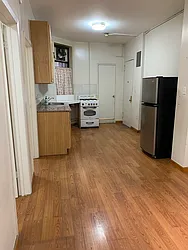
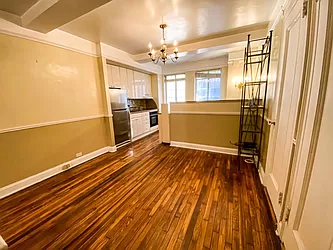
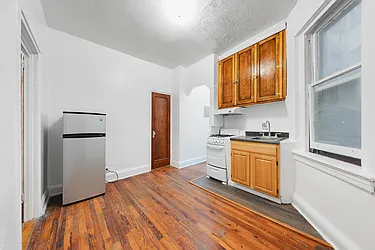
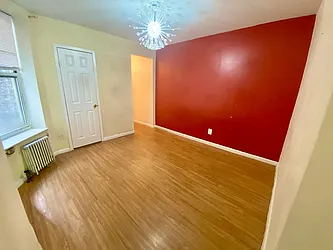
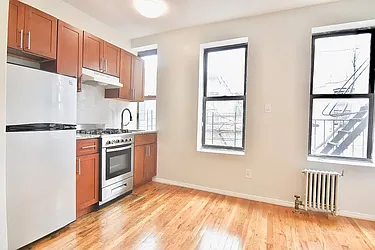
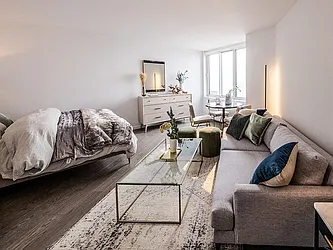
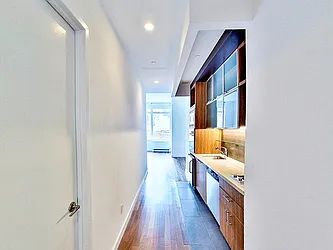
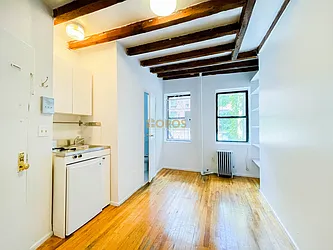
What is a studio apartment?
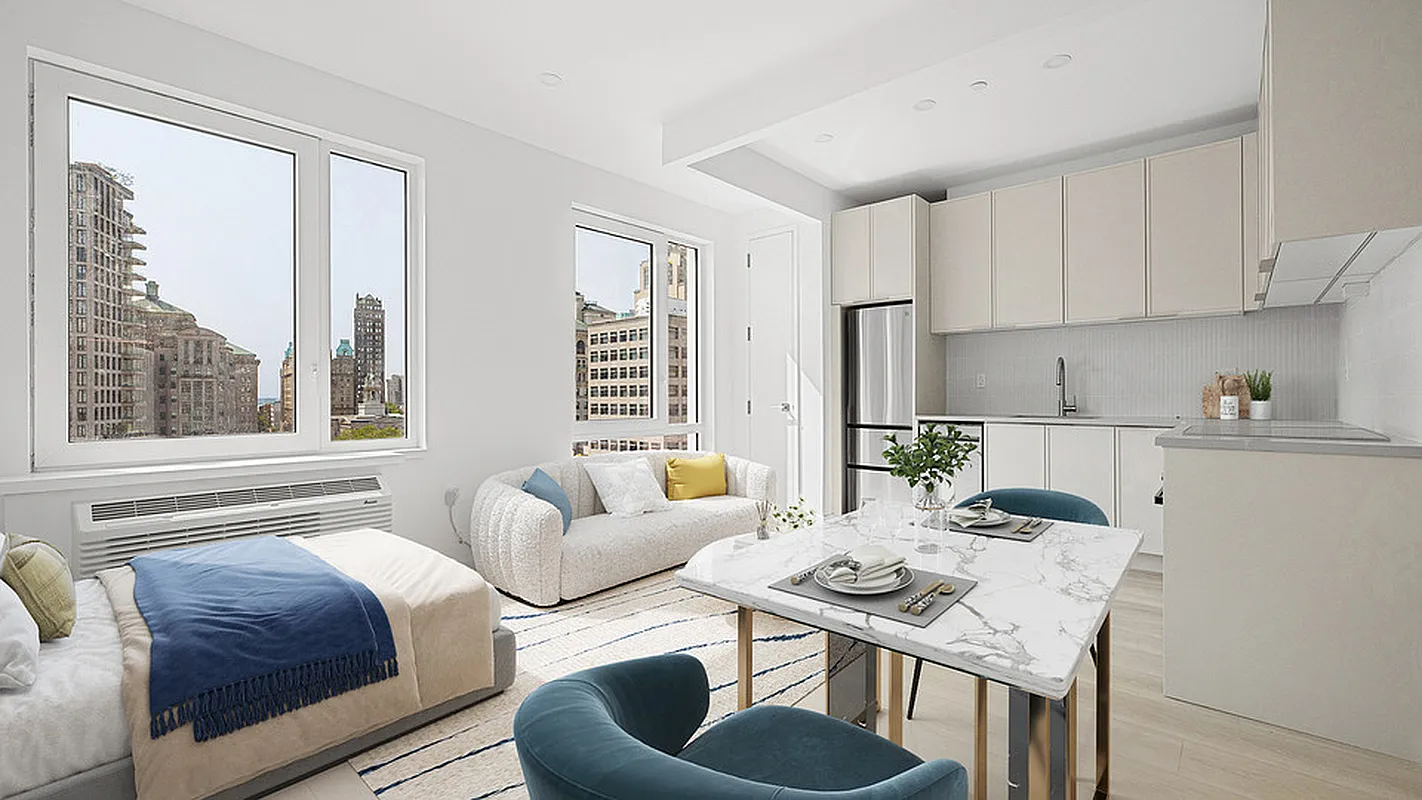
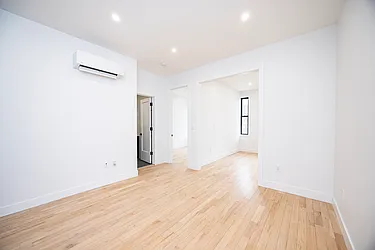
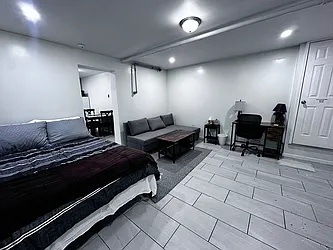
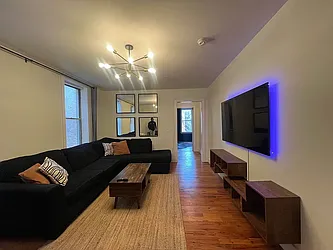
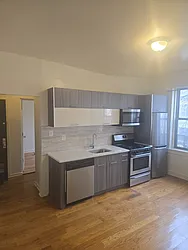
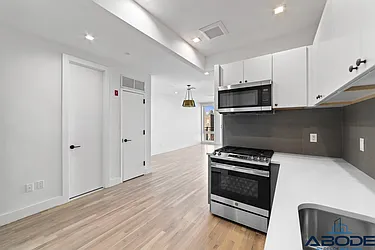
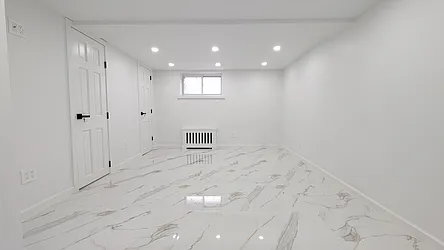
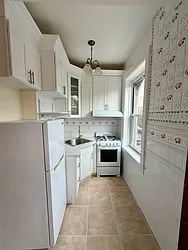
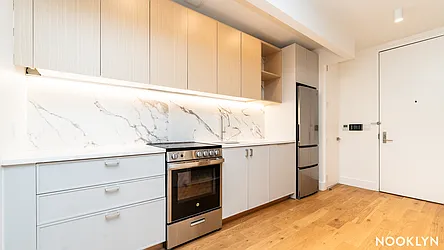
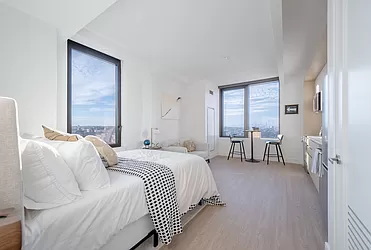
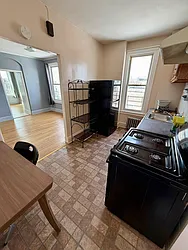
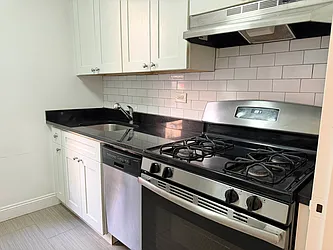
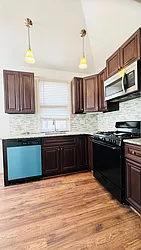
A studio is an apartment made up of a single room serving as the living, sleeping, and kitchen area. Only the bathroom is in a separate enclosed space — though believe it or not, occasionally you’ll find one with a bathtub in the kitchen! Some have full kitchens, others have a kitchenette. They’re typically small, but not always — some units, like this one in SoHo, are technically studios but measure 1,500+ square feet (and the rent isn’t cheap).
Variations include an alcove studio, which has a sleeping “alcove” that may be recessed, and a junior 1-bedroom, which has a distinct sleeping area sectioned off by a partial wall, a sliding door, or a “flex wall” that doesn’t reach the ceiling. These definitions can be fuzzy, and you’ll sometimes see the terms used interchangeably.
Underneath all the jokes, memes, and social media posts about closet-sized units with communal bathrooms, there are health and safety stipulations about what constitutes a studio apartment. It comes down to the legal definition of a bedroom according to the city’s Building Code, which is complex and varies based on the zoning district, building, and more.
That said, with exceptions, some basic requirements for a legal bedroom in NYC are that it must:
- Be at least 8 feet long, 8 feet wide, and 80 square feet in size
- Have a minimum ceiling height of 8 feet
- Have at least one window measuring 12 square feet or more, facing a street, yard, or other outdoor space
- A skylight is acceptable in some zoning districts
- Have at least two means of exit that don’t require keys or tools (e.g. a door and a window)
The same requirements would apply to a studio apartment, which is technically a bedroom.
Brooklyn Studios Under $3,000 on StreetEasy Article continues below
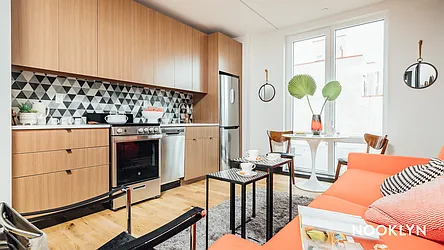
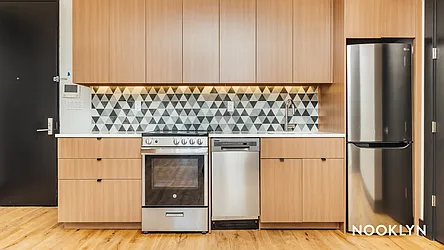
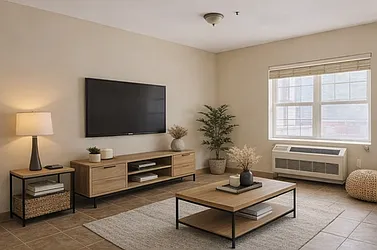
Tip #1: Embrace minimalist living
First and foremost, to survive in a studio, you must declutter your life. Get rid of any furniture, clothing, or other belongings that aren’t necessary.
“I donate or give away a lot of things I don’t use anymore,” Alexa Batista, a studio apartment owner in Chelsea, tells StreetEasy. “I do this throughout the year with things like clothes and books. I also don’t like drawers to be overflowing. I subscribe to the Marie Kondo folding techniques, and anything that doesn’t fit or that I don’t wear, I remove from the apartment.”
A good rule of thumb to keep clutter at bay: if it’s been more than a year since you’ve used something, get rid of it. If that doesn’t cull things down enough, make it six months. The city is full of great places to donate big items like furniture. Some of them will even pick it up for you!
Tip #2: Smart hacks for small-space organizing
Organization is key to living in a studio apartment, so it’s essential to figure out functional and space-saving storage options. Here are some great hacks.
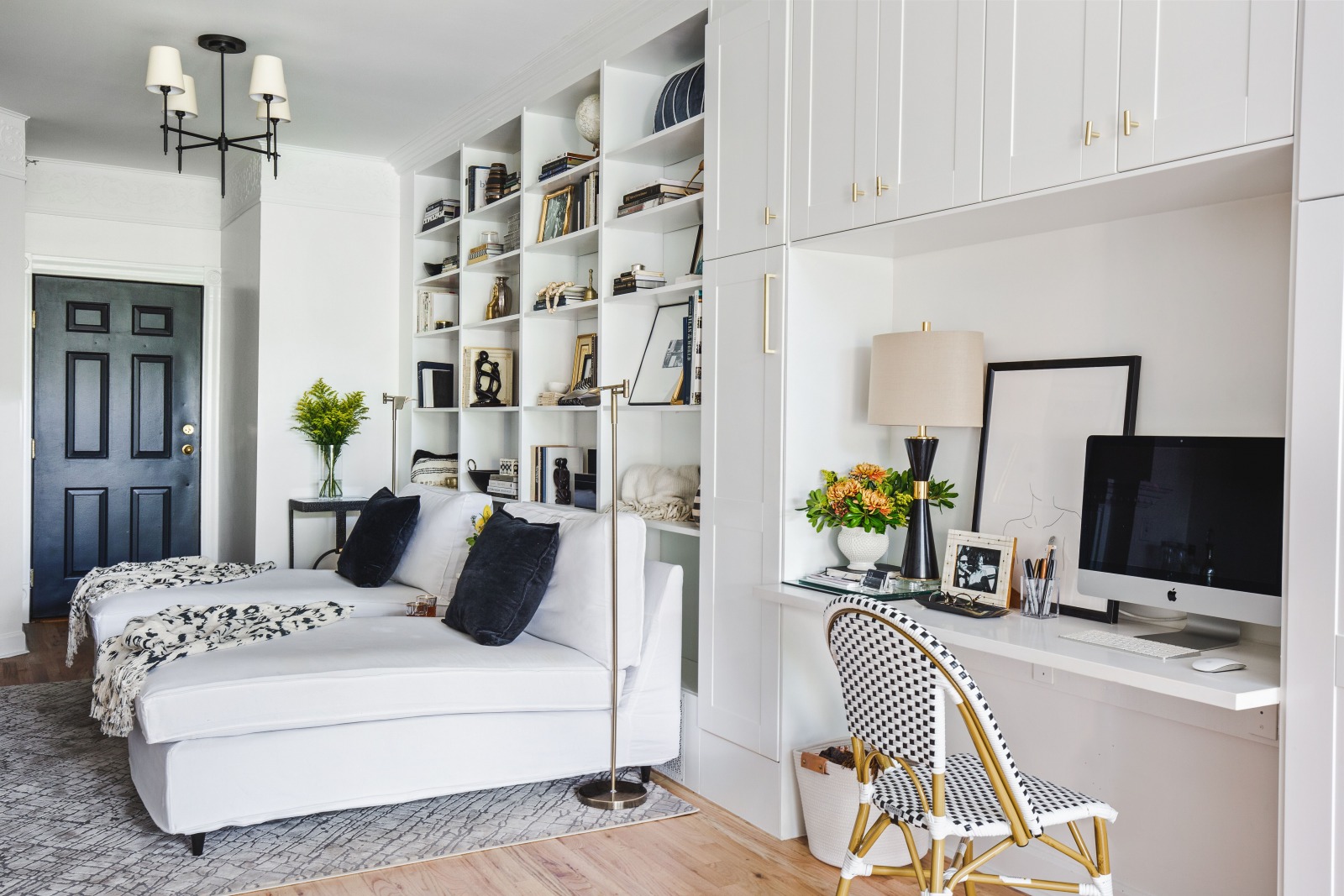
- Think vertically: Make the most of the square footage you have by going vertical. “One of our favorite narrow-space design ideas is using bookcases in creative ways,” says Modsy VP of Style Alessandra Wood. “Bookcases make use of your space vertically. So you can maximize storage while minimizing the use of floor space.” Try using a bookcase in place of a nightstand or side table.
- Embrace baskets: Keep items grouped by adding boxes, bins, or baskets under the bed, in the closet, and even on bookshelves. “Storing loose items in a specific place makes a space look less cluttered,” says Lee Mayer, CEO, and co-founder of Havenly. “It also helps to ensure that you can quickly locate them.”
- Make it multi-functional: “All furniture should hold multiple purposes,” says Batista. “For example, my bed has built-in storage underneath it.” The Container Store, Ikea, and Bed, Bath & Beyond are great resources for efficient and affordable pieces.
Tip #3: Divide your studio apartment into multiple rooms
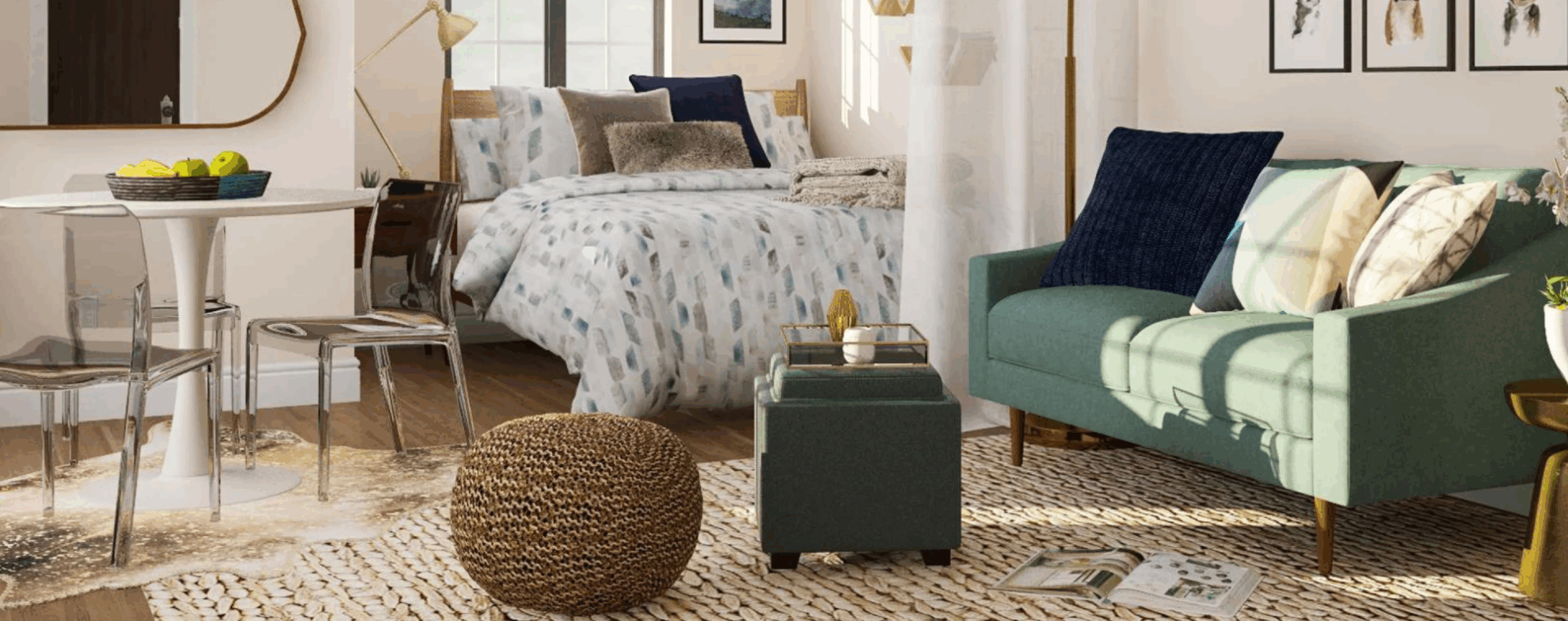
Life in a studio apartment means one room serves as your bedroom, dining room, living room, and kitchen. To make these areas feel a bit separate, you’ll want to distinguish each of them in some way. The easiest way to visually divide up a room? Use throw rugs to set the foundation for distinct spaces. “Consider different shapes and sizes,” says Mayer. “You can use more than one rug. Just ensure the colors, patterns, and textures are balanced.” Rugs can work in conjunction with other decorative items, too. “My living room area has its own carpet, seating, and art, so it looks more defined,” says Batista.
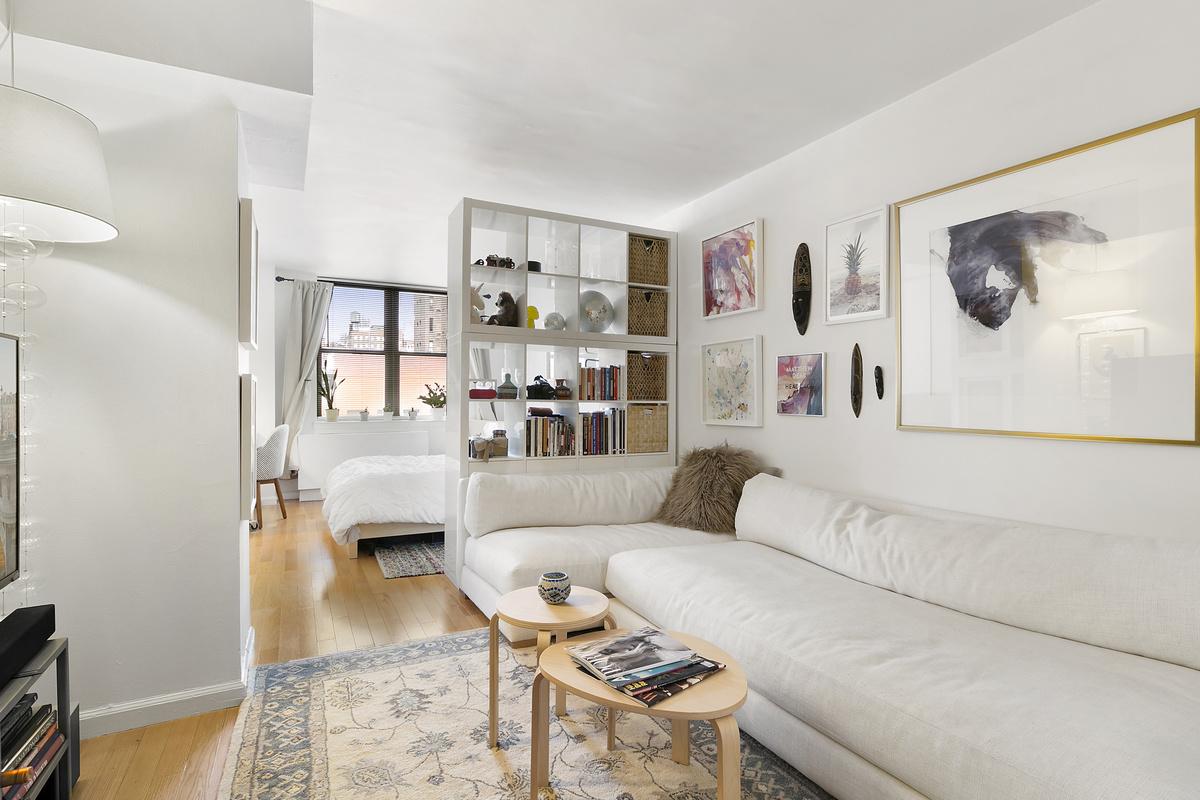
Furniture is also a great way to create distinct areas. “We often encourage utilizing furniture to separate a space,” says Mayer. “For example, the back of a sofa can act as a makeshift wall or divider between a living area and a bedroom area.” Closed bookshelves can create the illusion of a wall: “I did this in my own former studio,” says Wood. “I actually put a desk on the backside, bolted everything together, then bolted it to the wall. It really divided the space.” On the other hand, an open shelving unit creates the feel of a divided space without blocking light, and it’s a great way to showcase your books or curated collections. Wood’s pro tip: “Bring it out from a wall and use two to extend the length.”
Tip #4: Use lighting to create depth
Harsh overhead lighting can be unkind to a small studio, drawing attention to low ceilings, dirty windows, and unattractive architectural details. And in older buildings, overhead light fixtures are often all or nothing, meaning you can’t modulate the amount of light with a dimmer. If you’re living in a studio apartment that’s saddled with this kind of lighting, consider layering in lamps, which create a sense of depth.
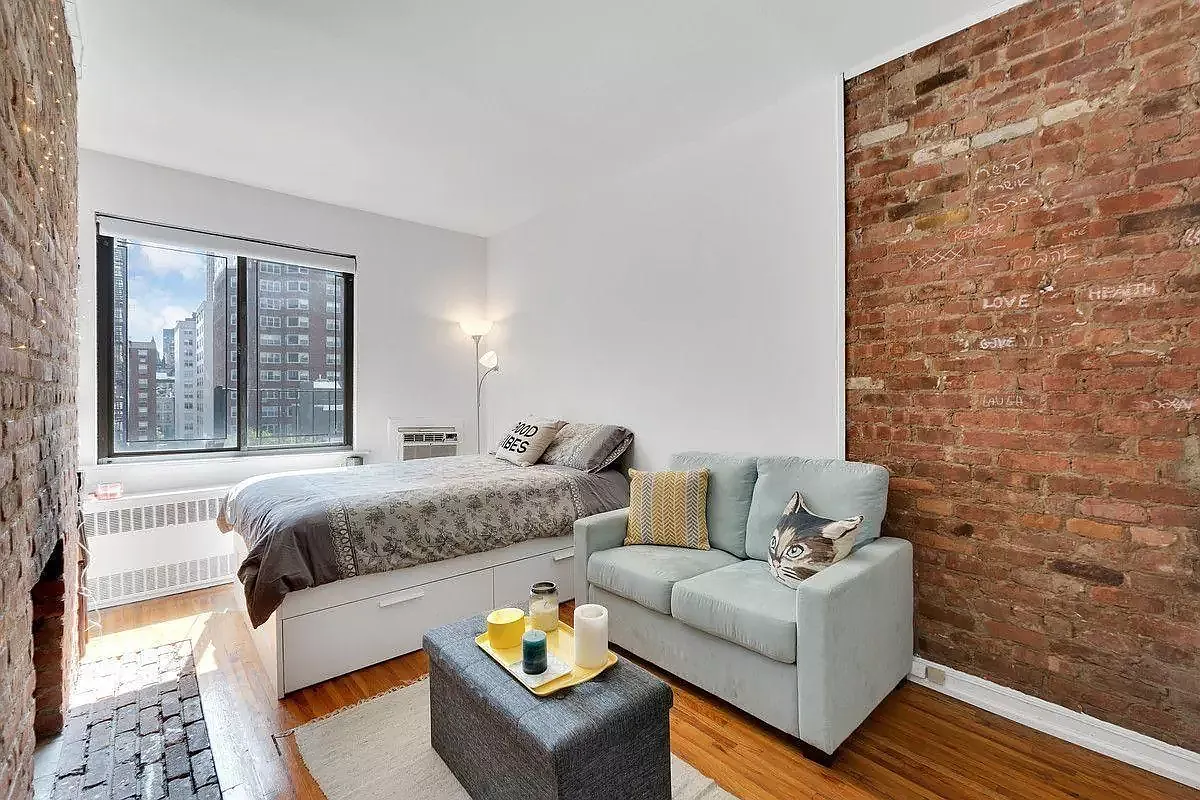
But you want to be sure the extra lighting isn’t eating up your precious floor space. “Table lamps and task lighting are great, small-scale decor elements that evoke style and create visual interest,” says Mayer. “Plug-in sconces are another option to add both warmth and an artful touch to a wall area without taking up valuable room real estate.” Even floor lamps can be a space-saving lighting solution when they are nestled behind a chair or sofa, or even anchored at the corner of a bed.
Tip #5: Keep things tidy
Messiness is a studio apartment’s worst enemy. A few dishes in the sink, clothes on a chair, or shoes on the floor may not be a big deal in a sizable 2-bedroom, but in a studio, it’ll make the space feel even smaller. Be sure to stay organized, avoid clutter, and put things back where they belong in order to free up much-needed space.
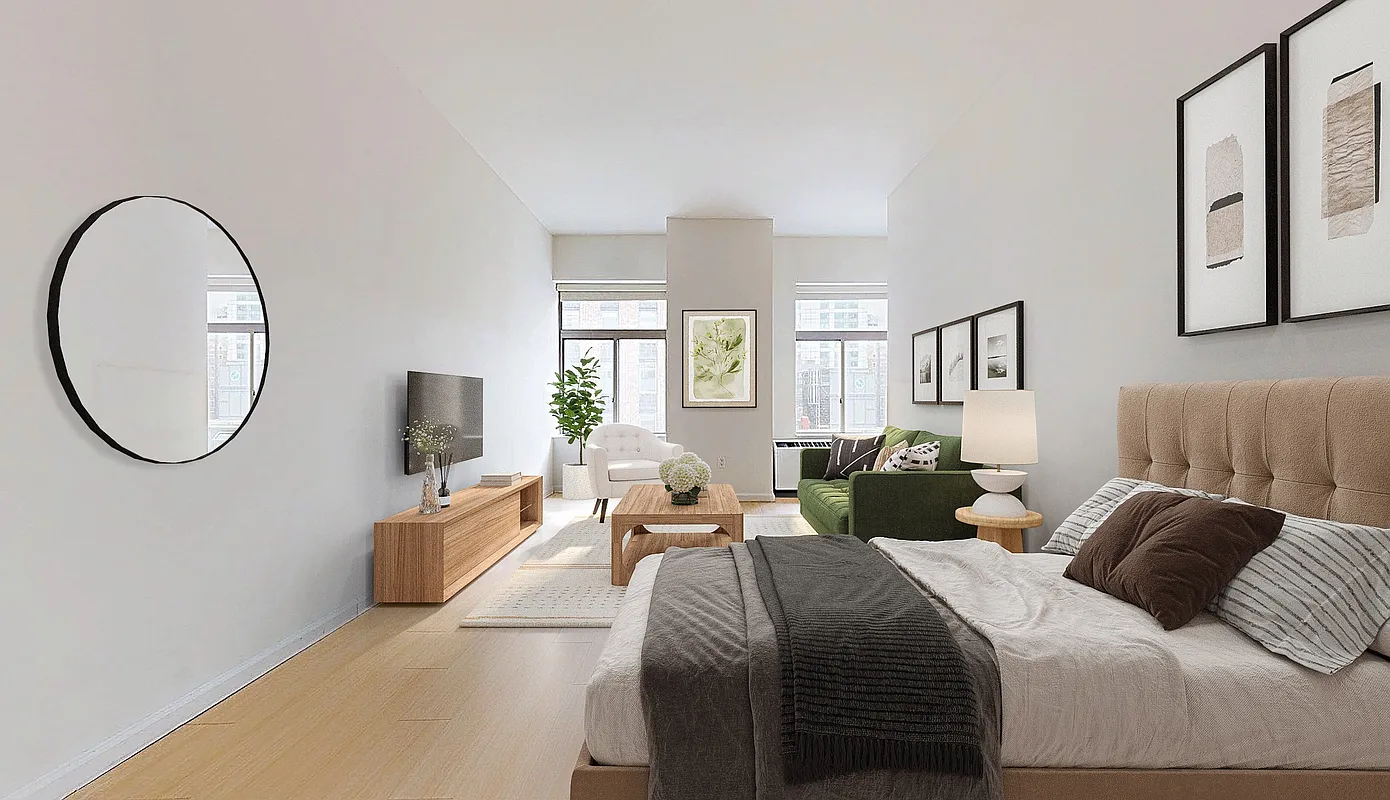
Some tips to help keep you in tidy mode:
- Make your bed: “You’ll be amazed how a made bed immediately sets the tone for calm and order, which encourages you to keep the rest of your place tidy,” says Mayer. “This is especially important in a studio, where your bed is always visible!”
- Put up hooks: “Install hooks right by the entry for hanging things like coats, purses, and keys, so they don’t get tossed on top of your much-needed resting areas,” Mayer advises.
- Use double-duty pieces: “A storage bench or ottoman is a useful piece of furniture and also a perfect place to stash dirty laundry,” says Wood. “Also, look for coffee tables with built-in storage.”
Queens Studios Under $3,000 on StreetEasy Article continues below

Tip #6: Choose the right paint
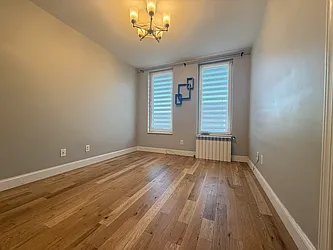
When you’re living in a studio apartment, you might think there’s no opportunity to jazz up such a small space with some color. But, if you own your place (or your landlord allows it), painting can be completely transformative and help you customize your space to your own unique style.
“Paint adds dimension and personality to any space,” says Mayer. Just be careful with the colors you choose. “Darker colors can make a space feel smaller, depending on your room’s lighting,” says Wood. “Choose a color that you love and that feels uplifting in your space.” You can even go all white, as Batista did: “I painted my entire apartment white, including the brick, which made it seem brighter and larger.”
Tip #7: Create more visual space
You can’t change the amount of space in your studio, but you can use some visual tricks to make it appear larger.
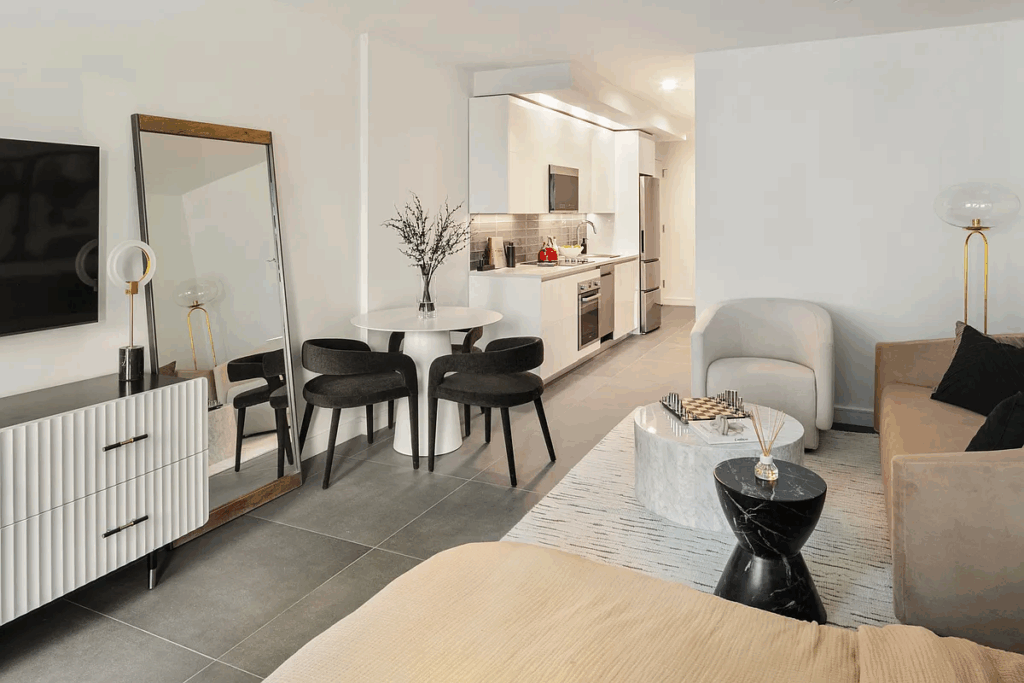
- Hang a mirror: “Mirrors are great for small spaces, as they reflect light and create the illusion of more space,” says Wood. “However, don’t go overboard. One large, well-placed mirror is just enough.”
- Opt for clear pieces: The oldest trick in the interior designer’s handbook? See-through furniture! “Pieces made of glass or acrylic are a great way to fool the eye into thinking your space is larger than it is,” says Wood. “Skip the heavy wooden coffee table in favor of a clear option to make your living space look more open and airy.”
- Elevate your furniture: Similarly, nothing makes a small space look even smaller than a big bulky sofa plopped right on the floor. Instead, opt for furniture that sits up off the floor and creates negative space. Being able to see the floor space continue underneath the furniture makes a room look roomier. Just don’t make it too high off the ground, which cuts into your precious vertical space.