It will be interesting to see the final transaction price of this unit...
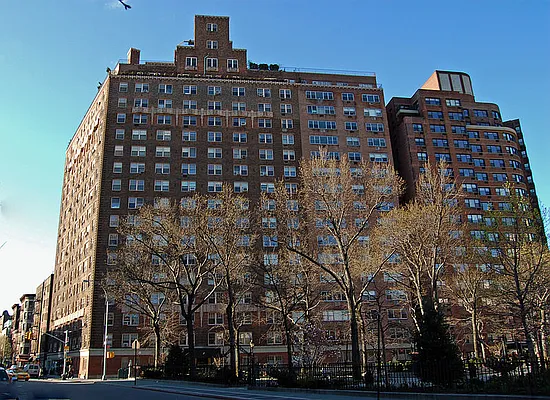
2 Horatio is a great building, but this apartment is in the post-war addition, despite the broker's claim that 17R is a pre-war apartment. It has great views, but a drab post war dated feel (parquet floors and track lighting) and a very middle-end kitchen renovation. And 930 square feet seems a bit aggressive - 850 is more like it. It seems odd to ask such a premium when the pre-war 1-bedrooms at 2 Horatio trade around $1M each.
(It's a cond-op, with the city reporting the apartment number as #RES1 rather than #17R, so SE couldn't match it up.)
Ignored comment.
Unhide
Response by front_porch
almost 15 years ago
Posts: 5325
Member since: Mar 2008
Cond-op? Wha?
Ignored comment.
Unhide
Response by happyrenter
almost 15 years ago
Posts: 2790
Member since: Oct 2008
A high floor one-bedroom has not sold in the building in recent years, but I think it is safe to say that a high-floor one bedroom on the prewar side of the building would sell for far in excess of $1 million in this market.
Ignored comment.
Unhide
Response by NWT
almost 15 years ago
Posts: 6643
Member since: Sep 2008
Ali, it's the kind of cond-op where the co-op owns the one big residential unit (98.something PCI) and the sponsor owns the tiny retail unit. It converted in 1986, when sponsors weren't as able to finagle long sweetheart leases for the retail, so went cond-op instead of pure co-op.
Ignored comment.
Unhide
Response by kylewest
almost 15 years ago
Posts: 4455
Member since: Aug 2007
I strongly dislike the "cond-op" label because so many people are misled by it. It does not mean a "co-op with condo rules" as many think. This one, like most, simply refers to the arrangement that NWT outlines. A typical example is a building with a garage, apartments, and retail space. Each is made a condo. The offering plan sets forth how expenses will be divided between the condo units for things like building maintenance. Then, the apartment compenent is divided into a traditional co-op with its own prospectus, proprietary lease, etc. Buyers of apartments truly buy a 100% co-op. The fact that the garage and stores are not owned by the co-op generally has no practical impact on owning an apartment there, other than to say that certain expenses will not fall solely upon the apartment owners.
Ignored comment.
Unhide
Response by front_porch
almost 15 years ago
Posts: 5325
Member since: Mar 2008
NWT, thanks for explaining.
I'm with KW that I'd rather use the term "cond-op" for a building where the board doesn't have the power to reject applicants (like, say, 520 West 23rd) rather than for a building where the co-op corporation owns retail spaces (I seem to remember that this is the case with the Powellton on West 97th).
2 Horatio may own its retail space (I'm not in the office so I can't check the offering plan, hence my eloquent "wha?").
However, I balked at the term "cond-op" because that's not how I think of it -- and any number of rejected applicants who have hit that tough board, such as one of the stars of the recent Woody Allen movie, probably don't think of it that way either.
ali r.
DG Neary Realty
Ignored comment.
Unhide
Response by huntersburg
almost 15 years ago
Posts: 11329
Member since: Nov 2010
>2 Horatio may own its retail space (I'm not in the office so I can't check the offering plan, hence my eloquent "wha?").
The seller bought it from the sponsor for $1,110,000 in late 2006: http://streeteasy.com/nyc/closing/90452
(It's a cond-op, with the city reporting the apartment number as #RES1 rather than #17R, so SE couldn't match it up.)
Cond-op? Wha?
A high floor one-bedroom has not sold in the building in recent years, but I think it is safe to say that a high-floor one bedroom on the prewar side of the building would sell for far in excess of $1 million in this market.
Ali, it's the kind of cond-op where the co-op owns the one big residential unit (98.something PCI) and the sponsor owns the tiny retail unit. It converted in 1986, when sponsors weren't as able to finagle long sweetheart leases for the retail, so went cond-op instead of pure co-op.
I strongly dislike the "cond-op" label because so many people are misled by it. It does not mean a "co-op with condo rules" as many think. This one, like most, simply refers to the arrangement that NWT outlines. A typical example is a building with a garage, apartments, and retail space. Each is made a condo. The offering plan sets forth how expenses will be divided between the condo units for things like building maintenance. Then, the apartment compenent is divided into a traditional co-op with its own prospectus, proprietary lease, etc. Buyers of apartments truly buy a 100% co-op. The fact that the garage and stores are not owned by the co-op generally has no practical impact on owning an apartment there, other than to say that certain expenses will not fall solely upon the apartment owners.
NWT, thanks for explaining.
I'm with KW that I'd rather use the term "cond-op" for a building where the board doesn't have the power to reject applicants (like, say, 520 West 23rd) rather than for a building where the co-op corporation owns retail spaces (I seem to remember that this is the case with the Powellton on West 97th).
2 Horatio may own its retail space (I'm not in the office so I can't check the offering plan, hence my eloquent "wha?").
However, I balked at the term "cond-op" because that's not how I think of it -- and any number of rejected applicants who have hit that tough board, such as one of the stars of the recent Woody Allen movie, probably don't think of it that way either.
ali r.
DG Neary Realty
>2 Horatio may own its retail space (I'm not in the office so I can't check the offering plan, hence my eloquent "wha?").
Don't backtrack.