Carnegie House--what price psf is a good deal?

Started by bluesky2472
over 10 years ago
Posts: 74
Member since: May 2016
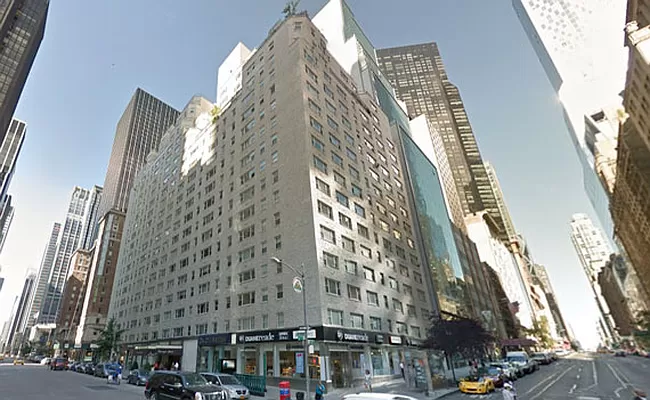
Discussion about Carnegie House at 100 West 57th Street in Midtown
Add Your Comment
Most popular
-
33 Comments
-
28 Comments
-
81 Comments
-
8 Comments
-
12 Comments
So, I think I figured out a rough way to price the discount. For a 850 sq ft apt, the current maintenance is $1900, which i estimate $600 of it is rent lease payment. If it goes up by 4x, to $2300, then annual payment is $27,600. NPV of that annual payment for 50y at discount rate of 4% (arbitrarily chosen) is $593,000. So, a normal coop in that area probably is $1200/sf* 850 sf = $1,020,000. So, discounting $1,020,000 by $593,000 = $427,000, or $500/sf. So, if the lease rent goes up by less than 4x, then it's a good deal. But problem is it's a huge unknown.
The problem with that logic is that once a maintenance goes outside of what people consider "normal" the decrease in purchase price is not linear to the amount over what people expect the maintenance "should" be. It can be closer to exponential. So in this case, using your numbers, it appears the maintenance would go from $1,900 to $3,600. At that number the unit might be unsalable as opposed to a fixed quantifiable decrease.
Wow that's brilliant ; never thought of that but what you said makes perfect sense.
As an example, see what happened at 101 West 23rd St.
https://www.curbed.com/2020/11/the-usd99-000-one-bedrooms-on-billionaires-row.html
What does everyone think is the likelihood of the coop going under and being replaced by a huge tower? I mean, it is a 21-story bldg sitting on a 150' x 200' corner lot that fronts not one but two wide streets in a C5/C6 district. Doesn't seem like the highest and best use.
Adding a question: if you buy into co-op and landlease goes up by whatever amount, say 50x and not 5x... are you personally obligated to pay or is the lease only secured by the apartment elsewhere?
Asking a question as a rental.. can one go in and just amortize the purchase price down through 2025 to 0 and approximate that as a rental price? It doesn't seem to be a deal though, just curious. For example, if you buy 16C for $500K, over 5YRs that's $8.3K per month. You add $6.3/month of monthlies. now you are at ~$15K per month! You can write off your $8.3K/month (can you?) as the house goes to zero... call that a marginal tax rate 50% for math sake... and you are saving ~$4K off your taxes. So your all-in is now ~$11K per month. Not a deal given its still a high price and there is a fair amount of complexity (personal guarantee of land lease, tax write offs etc.) for an individual renter to step into.
In most co-op bylaws, there's a procedure for a supermajority of shareholders to dissolve the corporation. Hard to imagine shareholders becoming personally liable for outstanding debts unless there was shady off-books accounting. (but this is getting deep into "ask a real estate attorney with commercial litigation experience in NY County" territory)
I thought the whole purpose of a corporation was to limit the liability to the money invested / value of shares.
Another -
https://streeteasy.com/building/carnegie-house/sale/1511736
Last sold only 10 months ago to an out-of-state buyer. Did she get duped and now she’s trying to get out? Do brokers need to disclose land lease status to buyers before purchase? I can imagine out-of-towners being vulnerable to this situation.
But I though these were "the only nyc apt with 2020 value increase"? Right.
I'm surprised no one individual (i.e. the developer) is buying up all the apartments to consolidate power and dissolve the corporation. Seems like a cheaper game to play than wait out the lease then deal with RSL.
Isn’t that what happened to 101 West 23rd? My personal favorite land lease drama story.
INT: Can you kindly explain to a relative novice how this would work? That is, if a developer buys up the units, why/how dissolve the corp? What is the end game?
Well it didn't help that a co-op board member was the developer's purchase agent (and didn't disclose the relationship until after the "take it or leave it, forever" deal was on the table, if the court filings are to be believed).
Depending what era the co-op originally formed, wouldn't dissolution lead to rent stabilization in some cases? Or is that only ex-ML properties?
Elmosam, et al. Most if not every coop allows for a dissolution of the corporation and termination of all leases if shareholders holding a certain percentage of shares vote to do so. At 101W23, the landowner was at the very end of the line and wanted to buy up 80+% of the shares in one bout. But I think there's another strategy, which would be for the landowner to start buying up now, one apartment at a time, and build up their shares. The apartments are dirt cheap on the open market, so relative to the amount invested in the land itself, the incremental cost of the apartments is very low. Plus, most of the maintenance just goes back into the dev's pocket because of the land rent. Also, I bet the coop is super lenient about subletting now, so there's some additional passive income to be earned from rent. As the dev builds up shares, they eventually can control the board and slash amenities, which would further reduce the value of the apartments. Eventually the dev's missive will be clear and the cost of acquiring the apartments will shoot up drastically but the benefits will be that there will be far fewer apartments in a position to hold out as opposed to the entire building and that many of the apartments were acquired for next to nothing on the open market with the sub-benefits as described above.
I am not clear as to whether any holdouts get to remain in their apartments after termination of all leases. You'd have to read the offering plan and lease of that specific building and maybe the Rent Stabilization Law. My lease says nothing about me retaining possession after my lease is terminated but perhaps there's case law supporting stabilized leases for holdouts.
It's all a game.
@intbuyer -- your strategy has been worked, rather successfully, in small-building co-ops which were then dissolved by the majority shareholder -- I can't put my finger on it but I read an article in the NYT about this a few years ago.
Much harder to do in a 300+ unit building, however; the number of non-owner-occupied units becomes a problem for lending banks rather quickly.
ali r.
upstairs realty
Hi, Ali. I honestly think most schemes are scalable with enough money - and I assume the landowner in this case has more than plenty. More units just mean you need more money - and I recognize the cost per share may rise geometrical or exponentially - rather than linearly - over time. Everyone has their price and that’s especially true in NYC.
Like everyone on this thread, I am very interested to see how this plays out. In the mean time it’s fun to speculate and perform thought experiments. No one is wrong here.
@ali - I believe it was an article about a very large 5th ave mansion that had been broken up into a relatively small number of co-op units. A wealthy buyer picked up the top floor, then the next one down, and gained enough control so it was viable to push out other shareholders -- so he could acquire the rest of the building for himself.
Elsewhere,more recently, all the owners of a Park Ave (upper 50s?) co-op agreed to dissolve the corporation and then sold their building to a developer to be razed.
Here's one in Soho. https://www.habitatmag.com/Publication-Content/Co-op-Condo-Buyers/2019/2019-June/Park-Ave.-Co-op
The situation with Carnegie House is obviously different because Carnegie House does not own the land and thus have about as much leverage as a squatter does.
But the case study confirms that the pressures to develop underutilized lots is very, very high - especially on West 57th. The people who live and choose to buy here must understand that. Let's say that the lot is underdeveloped by a factor of 3 (I don't know if this is the right number, but, let's say). By floor area alone, if you buy a 1,000 sq ft apartment, it can be said that you are actually sitting on the rights to develop a 3,000 sq ft apartment and have not utilized the additional 2,000 sq ft. You must understand that you are renting the ability to develop 3,000 sq ft but for some reason have chosen to only utilize a 3rd of it. The other 2,000 sq ft are not free. You must pay for them - and are, through rent. And each year, those rights become more and more valuable.
The land here is so immensely valuable and so immensely underutilized. There is the situation where the landowner sells the unused development rights to a neighbor, but that's not likely here because the lot is a corner - you get windows on two sides for free without having to set back 30 feet. No one is going to give that up. If anything, adjacent rights are going to be moved to this lot. Unless the landowner for some reason has a pang of clemency, I do not see how the coop survives.
If the coop wants to maximize finances, my gut says that they should voluntarily disband and sell the building to the landowner. This way the landowner can demolish it and rebuild it as soon as they desire - maybe rent in the meantime? - and reap their own gains as soon as they please. They should be willing to pay for that because they will not have to deal with the many, many years or even decades of headaches having to kick everyone out.
But I also understand that some shareholders may just want to say put in their homes, wait out their days, and enjoy their lives. But you have overlapping generations, and new buyers, for whom that clock starts at different times and lasts different lengths of time. I don't see without miracles that there can be a situation where each shareholder is compensated with the non-monetary consideration that they desire.
Until someone at the coop assess the value of the unused rights that the current building is parked on - and I assure you the landowner does - no one will know anything about what the apartments in this building are worth - or not worth. The relationship between the two indirectly proportional.
I'm skeptical that this corner will ever look much different than it does today. The simple fact is that there are 324 apartments here, some of which are occupied by people of advanced age. No judge is ever going to send the Sheriff to evict some 80 year old granny in her walker dragging an oxygen tank. And since granny can live another 20 or 25 years, during which time the landowner probably receives minimal if any ground rent (if the coop is bankrupt), the practical reality is that the owner of the land will capitulate to allow the coop to survive in some form.
There are old SROs that people have been trying to empty for decades, and there are still one or two stragglers holding on, resisting any buyout offer. If you have a few million bucks to spare, this below is a gorgeous SRO with a park view and 35 open violations and $200K in outstanding fines. And it would be far easier to convert this building than dealing with 324 coop tenants.
https://streeteasy.com/sale/1328257
Ali,
The celebrity version is 138 West 13th Street where Ethan Hawke and Uma Thurman started with the largest unit and then bought up the rest. Later when the building was put up for sale, at the introducory open house I asked the listing broker if they were selling the Real Estate or if it hadn't been officially dissolved as a Coop so all they would be selling is all the shares, but couldn't get a straight answer. I later heard that was the reason James Gandolfini sued them to get his contract deposit back after pulling out of the deal to purchase the building.
@George I don't think it is accurate to say that it would be "far easier" to convert the SRO than to empty and raze a building like Carnegie House. One exists on the free market and the other is in the death-grip of multiple layers of legislation and political interest. No elected official will fight to save Carnegie House. Tens of them will come to the scene to save the interest of even just a single SRO tenant. Theoretically these politicians, acting ostensibly for the public good, should have no price that can be paid to sway them
Look at 217-221 West 24th Street, the Windemere, and other SRO and rent-regulated buildings. Many of these are run-down single-room occupancies, which are only partially occupied at best, that the government has clearly expressed their interest to save. I think the current political climate is one to save as much of the lowest rung of the housing market in the interest of the public good (ostensibly). Every dwelling unit that is demolished, no matter how small, is a huge loss to this city.
With Carnegie House, the interests of all parties can and should theoretically be able to be satisfied satisfied with paid consideration, be that monetary or non-monetary. I'm not saying that the current or future occupants would be forced to do something - not at this point at least - just that it's in there interests to be able to act voluntarily, while they still have something to offer the developer (which is time). But it some point, time will have run out and the coop will be under duress, and the party under duress makes out well.
The circumstance that you describe, in which the coop does go bankrupt, is one of those duress situations that I am referencing. At that point, the dev just has to wait a few decades. The building reverts to the land owner and all of the tenants at that time either leave or die. And in this circumstance, the previous shareholders leave almost completely empty handed. A total loss for them. I'd hate to see that happen to anyone.
Additionally, I want to establish for the record that what @RichadBerg said about the building reverting to rent stabilized is correct per Section 2520.11 (l) of the Rent Stabilization Code, which provides that cooperatives are exempt from regulation under the RSL "so long as they maintain [cooperative] status."
Sidenote: based on this, every coop in the city should file a tax certiorari to lower their assessed value because their building's value as a stabilized dwelling is far less than the fictitious "rental building" that DOF uses. But that's an argument for a different time and place and thread.
I've noticed asking prices are starting to go up a little bit in this building.
One of the current listings (for 1.7M) says that the“Co-op wants to acquire the land,” which is promising for prospective shareholders. Maybe sellers are hopeful because of this?
How is the co-op wanting to acquire the land promising?
The 'right price' for the land owner to sell the underlying land for is a price which would make the average apartment just slightly above worthless.
"Congratulations prospective buyer, you are about to go effectively another $1.5 million in debt, could be more, and there isn't a thing you can do about it."
Wanting to acquire the land is arguably a better scenario than the value of your equity going to zero. I’d rather be given the opportunity to pay additional money to maintain value (or at least be able to sell it off to someone who does want to do that) than be given a lowball offer under duress to have zero equity and have nothing to liquidate. If the coop buys the land they guarantee their continued existence.
And then there's this -
https://streeteasy.com/building/carnegie-house/12r
INTBuyer, what is the comparison between this building's situation and the Windermere? Funnily enough positioned further west on a less desirable part of 57th Street. I thought the story behind that building was a long absentee/criminal landlord who neglected renovations for decades.
Never mind, I misread what you said, which is that the two are opposite stories. My mistake...
About time for an update on this...
https://www.habitatmag.com/Publication-Content/Legal-Financial/2024/October-2024/carnegie-house-co-op-lawsuit-rent-hike
Land owner proposing jump in ground lease from $4m to $25m/yr. Coop proposing $5m.
Meanwhile, they're pondering how much their stabilized rent would be if they lose the building.
I see there is a studio for sale for $95k.