161 W. 75th 10F - what's a fair price?

Started by daisy37
about 8 years ago
Posts: 18
Member since: Oct 2011
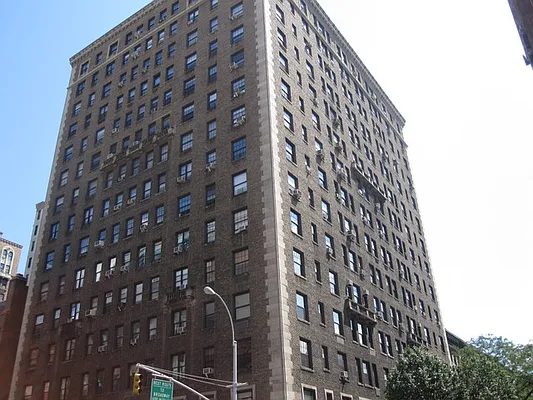
Discussion about 161 West 75th Street #10F
Add Your Comment
Recommended for You
-

From our blog
NYC Open Houses for November 19 and 20 - More from our blog
Most popular
-
17 Comments
-
29 Comments
-
9 Comments
-
22 Comments
-
192 Comments
Recommended for You
-
From our blog
NYC Open Houses for November 19 and 20 - More from our blog
What does some one think of as their car lease payments? Lease payments plus cost of capital on the initial $3-5k initial payment. No.
300, I don't agree with your math. The $10K benefit for mortgage interest and tax deduction is a tax deduction, not a tax credit, so it doesn't all get to count, because the buyer's tax rate is not 100%. I think the way to do it is to set up a hypothetical tax rate (35%)? and then adjust from there.
30, in our RSD example, It sounds like you're agreeing with me. If we need to increase the price of the comparable apartment you can buy, that makes my example stronger, I think.
The point is that cost of capital is an institutional concept. We are not talking about instituational investing and efficient allocation of capital where you would simulate and optimize your expected returns, volatility and cross correlation for each asset class for an efficient frontier.
For individuals, it is different.
Ali, $750 mortgage 4% interest. $30k per year deductible at 25%. $7500. $10k property taxes deductible at 25%. $10k. That is the underlying math.
Mortgage interest and local taxes are two separate deductions.
One could claim that they pay enough in state and city taxes to already hit the cap of 10k deduction. In that case, it is marginal $7.5 k at 25%. At max federal rate of 37% appx $11k. Most buyers in Manhattan are probably somewhere in the middle.
As far as "Where is the new supply of non-luxury rentals coming from?" the answer is the 6,000 units being deregulated each year:
https://www.6sqft.com/new-york-city-has-lost-152000-rent-regulated-apartments-since-1993-according-to-report/
These are almost all units in buildings which were built before 1971, and therefore not amenity laden like almost every building being constructed now. However, the effect of these units coming on the free market, at market prices after undergoing extensive renovations is the equivalent of a large wave of new construction - just at lower $/SF rental prices.
ah, 300, of course that makes sense. Apologies for ever doubting.
ali
Ali, No problem at all. Happy to always clarify my math. Naturally, input assumptions depend on the person buying. Biggest "if factor" for an individual is what percentage premium they are willing to pay over renting for the ability to customize and freedom of not having to move. The richer you are vs the cost of apartment, highly likely higher the premium you are willing to pay to own vs rent.
Which of course means that the people most likely to be swayed by a rent vs buy comparison are those at the lower end of the spectrum.
For Manhattan, I do not think buyers of ultra-luxury do these calculations as they may not even finance. That said, for 432 Park Avenue, I did a couple of calcs for buy vs rent. Data is limited due to a lack of rental listings. Buying is 20-40 percent expensive than renting there depending on the expected hold and life of the finishes but there are no rentals currently available. I would have expected larger premium for such a building.
Depending on how low you go and perhaps what demographic you're speaking of, some of these 'lower end' buyers feel home ownership is a pathway to wealth.
Yes, if you were going to spend the money instead of using it for downpayment. Also, the desire to own a home gives you an incentive to save for downpayment which is true even for $1000-1500 sq ft price buyers in Manhattan- skip that $5k ski trip for two to Vail for 5 days. Skip the summer share in the Hamptons for $10k. Instead of eating out three time a week for $600 for 2, only go out once $200 and do $50 takeout the other two. It all adds up. We are effectively talking about negative cost of capital for downpayment for some. That is what the grandmas have been telling for ever.
So there actually may be some home ownership premium over renting even at the low end where customization is not that important as you may not have the money to do it.
The younger me is a good example of home ownership building wealth, after leaving my ex-wife's beautiful brownstone in Chelsea, I rented an apartment in the East Village. This was around 1992, rents were cheap, however so was buying. If like a few of my friends I purchased some dump in the Village/Chelsea I would have faired substantially better. None of my friends were making 'Wall Street' money, all in the arts, magazines etc. However because of the purchased home they built wealth which they either rolled into a better home or stayed put and now are 'that guy' that paid 'what??!'
Just a real life scenario...
Keith
and keep in mind, when prices hit $500 a f2 for a condo in the West Village (think 99 Jane Street), people lost their minds, thinking this valuation was insane! I think 30 will confirm that...
"The point is that cost of capital is an institutional concept. We are not talking about instituational investing and efficient allocation of capital where you would simulate and optimize your expected returns, volatility and cross correlation for each asset class for an efficient frontier.
For individuals, it is different."
I could not agree more, 300. This is the basic problem with home ownership today. Consumers are woefully ignorant of how to perform basic investment analysis before deciding to purchase a home especially one they might barely afford. Where are the fiduciaries to explain that perhaps renting is a better option than buying? Or that spending the vast majority of your personal wealth in a home at the expense of alternative investments is possibly a bad decision?
If more people were better educated in the risks of investing in a home, more people would choose to rent rather than buy which would make more people's lives less risky and make homes more affordable to those who choose to buy.
Unfortunately, there are no fiduciaries out there advising potential home buyers on whether to buy or not. Few would invest in the equities markets without professional advice from a licensed investment adviser but many will plunk down a huge chunk of their net worth to invest in a home without seeking advice other than from friends and family.
I think most individuals are very smart about their home buying choices except for the low income range, who can not afford to buy in Manhattan. In addition, after the financial crisis, lending standards are generally tighter which puts a discipline on the buyers. Excluding low income families, there are many fewer disasters in home owning vs buying single stocks or buying into somewhat diversified portfolio of stocks when the market is high. Individuals just do not talk about their poor investing record.
300, I do not know what statistics you are relying on to make any of your assertions but please stop calling low-income people less smart in their investment decisions. Wealth and intelligence have very little to do with each other. Anyway, it's not about relative market performance, it's about relative market exposure.
At the moment, the hottest residential sales markets are in secondary markets such as upper Manhattan and the outer boroughs. These relatively young, often first-time home buyers are jumping into the market at a time when prices are near their peak, borrowing much more heavily than wealthier buyers. They are taking considerable risk that these secondary markets will stay hot and stabilize at or above where they purchased. They should be performing a rent-buy analysis but the vast majority of interested buyers do not.
Do you consider these buyers to be sophisticated enough that they do not need to rely on professional investment advice?
Optically, these low prices seem too good to be true so people will jump into these investments. But these are the last types of housing purchases I would consider making.
I will call it again. Who gets or got most sub-prime loans?
Keith,
If you want to pick 1992 as the example of a great time to buy, I'll remind you what happened in the three years preceding that. And I'm agreeing that it will be a great time to buy - as soon as the impending market crash occurs. LOL.
Ximon, Next thing you would ask me to do it prove correlation between income and college education.
"In addition, after the financial crisis, lending standards are generally tighter which puts a discipline on the buyers. "
Non-bank lending has risen to the point where in accounts for half of all mortgage originations. With these institutions you are seeing a lot of the same behavior which led to the prior crash in terms of lending criteria (the amount of subprime mortgages doubled year-over-year in March 2018).
https://allenvillere.com/newsletters/how-sub-prime-mortgages-are-making-a-comeback/
Many loans are even being given without any appraisal.
https://www.washingtonpost.com/realestate/fannie-and-freddie-approve-thousands-of-loans-with-no-formal-appraisals/2018/04/30/50503d9c-4c95-11e8-af46-b1d6dc0d9bfe_story.html
"Next thing you would ask me to do it prove correlation between income and college education."
This "correlation" has nothing to do with intelligence. I have known a lot of college educated people of wealth who were pretty stupid. And for the so-called "smart" ones, basic investment analysis is not inherent to their upbringing or education. Remember all the doctors who invested in limited partnerships in the 1980's and lost their shirts?
I stand by my comment.
"I will call it again. Who gets or got most sub-prime loans?"
Small business owners and independent contractors.
Anyone who's had credit issues (like a bankruptcy within the last 5 years, going through a nasty divorce, people who are buying a condo because they can't pass a co-op board)
People buying multiple condos to rent out and have maxed out their credit.
Would you say that most subprime loans were to people with low credit scores? And do lower income people on an average have lower credit scores?
I will say that a much higher percentage of people with low credit scores (and/or other blemishes which would prevent them from getting a non subprime mortgage) that have high income get subprime mortgages than the percentage of low-income people with bad credit scores.
But I don't understand your question "Would you say that most subprime loans where to people with low credit scores?"
What definition are you using for subprime loans? Because as far as I know any loan made to someone with a low credit score is considered a subprime loan
What was stupid about subprime loans wasn't that people took them but that the government allowed them. And wealthy people with higher credit scores are not by definition smarter investors.
"What was stupid about subprime loans wasn't that people took them but that the government allowed them"
And look what is happening now: banks are lending large amounts of money to non-bank mortgage originators which they claim shields them from the risk of the subprime loans these companies are making (personally I don't buy that claim). Being non-banks these companies are far less regulated. And then Fannie Mae and Freddie Mac are still largely buying these loans. I don't see how this isn't a recipe for disaster.
https://www.wsj.com/articles/big-banks-find-a-back-door-to-finance-subprime-loans-1523352601