Example of current market conditions

Started by 30yrs_RE_20_in_REO
over 7 years ago
Posts: 9913
Member since: Mar 2009
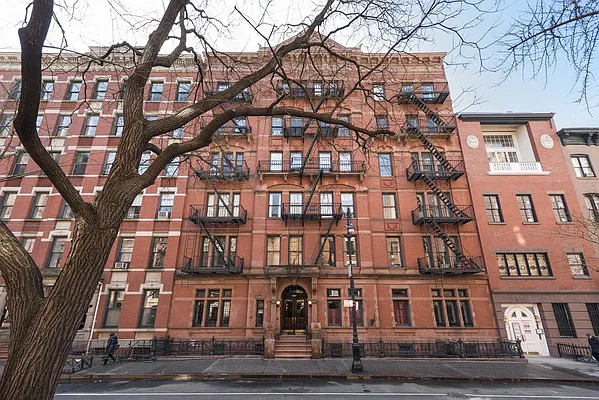
Discussion about 50 West 9th Street #2A
Add Your Comment
Recommended for You
-

From our blog
NYC Open Houses for November 19 and 20 - More from our blog
Most popular
-
72 Comments
-
3 Comments
-
8 Comments
-
33 Comments
-
9 Comments
Recommended for You
-
From our blog
NYC Open Houses for November 19 and 20 - More from our blog
This one clearly should be priced close to 2015 sale of 1.9mm. Perhaps a little higher at say 2.05mm to allow some discount from list. I do not see any sign of renovation. It is barely 1100 sq ft very generously measured and one bath.
buying a small apartment with no washer dryer for over a million? you gotta be kidding
You just have to find a place that does make sense all things considered. Sellers that purchased in 2014/2015 are certainly facing difficulties considering they purchased at the most recent peak.
Keith,
While I absolutely agree that's what buyers should be seeking to do, my point is brokers/sellers are behind the curb. Brokers are paying lip service to how great a time it is to buy because of how soft the market is, but I don't think most of the offerings actually reflect that. As a result I think we are seeing tons of buyers out there (especially because of how crazy low interest rates) but the sell side simply isn't meeting the current market.
And to some extent this has caused a "there is no current market" scenario - not that nothing is selling, but that the current bid/ask spread is so large that you can't even accurately tell most sellers the number at which their property could sell quickly (without that number being at an astronomical discount). I think you made a statement recently corroborating this, saying there were listings you had pitched, not gotten, were asking less than the number you pitched, and still not selling.
Bad floorplan. This is really a 1BR.
Another data point: slightly elevated ground floor unit, same line is in contract for ~1 million. Not sure 2nd floor commands a million dollar premium.
Here is another example:
Currently on market for $2,150,000
https://streeteasy.com/building/755-west-end-avenue-new_york/12c
Sold 05/01/2013 for $1,950,000
15 sold 04/24/2017 for $2,080,000, and previously 08/24/2012 for $1,900,000
It seems to me based on these data points there is an unwillingness to accept the market has gone down at all.
It's probably some combination of "my baby isn't ugly" and wishful thinking. Many of the units on the market are so out of touch with recent comps that their selling strategy seems to be based on hoping for an ignorant buyer to come along.
thoth,
I agree 100% with that. I also think that in the long run that leads to a harder crash because when the only transactions which occur are when sellers get desperate and HAVE to sell, the market becomes all fire sales/low prices.
And here is an example of what I think should be kind of an "A" property which ISN'T selling:
https://streeteasy.com/building/the-lawrence-house/5f
Prime Village location, doorman, solid Coop, renovated, unit 2 floors below traded at $1,240,000 March 2016 (13% less than this one is asking).
30Y: Agree, but the one thing that I think distinguishes Manhattan is that a lot of the owners have the financial resources to drag things out for a while. This of course could just lead them into even more trouble down the line. You would think an owner that can't sell when the stock market, employment, the economy, and interest rates are all in their favor would start thinking that pricing might be an issue.
@30, 2/1s have been a tough sell for a while, because they've gotten expensive for what they are. With the disclosure that I'm not the listing broker, I agree that the Lawrence House apartment is eye-catching, but they need a buyer who has ~$400K in cash and makes, what, a minimum of $275K? It feels to me (and I own a conv-2 that I'm going to want to sell someday) that that particular buyer pool is getting shallower and shallower. Most buyers making around $275K probably don't have the capability to easily save $400K. Buyers with parents who can throw them $400K might be in jobs that make less than $275K (because they might be able to count on ongoing parental support) but that would make them not a good financial fit. Or you might have buyers with parents who can contribute, where the buyers themselves make more than $275K, so those people are probably out looking at 2/2s.
And how much is a 2/2 in that building? Or are you arguing that prices need to adjust downward by 35% to 50% off peak to meet the current set of buyers? LOL.
I think the point here is prices need to reflect what the local population can afford.
I think 30 has a point vs 3F sale. Of course , there seems to have been a bidding war and some one may have gotten carried away but $ paid were real.
https://streeteasy.com/sale/1196148
Yes, stache, that's exactly my point -- and since they don't, any niche in which they don't might no longer be considered an "A" property niche. The location is still solid, the architecture is still solid, the quality of the unit is still solid, and the co-op is still solid -- but the supply of potential buyers has structurally changed over the past ten years. So 30, when you say "the market's terrible because even "A" properties aren't selling" -- I disagree. In my world "A" properties are still selling fine (at a slight discount to two years ago, but still). It's "B" properties that are harder to move. They take longer, and they need higher discounts. I'm by no means suggesting 30% -50% though.
So then what bars do you need to surpass to reach "A" quality and what percentage of the market meets those criteria?
Also, if the apartment at 79 West 12th still needs a significant drop because the buyers for it are at a lower price range, so it ends up selling for ?$950,000? (or lower?) and the last sale (3F) was at $1,240,000, and prices are still trending downwards due to supply far outpacing demand, I find it hard to argue against prices dropping in that range.
NB It is my opinion that price shouldn't be a consideration in the grading of units as "A", "B" or "C" so if units are overpriced that doesn't turn them from "A" to "B", it just makes them overpriced. So if 79 West 12th St is an "A" at $700,000 it's still and "A" at $1,080,000.
30 & FP: You seem to have different definitions of how to classify a property A, B, & C. I lean towards 30's view that price is a separate factor vs. the quality of a unit.
What is your opinion on how and why the supply of potential buyers in NYC have changed in the last 10 years?
30, I'm not arguing that price is turning a unit from A to B. I'm arguing that a change in market positioning is turning a unit from A to B. A Cadillac is still a damfine car, but in a Lexus world it may no longer be the first choice of many car buyers.
Simple, if most people like a property, it is A
But it's still just a price issue. You are arguing that people prefer 2/2s to 2/1s.
Duh. They always did. Then you say 2/1s got overpriced. Fine - you fix that with a price adjustment. It doesn't make 2/1s "undesirable" - people still prefer them to straight 1 BRs. Drop the price of the unit in question to $795,000 and it sells within 1 week - so not a desirability issue but a price issue. If you dropped it to $795,000 and still couldn't sell then it would be a desirability issue.
30Y: Perhaps FP is saying that even if the unit stays the same, the market can shift around it. E.g., if most units available are 2/1s, then there's a whole bunch of new inventory that are 2/2s, the desirability of 2/1s to a buyer will shift.
This can certainly happen, but I don't think it's a factor in this case, unless there's been a major shift in inventory between when 3F sold vs. now.