30 gallons

Started by bbbccc
over 16 years ago
Posts: 1
Member since: Jan 2010
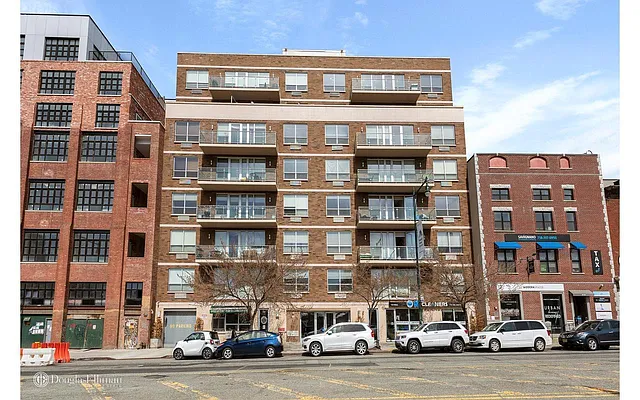
Discussion about Solarium at 5-43 48th Avenue in Hunters Point
Add Your Comment
Recommended for You
-

From our blog
NYC Open Houses for November 19 and 20 - More from our blog
Most popular
-
3 Comments
-
3 Comments
-
72 Comments
-
22 Comments
Recommended for You
-
From our blog
NYC Open Houses for November 19 and 20 - More from our blog
Well, that would be a deal breaker, for me. I'm all for conserving water, but I wouldn't want the hot water to run out, before I can complete my rinse.
If it's just a studio, 30 gallons should be fine. You always have the option of swapping in a tankless on-demand water heater.
30 gallons for all units? even 2 bderooms?
Here are the numbers we used in our calculations:
Bath: 50 gallons
Shower: 2 gallons per minute
Teeth brushing: 1 gallon
Hands/face washing: 1 gallon
Face/leg shaving: 1 gallon
Dishwasher: 20 gallons/load
Dishwashing by hand: 5 gallons/load
Clothes washing (machine): : 10 gallons/load
Toilet flush: 3 gallons
Glasses of water drunk: 8 oz. per glass (1/16th of a gallon
nevetstaco
14 minutes ago
ignore this person
report abuse
...
Toilet flush: 3 gallons
...
aboutready, any perspectives?
nevetstaco, some of those use no hot water, and some use a mix of hot and cold.
hi alamefart
The prices for studios are SO steep. And it can't be demand. Anyone know why they're so high? It's not like the layout is amazing. The Vere has wash/dryers in the unit and balconies in their studios and the prices aren't anywhere near the prices for the these at Solarium. I know there's only 1 studio left at Vere, but the ones in contract are in the 320k range.
If the 30 gallon is not enough, what options would there be to replace it? Would it be difficult and/or expensive?
If you don't have room for a larger heater, you could supplement it with a tankless heater installed in the bathroom or kitchen. Or you could replace it entirely with a tankless unit. Either way, a tannkless heater is likely your best option.
Easier to get appliances that heat up their own water. Both my dishwasher & washing machine do this.
There is no assurance you will be able to swap out the h/w heater for a tankless unit, unless they are electric. Gas tankless units may require different flue vents, typically require stainless steel vents, and changing your vent (if need be) 3 floors away from the roof may be difficult if not impossible.
The people who comment on this issue are not familiar with water tanks. First of all, you never use only hot water, you always mix it with cold water. Second, these tanks have an amazing recovery rate, which means that in less than half an hour you get all the water heated up again. A 15 minute shower would use about 30 gallons of water in total, which means about half of hot water if you have the tank set up at a high temperature, so at least three people can take a long shower before you ran out of hot water. We have a 20 gallon tank at home and we are five people. In the cold winter we can still have three showers in a row and have enough water. The other two only have to wait for about 20 minutes and the water will be hot again. You don�t need more than that. Even less if you have appliances that heat their water.
A 40 gallon water heater is more than fine for me and significant other.
That said, I hate individual electric water heaters with a passion. The water is never as hot as with gas or propane. The energy inefficiency is also terrible, compared to other fuels. (Electric has run me about $40-60 more per month.) I wish water heaters were kept on a programmable thermostat and could be "turned off" during the workday.
Plus, you're just asking for trouble with individual water heaters in multi-story buildings. Water heaters are one of those appliances no one thinks about it until they burst (we had one in our building just go, at 41 years of age!), and then an entire line of apartments can be flooded. Our under-counter water heaters are also in a corner of the kitchen that requires one to take apart the entire kitchen -- removal of stone countertops, at least one cabinet, and probably the range -- to change them, so there's even more tendency toward deferred maintenance.
Retrofitting a tankless is hard. First, you need 200 amp electric. Then, I believe you need three breakers, or you did the last time I looked into it a few years ago. Convincing the co-op it should spend significant money upgrading the building's electric just so we can all spend even more significant money upgrading our individual electrical boxes is probably a no go. We may try to relocate the water heater to an upstairs closet when we do the washer/dryer work. I just can't imagine having to take apart the whole kitchen every 8-12 years to change or service the water heater.
Some thoughts about solarium.
Observation: lots of units r being sold for $700+/ per sq.
guess: people feel like the lower common charge will compensate/justify the price analysis:
point A: imagine a building and b building are built with similar cost, after built, a manages building in a cheaper way. But maintenance is an on-going cost. While it's a good strategy from the seller, there is no reason that a buyer shud pay more for a than b when their development cost is similar.
point B: yes, solarium's common charge is a lot cheaper now. But you have to pay ALL utility, everything will be powered by electricity and that's not going to be cheap. Ok, green design saves energy when heating space, but it does little when u r heating water. It might be costly to enjoy a bath tub. when you have to pay all energy consuming activity, it will change ur behavior, yes, it will be more env friendly because u r more conscious about energy usage, but is it a better life style for you?
conclusion: dont just pay higher because you think u r earning the present value of future saved maintenance fee.
as a buyer, there is only one fair price: the lowest price.