Maintenance

Started by Lexxie07
almost 6 years ago
Posts: 0
Member since: Oct 2013
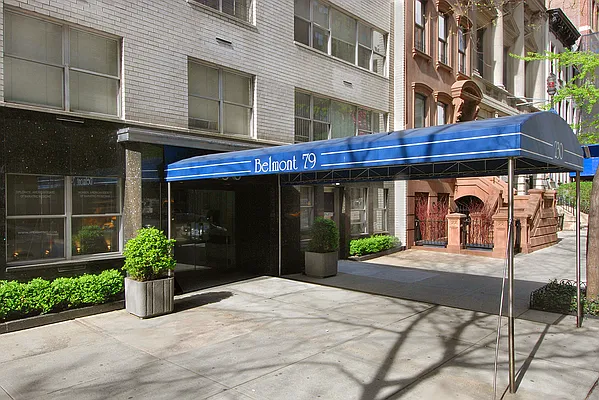
Discussion about Belmont 79 at 230 East 79th Street in Lenox Hill
Add Your Comment
Recommended for You
-

From our blog
NYC Open Houses for November 19 and 20 - More from our blog
Most popular
-
3 Comments
-
38 Comments
-
28 Comments
-
33 Comments
Recommended for You
-
From our blog
NYC Open Houses for November 19 and 20 - More from our blog
corrupt board?
The Corporation has recently completed several, significant renovations: newly renovated hallways, now with both Verizon fios and Spectrum, a new cell phone-based intercom system, a new mobile app-based laundry, a new mail room and a new package room.
Maintenance was already high 10yr ago, according to old listings.
I tend to think more and more that high maintenance is a function of too many people employed by the building and rising union costs. MCR has discussed this recently. I visited a friend in a mid-sized building who disclosed that his building has 3 doormen (except graveyards when it's 2), an elevator operator, a super, 2 lifeguards at all times even now with the pool closed for covid, a gym attendant, a package room guy, and several others behind the scenes including a property manager. Thus they get bored and make up rules and jobs for themselves. My building has half that staff for the same sized building and we get fine service. Nowadays, I'm thinking that a heavily staffed or "full service" building is just a waste.
Yes, that is certainly the case with our building. I am curious as to how 2022 SEIU negotiations go. If our building is any indication, the union is pricing its members out of jobs. Although I personally support the union wages, I am not master of the universe and am in a distinct shrinking minority in our building. Our current board president would prefer an electronic keypad and outside vendors for trash removal and cleaning services over our in-house staff. He has been fully transparent regarding his preferences and agenda for two years now and this year was elected board president, so I feel like the writing is on the wall.
MCR, is it easy for a building to simply "get rid" of its union staff? My understanding is that it is quite difficult.
I do not know and am not researching it because I don’t support it but others in our building are and time will tell. I have to believe that a building has the right to eliminate its staff, but I suspect it would be difficult from a practical perspective (if not also from a legal perspective) to replace union labor with non-union labor. I wouldn’t want to be the non-union laborer walking to work past all the union doormen; I’d be constantly looking over my shoulder. Moreover, our managing agent warned that there would be unpleasant repercussions, such as dead rats mysteriously appearing in front of the building.
>>>>>The Corporation has recently completed several, significant renovations: newly renovated hallways, now with both Verizon fios and Spectrum, a new cell phone-based intercom system, a new mobile app-based laundry, a new mail room and a new package room.<<<
Renovations and upgrades should be financed by existing funds or by assessment. Not by raising maintenance.
Often one can blame property taxes, which can vary dramatically for reasons that we (i.e. people who understand RE market valuation) would consider very stupid. But that doesn't seem to be the case here: projected 2020-21 bill for 230 79 Equity Inc is $1.2M spread across 107 units.
https://a836-edms.nyc.gov/dctm-rest/repositories/dofedmspts/StatementSearch?bbl=1014330034&stmtDate=20200115&stmtType=NPV
@bramstar There's an argument to be made for using debt to fund capital improvements, because it then becomes tax-deductible for shareholders (offsetting some of the SALT pain). I'm not sure I agree with it, but there you have it.
Capital assessments can be added to your basis reducing capital gains. Unless the SALT cap is eliminated adding to expenses which are already cap limited won't result in any tax savings. And increasing maintenance will almost certainly reduce shareholder value, especially as increases in other expenses (like RET) push the value-to-maintenance ratio further beyond buyer's ability to justify purchases to themselves.
My favorite high-maintenance building is the Carlyle, where you can pick up a luxurious 2br for $1.1m if you agree to pay $15k a month (or $500 a night!) in maintenance forever. I'm not sure how this is different from owning all 15 fractions of a timeshare (sorry, fractional unit), where the management company tells you what you'll pay and sets the fees to be sure unit owners can never sell at a material profit. At the Carlyle, the reason for high maintenance is both overstaffing (twice daily housekeeping) and that Rosewood tells the coop what they'll pay, and the coop does because they're locked into the contract. Moral of the story is that bad contracts agreed years ago can also influence coop maintenance fees, especially when combined with overstaffing.
https://streeteasy.com/sale/1441024
The other factor that the Carlyle makes clear is that cheaper units often pick up more of the maintenance bc shares are often allocated by square footage not market value. The 25th floor of the Carlyle, listed for $10m, pays $55k in maintenance. If 25 paid the same as a percentage of value as the $1.1m 2br I linked above, then 25 would pay $171k not $55k. Thus at the Board you can get fights between ultra wealthy who aren't paying as much to begin with, vs working stiffs (relatively) who are both more sensitive to maintenance fees and bear more of the costs relative to market value.
I am with 30yrs on this one. Anyone who wants to fund the building's capital improvements through debt can do so by leveraging their own shares.
When you mortgage the corporation's only asset, shareholders think it is free money and you end up with a situation like my building where people are griping about the money they spend on human service but not the money they spend on debt service because it is ostensibly tax deductible.
Interestingly enough, those who are griping the loudest about the maintenance in our building have already leveraged their own shares in addition to maintaining fully leveraged second homes in expensive locations, so I have a hard time believing they are actually recognizing a tax benefit. Nevertheless, it is now clear that the majority of shareholders are on board with the kick-the-can-down-the-road strategy, so it is what it is.
MCR good luck with all of this.
https://streeteasy.com/building/belmont-79/3c
wow, the asking price was a teaser price of $699,000, intending to get the bidding war. The seller must be very happy with the closing price of $850,000