Why did they build this with PTAC units

Started by Rinette
about 3 years ago
Posts: 653
Member since: Dec 2016
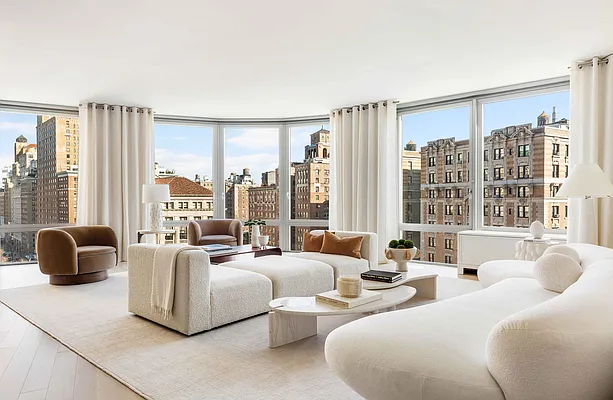
Discussion about 212 West 72nd Street #5H
Add Your Comment
Recommended for You
-

From our blog
NYC Open Houses for November 19 and 20 - More from our blog
Most popular
-
28 Comments
-
8 Comments
-
33 Comments
-
7 Comments
-
12 Comments
Recommended for You
-
From our blog
NYC Open Houses for November 19 and 20 - More from our blog
Was rental before. Built in 2010.
Given that most housing in NYC historically didn't have AC (unless you put in through-the-window) or had building-controlled heating/cooling, when developers started installing PTACS, it seemed like Zeus himself had personally delivered salvation to NY tenants. But, drowning men will snatch at straws. Never mind that most PTACS are the 'landlords halo' of heating and cooling: noisy, expensive, and difficult to service & replace. Utimately, they're pretty indicative of the level of contempt that developers have for their tenants and purchasers.
Just seems like buildings from the past decade or two decades? in prime locations in Manhattan shouldn't be built that way.
Aaron, All comes down to cost which ultimately get passed down to renters or buyers. PTACS serve a reason to keep the cost down. No ducting and related space usage. Ceiling don't need to be more than 8'. No need to worry about venting the conderser if the condenser in the unit. Also, if the cold water is supplied by the building (hot water is typically from the building any way), which means PTAC is basically a fan without much noise, the cost is borne by the landlord.
My point exactly: "..which ultimately get passed down to renters or buyers." I don't mind the passing down per se, it's the quality of what is passed to me that offends. I was also mostly thinking of the PTACs with their own compressors, which are glorified through-the-wall ACs. The units that rely on hot and cold water supplied by the building, are much better (though without full owner control, unless it's a 4-pipe system, as there is a switchover from hot to cold at some point in the season (inevitably too late or too early).
Aaron, What I mean to say is that renter or buyers are paying less for the PTAC units and low ceilings as NYC real estate market is relatively efficient at mid-end. Renters typically at mid-end luxury are not willing to pay a premium for cental ac due to their strectched budgets. Higher quality is available too but it just costs a lot more as in post 2000 new developments.
To add, in fact, cap rates for large and fancy rentals are much lower than tight 650 sq ft 1 bed rooms. So new rental buildings do not create for example 1300 sq ft 2 bed rooms. They try to cramp everything into sub 1000 sq ft 2 bedroom.
@300 - ive noticed a similar sizing pattern even in some new for-sale new devs in certain hoods.
For example, LIC has lots of recent new devs, but they all skew small.
Given LIC is cheaper per sq-ft than North Brooklyn, I thought there might be a trade there if I'm only in city half time. Some combination of better finishes / more space / better commute to midtown.
But everything seems a bit too small by comparison, like Manhattan sized 2BRs.
I assume some combination of skewing younger, targeting midtown hospital worker commuters, and trying to hit a price level. Otherwise I just don't get the 850-950 sq ft 2bed/2bath lux non-Manhattan condo thing. Less than 20% of 2-3bed units exceed 1250 sq ft... 8% exceed 1500 sq ft.
For the unit in the original post at $5.8M, $2800 per sf, what could this go for with central air?
Does this building have low ceilings?
>> Otherwise I just don't get the 850-950 sq ft 2bed/2bath lux non-Manhattan condo thing. Less than 20% of 2-3bed units exceed 1250 sq ft... 8% exceed 1500 sq ft.
Renters with a tight budget tend to pay per bedroom. Entry level condo buyers with tight budget are prioritizing bedrooms over square footage as well as the small apartments rents are higher per sq ft vs larger apartment.
I have not been inside the buildings but the best I can tell from the pictures, the ceilings look to be just over 8 foot.
>>> For the unit in the original post at $5.8M, $2800 per sf, what could this go for with central air?
Does this building have low ceilings?
Many units in old coops in Manhattan are nicely sized. To me personally the extra space is worth a lot more than floor to ceiling windows or nicer appliances. I saw some new 2br units offered for sale in Manhattan and was perplexed by the closets and bedrooms that fit a bed and two nightstands and not much else. It could work for someone very young (someone who does not have much stuff yet), but these units are way too expensive for college grads. I concluded that renovated coops were the best product in Manhattan for our situation.
My coop has heating/cooling units that rely on water supplied by the building and I am really happy with this system. There are very few downsides. Maybe a few days a year it is too hot or too cold. Not a big deal for me. And it is free!
ok how about vented dryer and range? Would a building with PTACs be likely to have one or both o those?
Rinette, You are looking for generalized answers. In NYC, that is very hard. You have to ask the listing broker. It varies building by building.
>> And it is free!
LOl, yes I’m sure that’s how it works out….
Do the neighbors pay for it?
In buildings where electricity is included in rent/maintenance people go away for vacation and leave their AC running.
Having come from many years in a rental with window units, when I bought, some form of central or through the wall a/c was an important factor, the quieter the better. I ended up with a unit with cold/hot water delivered by the building, like Krolik's, and except for a few of those changeover days, couldn't be happier. My electric bill is low, as I'm not running compressors, and the cost to the building to deliver that cold water is the least of the maintenace expense concerns when you're in a full service building.
And yes, I leave it running 24/7, whether I'm there or not (which is about 1/2 time, in summer). Somebody's got to use up all that cold water!
>> And it is free!
>LOl, yes I’m sure that’s how it works out….
This is what I meant:
>My electric bill is low, as I'm not running compressors, and the cost to the building to deliver that cold water is the least of the maintenance expense concerns when you're in a full service building.
Will add to the above that if such a unit breaks, the building has people that know how to fix it, and they will do it free of (extra) charge. These kinds of units are probably the most efficient way of heating and cooling in multifamily housing, and my electric bill is not any higher in the summer (or winter).
I thought 70% of the maintenance was Real Estate Taxes?
>I thought 70% of the maintenance was Real Estate Taxes?
It is in my building. The remaining 30% covers all operating costs including staff, repairs and common areas renovations, cooking gas and full building heating and cooling.
I highly doubt that.
LOL I am pretty sure I know my building's financials. I am in a very large (300+ units) low maintenance, low amenity (nothing besides a doorman), frugal building.
So my partner pointed out regarding our AC units that even though the water is supplied by the building, he believes we are directly paying for electricity to run the fan in each unit. I guess this is not completely "free" then.
There are two reasons we don't see seasonal impact on our electricity bill: 1) we are running these units year-round (for both heating and cooling) and 2) they really don't consume that much electricity, since these are just fans, without, more energy-intensive components of a typical AC unit.
I am curious how much does your building spend each year on:
- Salaries
- utilities (including heating oil if that's what you use)
- Real Estate taxes
Krolik, Does your coop own any commercial space?
@30
I specially selected a building with a lower maintenance, it was one of my main purchasing criteria.
Building spent 1.3m on salaries, 500k on energy and 200k on water/sewer in 2021
There is an interest-only mortgage which comes due in about 5 years. Will be interesting to see if refinancing will result in a jump in maintenance.
@300 yes!
@Krolik apart from the doorman - I imagine there's more than one unless he's part time - what are the other salaries?
I notice a difference in the months I am running the fan of the hvac, maybe ten bucks extra.
>> 500k on energy
That’s $1667 per year per apt. What’s the average unit size? I’ll guess 800 sq ft as that’s what coops of that era / location tend to have, which puts it at $2 per sq ft per year at what I presume (because of era, again) to be 8’ ceilings. These blocky old brick buildings are much more efficient to heat & cool than skinny all-glass towers.
For comparison, I’ll end up at $1.25-$1.50 per sq ft to ConEd, normalized to 8’ ceilings, in my current place. Similar insulation situation to what you’ve got. This includes all costs, but there is a an even smaller component of common space, so call that a wash. The main difference is probably that we are happier with a wider temperature range than most people. E.g., cooling set at 78 is comfortable. And if we’re ever away, we set temp accordingly. Not for the cost, but rather so that we don’t spew carbon into the atmosphere for no reason.
I recall recently reading some Tweet expressing sentiment to the tune of “Here I am separating my paper from my plastics while these rich assholes are flying private to eat dinner. Why do I even bother?”
Reading this thread, I am left thinking a counter-sentiment. “Here I am avoiding flying private for the sake of the environment, and these normal assholes can’t bother turning off the heat when they go on vacation because ‘it’s free’. Why do I even bother?”
To make you feel better, we don't really go on vacations and don't cool the apartment that much - we enjoy warmer temperatures than most :-)
By the way, I don't think all of $500k of my building's energy expenses can be attributed to heating and cooling the units, because the figure also includes cooking gas (which is included in maintenance also), laundry room, elevators, etc.
>apart from the doorman - I imagine there's more than one unless he's part time - what are the other salaries?
A super, two porters, and a few doormen (24/7 doorman service, though I notice that super takes some shifts occasionally, assume that is to cover vacations and sick days). Total staff salaries were $1.3mm in 2021.
Did I miss how much the Real Estate taxes are?
~$4.5m