what is land lease 2085

Started by anonymous
over 19 years ago
Posts: 8501
Member since: Feb 2006
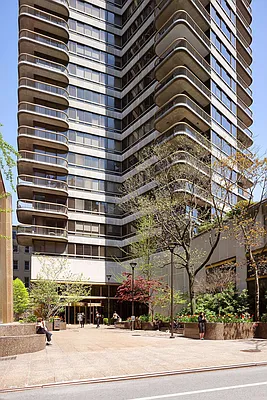
Discussion about 167 East 61st Street in Lenox Hill
Add Your Comment
Most popular
-
17 Comments
-
12 Comments
-
28 Comments
-
3 Comments
-
9 Comments
DO NOT BUY ANY BUILDING WITH A LAND LEASE!!
A land means this - the building does NOT own the land it sits on (most residential buildings in Manhattan DO own the land they occupy). If the building does not, that means they are indeed leasing the land the building is sitting on, and eventually (like all leases) the building will have to renegotiate that lease, which price will surely go up. At that point, it means that everybodys common charges in the building will get jacked up by the appropriate amount - in essence what it means is that you are not in control of your own building's destiny - the person who owns the ground the building is on does.
Now why is this a problem for you, if the lease goes to 2085? You'll (most likely) be dead, right? Well, let's say that you buy the place and live there a long time - 25 years. When you're ready to sell (in 2032) that lease is now 53 years away. Now you've got to sell the unit to someone else who doesn't care that it's a land lease. But when they buy, THEY have to think about who THEY are going to sell the unit to... and so on. It's like a ticking bomb.
I know that many people would disagree with me and say that with a land lease so far out, there's nothing to worry about. But the fact is that since the vast, vast majority of buildings in NYC are not land leases, why start out on the wrong foot in the first place? In addition, most land lease buildings sell for less per square foot than their comparable counterparts in the same neighborhood - it's definitely seen as a negative.
Our attorney told us the same thing.
I am the original questioner. Thanks, Comment #2 & 3. The building I mention is Trump Plaza. I wonder now, are all of Donald's buildings "land lease"?
I think lots of places are on landlease in the Lincoln Square area. Typically you pay significant higher maintenance and that should lead to a lower selling price. I would watch out for increases in that lease, it doesn't have to be fixed for the entire period.
And yes it might be a time bomb. If you buy into a low rise building and the zoning in the area changes to allow high rise it will be very difficult to renegotiate the deal. Same thing if your building does not keep up and doesn't attract a buyer who will be able to efford the new maintenance.
Personally unless you really love the place I would avoid that because it is tricky to valuate these kind of deals and you might get really burned if the market gets a but softer.
Trump Plaza is the ONLY Trump building on a land lease, units there usually take a long time to sell because of that fact. Another building thats on a land lease is the Stanhope (995 Fifth Avenue), the units there are incredibly expensive and, from what I've heard, hobbit holes. The common charges are ridiculous because of the land lease. Also, the reason why Trump Plaza is a co-op is because it's a land lease building. My own personal opinion, Trump Plaza is the only Trump building that sucks, it doesn't fit in with the others at all and isn't a condo. What a suckfest, Donald made a mistake with that one.
I respectfully have to disagree with the other posters on this one. Risk is something that we as human beings consistently mis-value, and this case is a good example.
"Never, ever buy a land lease apartment"
Let's assess that statement. Assume you have a tremendous condition, 2000 sq foot co-op. It's a land lease, expiring in 20 years. Let's say for the sake of argument that the lease provisions make what happens at the end of 20 years very uncertain. Let's say the maintenance is twice market, say $3,000, or even $4,000. Asking price is $1. Should you buy it? Of course.
Why? Because this, as all situations, is a matter of price versus risk. You wouldn't buy it for the same price as a non-land lease situation, but the operative question is one of price, and how well YOU personally can shoulder that sort of risk. It's the same situation that leads most prudent people to say that a retiree should not have his entire net worth invested in biotech stocks. For a twenty year old, that may not be a terrible thing, and certainly not terrible if it represents a lot less of your liquid net worth.
The last thing that people forget is that there where there is risk, there's also usually opportunity. Part of the opportunity is being able to buy at a significant discount and own the same thing (less the land and with additional lease volatility). However, what if the risk went away? What happens to the value of your apartment if the co-op renews the lease for another 150 years (or buys the land outright)? Well, in that case, the apartment you bought at a discount may be worth a considerably greater amount (you have to factor in the effect of the increase in co-op mortgage versus the reduction in maintenance and increase in tax deductibility due to the purchase of course).
This is not to say I'd buy this particular property, which I don't know anything about. In this case, I'd be a bit worried because the Trump name has liabilities as well as brand value, and these things can make renewal/land purchase negotiations more complicated than if it were not a Trump property.
Still, the thing I'd keep in mind is that unless the two parties are irrational, they'll come to some reasonable business arrangement about renewal or purchase of land. That's the reason that no one (to date) has ever seen a land lease building situation disintegrate. There's a first time for everything, and you should consider the worst, but look at the facts with a clear head.
Land leases are complex, and definitely increase uncertainty. However, as an investment banker, I have to say that this is how people in the markets I work in win - they look with a clear eye to risks and opporunities. They assess the real risk more clearly than others, and they buy when others have overreacted to risk.
I go back to my old example: you were a lot safer flying on 9/30/01 than 9/11/01, but that's not how people's emotions work.
how do you know if the apt you're buying is on a "land lease?" I know most apts in battery park city are on land leases... but those brokers do not list that in their ads... so how do you know? until closing date?
you should know well before closing whether the building has a land lease. You should know well before CONTRACT whether the building has a land lease. Your RE attorney will see this, and should advise you accordingly.
I always ask brokers showing me co-ops whether the building is a land lease.
Keep your life simple, stay away from land leases as long as you have other options.
Normally you can see it as you have higher maintenance and a lower selling price. I.e. in battery Park you have a few 1 beds in the 500K range floating with maintenance of 1400 or so a month. Clear indication for landlease I would think.
One could argue that this would change and could become neglectable with increasing number of units in abuilding but typically the land lease cost more if the zoning allows higher buildings.
http://www.kvny.com/index.cfm?page=details&id=9912
I think this is a prime example. Looks like a bargain until you see the maintenance.
Tp post #7:
I have to respectfully disagree with you. I think the real issue here is that with so few land lease buildings in Manhattan (as a percentage of total available units), why get involved in ANY situation that could potentially be problematic down the road? The risk isn't even necessary to begin with - if one is looking for advantageous situations, they certainly exist (if one is tenacious and resourceful enough) withour the immediate complication of a land lease. There are times when risk-to-reward is definitely to be balanced. This is a situation in my opinion where the risk isn't worth getting involved with in the first place, with such a broad majority of options available at the starting gate.
:0) I would NEVER buy a land lease.
#14, you're the one who isn't worthy of respect because you don't give it to others. If you don't want to read #7's post, don't read it. I don't happen to agree with him but we all have our opinions & his may very well be more knowledgeable than mine & I'm grateful that he's sharing it with us.
Leaseholds can create opportunities for people willing to take a chance in exchange for lower prices. Nobody knows what will happen in 1 year much less 50 years, but if you take a chance, you get a discount. I lived in London, where in the nicer parts most of the properties have land leases. While its a backward concept, what you find is that very long leases (>80 years) have very little discount to even longer leases or ownership (freeholds). You run into problems with leases less than 30 years (mortgage loans become more difficult), but anything greater than 30 years have very little issues. There are semi-regulations governing the extension and purchase of leaseholds, but they change and it is difficult to actually gain ownership outright. However, this creates opportunity for people who can go through the process (negotiation with the lease owner, court battle/arbitration) and there is an active market for even very short leases of 2 to 3 years. I personally wouldn't care much about an 80-year lease (or longer), but if I can negotiate a nice discount, I'd be happy.
London is not applicable - the majority of properties there are landlease. Freeholds are very rare, and when they do come up, they are VERY expensive and sell and a VERY high premium. Why? Because everybody wants to worship (and own) the ground they live on. As I said above, there are PLENTY of opportunities in NYC (if one is tenacious and resourceful enough) to locate a below market property, without having to add on the additional long term risk of a land lease to the equation. The so-called 'opportunities' created (your term) by a land lease in NYC do even seem to warrant getting involved in the first place.
Hawaii has had a lot of trouble with leasehold property, most everyone tries to buy
fee simple if possible. I have a friend that loses his home in the next 5 years, sfter a 40
year lease. He passes nothing on to his heirs and loses the beautiful home he built.
I hate the idea of leasehold residental property... what a clever idea for others to get
their property back in the future... :)
You don't have to buy leasehold in NYC, so I would recommend that you don't (of
course I'm not trying to sell you leasehold property either...).
Who owns all that land in London, the Crown? I've seen places in Mexico where you just lease the land as well. Yes, if you're thinking of future generations it makes no sense at all. I don't see buying a stucture on someone else's property.
Who owns the land under Trump Plaza at 61st street? If anyone is in the know have they also tried to purchase the land?
The Estate of Donald S. Ruth owns the land. Here's an excerpt from a court decision:
"The nature of the project was somewhat unusual. Petitioner [Trump] acquired a 99-year leasehold on the west side of Third Avenue between 61st and 62nd Street in Manhattan from a Donald S. Ruth. Petitioner conveyed its rights under the leasehold to Trump Plaza Owners, Inc., the cooperative housing corporation, in exchange for cash and unsold shares on March 1, 1984 after construction was completed (or sufficiently completed so that units could be sold). At the end of the 99-year lease, the property will revert back to Mr. Ruth so that the cooperative housing corporation will have to negotiate a new lease or purchase the property."
thank you NWT