Carnegie House Land Lease Bummer

Started by mssn
about 17 years ago
Posts: 1
Member since: Jun 2009
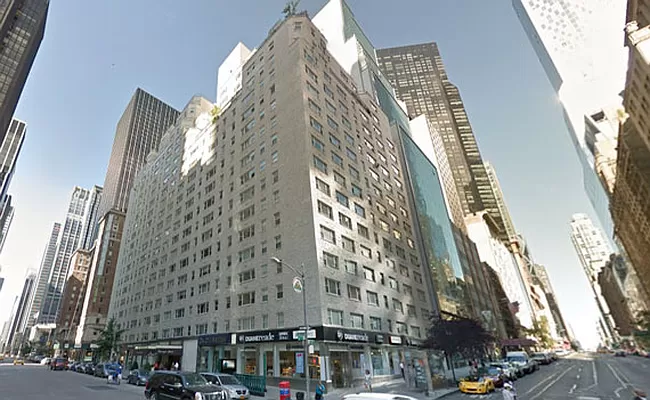
Discussion about Carnegie House at 100 West 57th Street in Midtown
Add Your Comment
Most popular
-
17 Comments
-
12 Comments
-
28 Comments
-
3 Comments
-
9 Comments
I hear the land lease ends soon but could you tell me about when it ends, what will happen to the maintenance fees, and if they have been negotiating a new deal recently?
See here: https://therealdeal.com/2015/08/27/carnegie-house-residents-bolting-over-looming-fees/
When the fee rises, it will be perhaps $25 million a year, or $6430 per apartment per month. This may very well exceed the value of the apartments, and thus they become worthless.
So, what happens to the building, it will go bankrupt? Are there precedent cases like this?
Ground rent will be appx 8 percent annually of the market value of land which at the current market price of land will likely translate into 700-1100 per sq ft depending on floor and market value.
See the post above regarding 101 West 23rd Street. The ground lease owners made a deal to buy-out the coop interests at a cheap price but paid more than they really needed to. Almost all owners sold. A dozen did not and then sued the Board. It has been a disaster. It's not a situation you want to get yourself in. Don't be on the Board of such a building, and if you do buy, assume your asset is worth zero when the lease resets.
https://streeteasy.com/building/carnegie-house/7l
Does anyone know how many sqf the entire building has? Assume land owner has paid $365MM and sells for $390MM. Wouldn’t that be a way to calculate the per sqf cost? Then compare this amount with the going sales price per sqf of either coops or condos in the area. Is this a right way of thinking?
https://therealdeal.com/2019/11/15/something-is-rotten-at-chelsea-co-op-owners-say
The fun never stops on 23rd Street
Peter, You need share allocation percentage, which can be different from square footage based percentage. The numbers I have quoted in my comments above are generally in line with the last transaction price of land. That is why I mention a range.
ToRenoOrNotToReno,
I hope everyone who convinced themselves to buy one of the thousands of land-lease coops which have transacted at too high prices over the past few decades because they were "getting a good deal" reads that.
The big question I had after reading the article is what kind of real estate advisor buys shares in a land lease himself? The gentleman who was tasked with finding a buyer is a real estate advisor who was also on the board?
It's common on small boards. You save money by having a Director do the legal work, the accounting, overseeing the mgmt co and staff, the maintenance, whatever you have a Director qualified to do.
@George - That part I get; the part I don't get is how a real estate adviser was a shareholder in a land lease coop. Either his original purchase made some sense, or his credibility is now zero. In other words, if the gentleman in question lost a ton of money here, why would anyone ever hire him to advise them?
One of the problems with Coops is the Board Members can almost never separate their personal interest as shareholders from their fiduciary duty as Board Members. Here you have this compounded by someone who is supposed to be acting as an impartial advisor added yet another level of self interest and on top of that if I remember correctly was accused of steering the building towards his own personal gain (I apologise if I have some of this wrong I'm too tired to read the whole thing over again).
Lately I have seen some Coops pass rules that Real Estate agents/brokers can't hold Board seats. This seams like discrimination based on occupation, as well as looking to avoid a free professional opinion, but what it mostly tells me is that so many Coop attorneys, managing agents and Board Members are so entrenched in acting in their own self interests that they can't imagine anyone else not doing the same.
@30yrs - Totally agree re board members not being able to refrain from acting in their own self interest and rationalizing it all sorts of ways. I am in the process of training our board in this area and it is painful indeed. Mercifully the questionable decisions to date are not irreversible and have woken up shareholders who were not paying attention. The board members seriously thought their interests were completely aligned with the coop, but each failed the test when I asked them their rationale for one decision in particular.
The coop board must get an independent appraisal to figure out the allocable value to the Residential component, excluding 1) Retail, 2) Parking, and 3) Unused Air Rights. What is the arbitration clause in the land lease? The fee owner's mortgage is in default. The coop has the advantage in this negotiation.
Glad I saw this thread before going to an open house for unit 7L. Here's what the agents sent me:
"Here’s the scoop on why the apartment is priced the way it is:
100 W 57th St is a land-lease coop. The land lease goes through 2067 and the next rent reset is in 2025. The value of the land is determined at the time of the reset by an independent appraisal and the annual ground rent is 8.166% of that amount.
At this time, the building is negotiating to buy the land. The current offer from the land owner if accepted by the coop would require each shareholder to pay an assessment of $2334/share. Apartment 7L has 276 shares, so the assessment would total $644,184. While the board is hoping to negotiate a lower price for the land, our listing price of $150,000 is based on this potential land purchase and assessment. So, before we ask the seller for an appointment we need to confirm that you know about this important information and are OK with the potential assessment.
We can't tell you what the payments will be for 7L's share of the assessment.
The building is offering three options:
Pay cash for your share of the assessment
They have a lender willing to finance your share if you qualify
The building will get a commercial note for the remainder and those shareholders who don't pay cash or finance their portion of the assessment will have an ongoing assessment. This is the most expensive option for the shareholder
Here is a link to the listing on Compass.com:
https://www.compass.com/listing/375249626793539841/view
Sublet policy is two out of four years after two years."
Well, good for Harry for having that level of transparency with the listing.
Holy hell, 7L $794k (with assessment). No way are owners going to come up with an additional 644k if they're only purchasing it for 150k. Owners are going to flood the market, these apartments look like time share/worthless investments. I think anyone that buys is really just praying and hoping. IF IT'S TOO GOOD TO BE TRUE....
How do the new nyc rent reform laws impact landlease buildings such as carnegie house since technically this coop is a tenant paying ground rent to the landowner/landlord? Any restrictions on yearly rental increase and is the landowner/landlord obligated to renew the landlease even after expiration?
How do the new nyc rent reform laws impact landlease buildings such as carnegie house since technically this coop is a tenant paying ground rent to the landowner/landlord? Any restrictions on yearly rental increase and is the landowner/landlord obligated to renew the landlease even after expiration?
How do the new nyc rent reform laws impact landlease buildings such as carnegie house since technically this coop is a tenant paying ground rent to the landowner/landlord? Any restrictions on yearly rental increase and is the landowner/landlord obligated to renew the landlease even after expiration?
No impact.
Another bargain - https://streeteasy.com/building/carnegie-house/phh
https://streeteasy.com/building/carnegie-house/20l
can anyone explain me where is the risk?
You buy a $100,000 studio with the current maintenance fees which are high but payable. In 2025 when they will refinance, you always have the option to sell the shares. In this scenario you will still own the apt and will get some cash for the shares.
If you "buy" the land, most probably the maintenance will not lower since that proportion will be payed as taxes.
And, always you can buy it, live there for some years and sell it quickly for $100k.
at $100,000 one apartment, what is the risk? you can buy it and live for a couple of years, then sublet it and get some money back. And in the worst case, sell it in 4 years... I dont think it will cost less than $100,00. Where is the risk?
It's not a refinancing happening in 2025, it's a ground lease rent reset.
And it's not the cost of the apartment, it's the assessment tacked onto that ground lease issue. From earlier in this thread:
"The current offer from the land owner if accepted by the coop would require each shareholder to pay an assessment of $2334/share. Apartment 7L has 276 shares, so the assessment would total $644,184. While the board is hoping to negotiate a lower price for the land, our listing price of $150,000 is based on this potential land purchase and assessment. So, before we ask the seller for an appointment we need to confirm that you know about this important information and are OK with the potential assessment."
That's a nearly $700,000 fee tacked onto a $150,000 apartment. And annual assessments after that until the lease issue is resolved, and maintenace fees that will skyrocket after the 2025 rent reset. All of which, of course, the owner is liable for. There's the risk...
Anything new on this place?
don't buy.
https://streeteasy.com/building/carnegie-house/4r
Seems like they're still managing to sell units in there.
It's a fairly low cost option on big upside if the lease is renegotiated well. And if the value of the land falls, the value of the less-than-optimal structure occupying the land rises. Show me somewhere else in NYC with such a big upside chance!
Did something get resolved here?
Lots of lawsuits.
https://nypost.com/2022/06/29/residents-of-billionaires-row-co-op-told-to-pony-up-280m/
The 2022 financial presentation of the coop's options is fascinating.
https://iapps.courts.state.ny.us/fbem/DocumentDisplayServlet?documentId=PlnCl4C37tVhJHlk1Z7ylg==&system=prod
I love that graphic on Page Four. I'm going to draw something similar next time one of my clients says they're interested in a land-lease.
ali r.
{upstairs realty}
Who could have possibly imagined there would be lawsuits.
https://therealdeal.com/2019/11/15/something-is-rotten-at-chelsea-co-op-owners-say/
https://therealdeal.com/2015/10/21/galil-chelsea-co-op-board-conspired-on-building-sale-residents-claim/
I saw someone describe HOAs as putting 500 people on a boat with no experience as sailors, and putting 5 of them in charge.. as you plot a course through a hurricane.
Probably applies to Condo/Coop boards as well.
Reading the history it seems like the board hasn't performed, but then again, neither have the residents, voters get the office holders they deserve. Having a different subset of residents in charge would not likely gotten better decisions made because ultimately the residents want the impossible.
Isn’t that what democracy is all about?
Don't make me yearn for the technocrats!
Who do you think is going to win here, a group of idiot Coop Board members or Rubie Schron?
People saying the board hasn’t performed or asking can the board win don’t get it.
The purchase price on a land lease building is a broker fee for a 100 year lease. You don't get that money back. Land lease apartments are fundamentally worthless. There is pretty much zero upside in the very long term and the landowners know it.
You can say the unit holders get the board there deserve, but it is too late. Once you can vote for the board it means you have already bought the unit in a landlease. If you have already bought the unit the money is already lost and you can only hope for a greater fool to buy you out of your peril.
WoodsidePaul,
There are some very good buildings that used to be on leased land and managed reasonable buyouts. Like 29-35-45 East 9th Street where I advised the Board President on the buyout back in 1989.
The UK still has significant (although declining) amounts of property tied up in land lease configurations (many stand-alone houses), and they manage to make it work - or at least I don't hear of the dramas like this one. Anybody know what they do differently?
Aaron, There is a formula for UK homeowners to buy the land which is not punitive. Rent increases are capped as a lot of the underlying land is owned by a few non-profit type trusts if I remember correctly.
https://www.nidirect.gov.uk/articles/buying-out-your-ground-rent
Some more color.
https://www.gov.uk/government/news/government-reforms-make-it-easier-and-cheaper-for-leaseholders-to-buy-their-homes
I think citing a 1980s example of a land lease buyout success is disingenuous. Brownstone shells were than $100k and coop conversions were happening because landlords didn't think the land was worth paying the property taxes.
For Carnegie House, the landowners paid a couple hundred million, so they don't think it is worthless. A 1980s style deal is not possible. Imagine renting now and holding out for a coop conversion… isn't going to happen in 2022.
It all boils down to current market cap rate and what % rent of market value is in the lease agreement. Many old land leases seem to equivalient to 8% coupon very long dated bond in 4% yield (cap rate) environment. So the apartment owners have to buy out that bond.
So building area 418,000 sq ft. Sellable call it 350,000 sq ft. $300mm gets you $857 per sq ft average payment ($750 per sq ft at $262mm) assuming there is no friction (legal process, multiple parties, ability to pay, eviction process) cost. That may not be worth it for some shareholders over 65 whose apartment is in poor condition. Might as well stop paying coop maintenance and become a holdout to the detriment of your neighbors.
WoodsidePaul,
So I guess according to you owners at 2 5th Avenue should have punted and walked away from their units rather than buying the land because they were worthless.
You're also about a decade late on that analysis.
I think that 2 Fifth had a 4% annual land rent cap, which helped the building greatly when negotiating the purchase. Their ground rents were only $1.3 million per annum.
I don't have the ground lease, but I suspect Carnegie doesn’t have a favorable lease based on the current status of their ground rents.
The lease terms are in the document linked above. It resets at 8.2% of the land value. If the land is worth what the buyer paid (in 2014), the lease resets from $4MM to $22MM annually. The interesting thing about that presentation is that it says the building de-converts into rent stabilized apartments if the lease isn't bought or renewed. But the first rent is market rate, and the debt does not go away, and the other limits of stabilized tenancy apply (must be primary residence, cant have more than one, etc.). I suspect that the coop will have trouble getting the votes to effectuate any of its options, and doing nothing means de-converting (and mutual self-destruction).
Sport,
Very interesting document. Thank you for posting.
So basically converting to rent stabilized rental with rents at the current market seems to be the most likely outcome which will wipe out any equity left of the shareholders in their apartments. And the value of land will never be fully realized by building a nicer building.
I wonder if the current coop apartment owners still have to pay their individual mortgage debt? I am guessing they do not as the collateral of shares doesn't exist any more.
They do have to pay their mortgages. They are personal debt. The corporation in which they own shares would probably file bankruptcy if there is an underlying mortgage if the building ever converted.
I think some are ignoring the possibility that the parties involved who have been in some ways or another swimming together in the same pools for decades structured a transaction tailored to achieve this result.
Is it over?