Chelsea Mercantile Tax Abatement?

Started by OnMadPark
almost 17 years ago
Posts: 52
Member since: Apr 2009
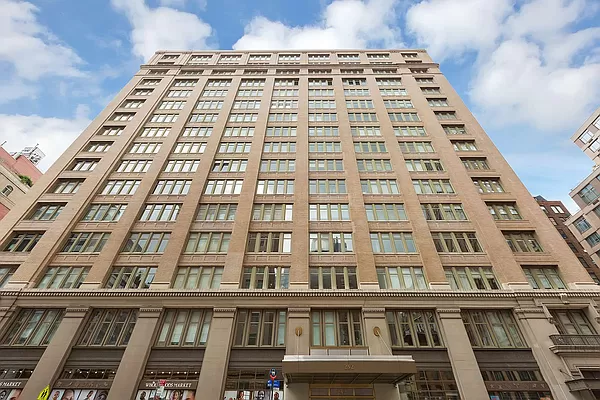
Discussion about Chelsea Mercantile at 252 7th Avenue in Chelsea
Add Your Comment

Most popular
-
48 Comments
-
10 Comments
-
3 Comments
-
9 Comments
-
33 Comments
other than downtown and maybe harlem (not sure) abatements weren't given to conversions, only to new construction, as far as i am aware.
"other than downtown and maybe harlem (not sure) abatements weren't given to conversions, only to new construction, as far as i am aware."
Look at what it is: if it's a 421-(x) it's new construction, if it's a J-51 it's rehabilitation.
421a
This program promotes construction of multi-family residential buildings with at least three dwelling units. It provides a declining exemption on the new value created by the improvement.
421b
Developed to promote affordable new construction of one- and two-family homes.
421g
Encourages the conversion of non-residential buildings in Lower Manhattan to residential use.
J-51
The J-51 Benefit gives a partial tax exemption and abatement benefits for the renovation of residential properties. The benefits can vary depending on the property’s location and the extent of improvements.
Obviously I was wrong in teh case of 421-G.
30yrs, you're right of course. but the j-51 abatements for condo conversions? do you have any examples of where in recent years they resulted in significant tax breaks, other than downtown? not being snarky, just haven't come across it myself in any real sense. i know many programs were utilized downtown (and yes, 421g was huge in that it allowed those office buildings to convert and have tax benefits, which is probably largely what i was thinking about downtown), but haven't seen it elsewhere for condos.
I don't remember exactly when it was, but I'm pretty sure there was a point where the J-51 program was specifically ended for properties be 96th Street and 421-a discontinued (as of right) between 14th and 96th Streets (you may say, "but there are buildings between 14th and 96th Streets with new 421-a's". I think the answer is that those buildings had to buy "421-a certificates" from developers in other areas and transfer them to their development (I never fully understood all the nuances of that process, but I think the also had to make them 80/20 projects if they did it? but I'm not really sure about that). this talks bit about all of this, but I'm too tired to read it:
http://www.thefreelibrary.com/Council+looks+at+421a+changes.-a059704961
If you look at the list of buildings receiving J-51 abatements, there are condo conversions on that list (below 96th street). The tax breaks are significant, I think I linked one or two tax statements for individual units. There is a part in the tax statement for each condo unit in NYC that lists the abatements and/or exemptions received.
Here you go - 252 Seventh does receive tax abatement (whether J-51, it doesn't say):
http://nycprop.nyc.gov/nycproperty/StatementSearch?bbl=1007741078&stmtDate=20090606&stmtType=SOA
Statement of account for 5W states that there is a 17.5% abatement.
Yep, 17.5% abatement for 10P as well.
http://nycprop.nyc.gov/nycproperty/StatementSearch?bbl=1007741203&stmtDate=20090828&stmtType=SOA
Ah, and it's NOT J-51 - see this. 17.5% abatement is to reduce disparity between Class 2 and Class 1 Props.
http://www.nyc.gov/html/dof/html/property/property_tax_reduc_coop_condo.shtml
Compare to a statement for one Ansonia condo (another conversion):
http://nycprop.nyc.gov/nycproperty/StatementSearch?bbl=1011651545&stmtDate=20090828&stmtType=SOA which does receive J-51 (but is not then eligible to receive 17.5% abatement).
Oh, and back to the OP: sometimes the reason taxes on listings are 'so low" is because owners don't really know what their taxes are because they don't pay them. they pay both their mortgage payment and the monthly portion of their RET payment ever month to the bank, and the bank makes the quarterly or semi-annual payments to the city. the reason behind this is that the only thing which comes in front of the first mortgage holder's lien is RET, and if you fall behind and get foreclosed on, they lose their position. Anyway, as a result, LOTS of owners don't know what their current RET are, they know what they were when they bought, or the last time they paid attention to a notice, etc.
My advice is simply check them yourself. Go to the Dept of Finance website and look at the bills, assessments, etc.
Hmm. Well, taxes aren't that low at 252 Seventh. 11P (which I assume is same sq. footage as 10P) has market value for tax purposes of 500ishk, on market for a tad under 4m. Compare to 7-109 at 2109 Broadway (in contract at last ask of 3.5mish) which has a market value for tax purposes of 300ishk.
I think disparities in taxes have much more to do with the current market value assessments than abatements, in general.
Also check out 200RSB, 41A taxes - on market for ask of 3.5ishm, MUCH higher taxes because market value assessment is
750k. Currently shielded by tax reduction for new multi-prop construction, but taxes are already much higher than similarly-priced conversions (of roughly same vintage, I might add) in Chelsea & UWS.
Wow. That was mind-blowing. Those Trumpies should band together and protest their high relative taxes.
As a sidebar, there were rumors and prospective indictments related to the (low) Ansonia tax assessment about 10+ years ago, but one of the key figures to be indicted died. And the case died as well.
I have alluded to this before w.r.t to TH real estate taxes, but the disparities between similarly-priced condos in conversions/builds of the same vintage are shocking.
nyc10023 - Could that be because sale of unit triggers re-assessment by the city,(with market value conveniently provided by buyer) so unit that stays with one owner for a longer period of time doesn't take the tax hit which a unit sold several times in the same period would?
Based on my research, sale of unit does not trigger re-assessment. Each condo & TH is assessed every year ("market value" change). For THs, the increase in taxes is restricted (regardless of market value) unless there is sig. improvement. I don't know if a similar rule applies to condos. In any case, as I've said, the market values according to the Tax Dep't don't make any sense when you are looking at similarly-valued condos. And these market values change annually, and are not dependent on length of ownership.
Mark my words, this could be a fertile source of RE litigation down the aord.
This article does a good job of explaining the basics of nyc real estate tax policy. It literally makes zero common sense, and people ought to be furious.
http://www.nytimes.com/2008/02/03/realestate/03cov.html?_r=1&pagewanted=all
RET in both Coops and Condos must be based on comparable rental properties. As such, new construction RET will ALWAYS be more than older buildings. It also depends on rentals in the neighborhood. If you look, you can see exactly which buildings the city used as those comparable rental properties (see : http://www.nyc.gov/html/dof/downloads/excel/condo_coop_comps/man_condo_comps_2009.xls ). So you can't look at similarly priced Condominium units in different neighborhoods, because that's just not part of the equation.
And as nyc10023 correctly points out, a sale NEVER triggers -re-assessment; EVERY property in NYC is re-assessed EVERY YEAR, no matter what.
"Mark my words, this could be a fertile source of RE litigation down the aord."
I'm not so sure about that: this valuation method is proscribed by NYS Law.
Right, 30 yrs. My point is that "market value" assessment is what drives the diff. in taxes. And that has not much relation to the actual selling prices of (in this case) conversion condos.
a) But it's the same for just about all classes, not just coops and condos. look at "market value" for single families; no where near market value.
b) The Coop/Condo lobby has no one to blame but themselves since they lobbied to be in class II a number of years ago and got it
c) I can see lobbying for a change in the law, but why do you think there are going to be successful law suits against ?Dept of Taxation and Finance? if the are following blackletter law? Or do you think there will be lawsuits against someone else? I'm not following what you are driving at? sorry?
d) If you take into account all tax classes, it isn't "market value" assessment which drives the difference in taxes. Because very few properties ever make it to "market value".
e) I don't think you should use "townhouses" as if it's a tax class: there's a HUGE difference between a single, two or three unit house and an 8 unit house. The single biggest "bonus" is available to class 1 properties, which is the limitation on TOTAL increase over a 5 YEAR PERIOD to 20%. That, in essence, means a 4% a year cap. No other class has that good a deal. Class 2 it's 30 percent over 5 years for building with 10 or less, over 10 units it's phased in over 5 years, but not capped. The rest there's no cap at all (commercial, etc).
But also, it's the "assessment ratio"
"The estimated market value is multiplied by the assessment ratio for the property's tax class to obtain the property’s “assessed value”.
Class 1: The assessment ratio is 6 percent. For example, a property that Finance estimates to be worth $1,000,000 would have an assessed value of no more than $60,000.
Class 2, 3, & 4: The Assessment ratio is 45 percent. For example, a property that Finance estimates to be worth $1,000,000 would have an assessed value of no more than $450,000."
That's another HUGE difference between single,2, 3 and Coops/Condos.
30yrs: you're right in the details, absolutely. I just thought that there would be some creative legal way to challenge the status quo. I have another tax question that I'm thinking about, I will shoot you an email.