Landlord refusing to renew some leases

Started by uwslady
about 13 years ago
Posts: 19
Member since: Oct 2011
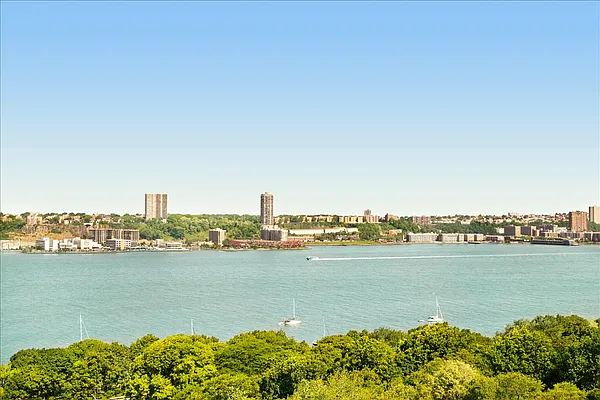
Discussion about 98 Riverside Drive in Upper West Side
Add Your Comment
Recommended for You
-

From our blog
NYC Open Houses for November 19 and 20 - More from our blog
Most popular
-
17 Comments
-
1 Comments
-
3 Comments
-
3 Comments
Recommended for You
-
From our blog
NYC Open Houses for November 19 and 20 - More from our blog
This is the infamous building with the window in the shower of the apartment that c0lumbiac0unty visited. Should have checked SE threads before renting.
So move.
Looks like you had a great deal for a while. Sorry...
25% increases aren't completely out of the question on the UWS these days, even without major reno.
I experienced a 26% rent increase in 2011 and had to spend a lot of money to move to a smaller apartment. I also had to get rid of some furniture that would not fit in the smaller apartment. It is demoralizing, and you have my sympathy.
What gets me is how the lucky rent stabilized tenants pay below-market rent and whine about a 4% increase.
It's the rent stabilized and controlled people that skew the Manhattan marketplace and make it so expensive for everyone else.
>It's the rent stabilized and controlled people that skew the Manhattan marketplace and make it so expensive for everyone else.
What if all the rent regulated people bought their apartments when their buildings were converted? Same supply not available to a market rate renter - still curse those people?
>>What if all the rent regulated people bought their apartments when their buildings were converted? Same supply not available to a market rate renter - still curse those people?<<
Your argument makes zero sense. You are assuming all stabilized/controlled apartments are in co-ops. They are most certainly not. But let's for a moment say your comment is correct. In that case if "all regulated people purchased at conversion" then the free-loading bustards would now be paying FULL carry-costs for their units and NOT forcing anyone to subsidize their rents. So you are wrong either way.
Bottom line: Rent control forces landlords to subsidize below-market tenants by raising rates for market renters.
No, Squid, that's completely wrong and illogical, and dripping with envy rather than facts. There is no subsidy, and nothing about rent regulation in older buildings prevents the building of new buildings ("supply") in the face of demand ("demand").
What prompts the building of new buildings, in fact, is higher rents -- and your argument seems to indicate that rent regulation is the hero creating the higher rents.
And the troll is correct: Apartments are apartments, rented or owned. Just as residents are residents, whether male or female. The apartments are still there, whether market rent, regulated rent, purchased at bubble prices last month ("big mortgage"), purchased at the bottom of the market in the early 1990s ("little mortgage"), or purchased with a small amount of cash or a now-paid-off mortgage in 1983 ("no mortgage").
Next time you read a political manifesto about rent regulation, dressed up as economic analysis, scrutinize it a bit. There's always a funny little tango involving the real-life example of New York vs. the false example that implies that every new building is immediately forced into rent-regulation.
>Bottom line: Rent control forces landlords to subsidize below-market tenants by raising rates for market renters.
So it costs the landlords nothing, just the market rate tenants?
Rent stabilization creates 2 housing markets, one with below-market rents and low yearly increases and the other with market-rate rents and potentially high yearly increases.
- There are about 1 million rent stabilized units in NYC. You can see the numbers from the Furman Center published at: http://en.wikipedia.org/wiki/Rent_control_in_New_York#Rental_unit_distribution. This severely reduces the supply of market-rate housing, which is only 39.1% of the market.
- Rent stabilization is not really based on need, but rather on luck. The income limits go up to 200k/year. It's an incredible deal if you can get it. It would be interesting to take an example stabilized apartment and calculate the present value vs renting a market-rate assuming the tenant stays 10 or 20 years.
- Most housing markets show normally-distributed prices. NYC's price distribution clearly shows 2 markets. See http://www.cato.org/pubs/pas/images/pa-2742.gif (data are a bit old but still valid). For a normal housing market see http://www.cato.org/pubs/pas/images/pa-27416.gif.
Price ceilings such as rent stabilization always lead to shortages. It's basic economics.
>Price ceilings such as rent stabilization always lead to shortages.
You have trouble finding an apartment?
9d8, here's an example from 790 RSD of calculated values, with 2012 rents, maintenances, payoff amounts and prices for RS tenants: http://midborodocuments.com/Final%2033rd%20Amendment.%20790%20RSD%20(00019793).pdf
Looks as if #9L took a $200K payoff offer, rather than pay half of what #6L just went for.
Or rather than keep renting at about $475 less than maintenance.
NWT, that's pretty amazing. #9L, a 4-bedroom apartment, was renting for $1950 per month. The co-op was willing to sell the unit to the stabilized tenant at a $900k discount from the market price of $1.8 million or pay the tenant $200k in cash.
Quite a bonanza for that tenant, especially when you consider all the prior years of rent savings as compared to market.
Apparently there is some dispute as to whether the $200k buyout would be considered income or a capital gain for tax purposes.
This case is a perfect illustration of the insanity and corruption that is the NYC housing system.
It was the sponsor doing the offering, not the co-op. The co-op doesn't care which of the three options a tenant took, as it gets its maintenance with any of them.
The state gave RS to the voters, and of course there're values to it. It gets complicated, though, because some landlords do better now with their market rents than they would if RS went away all at once instead of being chipped at as it is now.
"as it gets its maintenance with any of them"
As you noted before, the rent of $1950 does not cover the entire maintenance of $2428. Presumably the co-op would lose $478 per month if the stabilized tenant chose to stay.
No. The sponsor owns the unsold shares, and pays the maintenance on them, just like any other shareholder. When there's a shortfall, it's the sponsor's problem, not the co-op's. The sponsor more than recoups any running loss when the tenant vacates. The sponsor then sells or rents it at market.
>>As you noted before, the rent of $1950 does not cover the entire maintenance of $2428. Presumably the co-op would lose $478 per month if the stabilized tenant chose to stay<<
People can be such idiots.
Actually outside of manhattan there are plenty of RS apartments that are leasing above market rate, and people pay those rates for the security. And in manhattan, but for the RS program, there would be far fewer new market rate apartments, which would drive up the price of said apartments.
Grey. Things aren't always black/white.
>Actually outside of manhattan there are plenty of RS apartments that are leasing above market rate,
Yup.
Stabilization may be below market, but there aren't an epidemic of below monthly maintenance apartments out there.
>Grey. Things aren't always black/white.
Grey is cool, but I have you opted in so you come out black.
"Actually outside of manhattan there are plenty of RS apartments that are leasing above market rate"
In Manhattan, rent-stabilized rates are $1245/month below market: http://www.nytimes.com/2012/07/08/realestate/rent-stabilized-apartments-ever-more-elusive.html?pagewanted=all
That's a savings of $15k/year post-tax, or ~$25k/year pre-tax. And the savings tends to increase each year. Over 20 years you're easily talking $500k of rent savings. Plus thousands of dollars not spent on moving expenses and broker fees. All with the possibility of a cash buyout at the end. It's an incredible deal if you can get it, which is why these apartments rarely go to market.
In Manhattan, nearly half of all apartments are stabilized, yet they rarely hit the market. Tenants tend to hoard them because they are such a good deal. When they do become vacant, they are quickly swiped up by friends/relatives.
The only reason this program still exists is that it in effect allows politicians to pay people to vote for them.
This is why people buy, so they don't have issues like this.
>In Manhattan, rent-stabilized rates are $1245/month below market:
You mean below market rate. But they aren't market rate. So you didn't make a valid comparison.
>That's a savings of $15k/year post-tax, or ~$25k/year pre-tax.
Again. And what's with the nonsense of post and pre-tax?
> And the savings tends to increase each year. Over 20 years you're easily talking $500k of rent savings.
And the landlord gets to increase the rent each year (or every other year) and doesn't have to deal with the implications of down markets.
>Plus thousands of dollars not spent on moving expenses and broker fees.
Seems like you are stretching.
But also the landlord can avoid having vacancies, and only has to paint every 3 years.
>All with the possibility of a cash buyout at the end. It's an incredible deal if you can get it, which is why these apartments rarely go to market.
What's your point? That you are new to New York? That others have something you don't have?
What about the people who bought 15 years ago? Or longer ago? Was that unfair because of how much their places have appreciated?
>In Manhattan, nearly half of all apartments are stabilized, yet they rarely hit the market.
So these are irrelevant to you then.
>Tenants tend to hoard them because they are such a good deal.
Yes, I know an old woman who has 5 of them.
>The only reason this program still exists is that it in effect allows politicians to pay people to vote for them.
Which politician in the primary was citing their support for rent regulations in order to gain votes?
Maybe if the landlords plowed more money into Albany, RS would go away. But they don't, or at least not for that purpose.
Take http://streeteasy.com/nyc/building/river-court , a 295-unit rental. Only 38 are RS. In 2008, 46 were, so those few are dribbling away.
We've passed a tipping point where for many landlords, and maybe the industry in general, those below-market RS apartments, with their dependable increases, serve nicely to drive up market rents enough to make it worthwhile. The rare landlord with more RS than market units would object on money grounds as well as on principle, of course.
"What's your point? That you are new to New York? That others have something you don't have?"
My point is that rent stabilization is unjust and leads to distortions in the housing marketplace that provide huge benefits to some people at the expense of others. I disagree with the notion of politicians forcing landlords to provide below-market housing, a sort of privatized welfare, so that they can then get votes. It is almost certainly a taking of private property without compensation, and it should have been declared unconstitutional.
If we can't get rid of this system, then at least EVERYONE making < 200k/year should be given an opportunity to participate. So when these apartments become vacant, the next tenant would be selected RANDOMLY via lottery (similar to the 80/20 program, another govt-created monstrosity, but at least it gives everyone within the income limits an opportunity to participate). There should also be a time limit, of 5 or 10 years, as opposed to a lifetime benefit.
"So these are irrelevant to you then."
No, they are not irrelevant to me. I would like to bid higher than a current tenant for one of these apartments to get a better deal, yet I am in effect prohibited from doing so.
"Which politician in the primary was citing their support for rent regulations in order to gain votes?"
Quinn, de Blasio, and Liu immediately come to mind, I think you posted about this: http://therealdeal.com/blog/2013/06/14/mayoral-candidates-propose-a-rent-freeze-for-citys-rent-stabilized-apartments/
"those below-market RS apartments, with their dependable increases, serve nicely to drive up market rents enough to make it worthwhile"
Agreed. If I were an unprincipled market-rate landlord, I would fully support RS as it reduces my competition.
here's the way to go.
lets close down the government unless RS/RC is repealed.
waaaaaa rent stabilization waaaaaaa waaaaaaa can't make it in nyc waaaaa other guy waaaaaa unfair waaaaaaaa waaaaaa
My hypothesis is the real reason rent stabilization and rent control don't go away is how doing so would increase the homeless population.
Landlords with RC and RS are in the welfare business. Now, obviously, not when the rent is $4000/month in an RS building. But as you go down the ladder you see this everywhere.
The RC units in our co-op building all lose a lot of money for the sponsor, the rents do not cover maintenance, and those elderly folks would have no where to go if they paid market rent.
So as you go down the ladder it's very clear what is going on.
If RC and RS were phased out, the homeless problem would increase many times and many ways. No politician wants this, and a lot of developers don't want it either.
re: My hypothesis is the real reason rent stabilization and rent control don't go away is how doing so would increase the homeless population.
or maybe all those RS tenants are simply a powerful voting bloc
>are simply a powerful voting bloc
You think they have a spiritual leader or something?
">are simply a powerful voting bloc
You think they have a spiritual leader or something?"
If I were an unprincipled stabilized tenant just voting my own narrow self interest, I would vote for politicians who want to continue the RS program. It is a tremendous unearned asset; it has many of the same economic characteristics of buying.
How often do you need to log in? Do you ever make a mistake with your log-in name? Maybe cut and paste?
Wonder what his password is.
AR: how is it that you managed to stay under the RS income limits of 175k when your husband is a lawyer? He must have been a very poorly-paid lawyer assuming that income was honestly reported to PCV. How many vacations have you taken since receiving the settlement money for being "overcharged?"
Wow, such hate 9b8d798045e3935aBB2.
Also 9b8d798045e3935aBB2, you got the facts all wrong. Aboutready had a market rate lease, not a stabilized lease.
"Also 9b8d798045e3935aBB2, you got the facts all wrong."
Please lay out the facts so that everyone is on the same page.
Really? I've said it dozens of times, you can't do a simple search?
http://streeteasy.com/nyc/talk/discussion/592-peter-cooper-village?page=2
"Aboutready had a market rate lease, not a stabilized lease."
So market-rate tenants received a settlement? On what grounds-that they should have been stabilized? If so, did they look at relevant years' income tax forms to verify that the tenant would have been eligible for RS by being under the income limit for that year?
The reason RS is still around is that both landlord's and politicians rely on it.
The majority of the deep-pocket landlords don't want RS eliminated. We all saw what happened to market rates when just 10,000 units were vacant in 2010 (market rates were off 15-20%). What would happen to rates if 100,000 units became vacant? It's a world most landlords never want to see.
and .... what would happen to those 100,000 tenants?
Some tenants no longer live in their stabilized apartment, but rather rent it out and collect the difference. I am unsure how widespread this practice is, but it is common enough that some private investigators specialize in it: http://www.nytimes.com/2010/08/31/nyregion/31appraisal.html
* "some New Yorkers have tried to find extra money by moving out of their apartments and subletting to other renters for more than they are paying"
* "a rent-regulated tenant must occupy the unit for at least 183 days a year"
* "a tenant at one Chelsea building who held onto her $433-a-month apartment while living primarily in New Jersey."
* "New Yorkers settle into rent-regulated apartments in their 20s. But as their incomes and families grow and they move out, they try to hold onto these apartments by renting them out to family and friends."
* "They said some tenants who lived elsewhere most of the year would vote in the city (itself a crime) to leave a paper trail or would receive their mail at their rent-controlled apartment and bribe the superintendent to forward it once a week."
really your question should be - what would happen to the people in the one million deregulated units (assuming that RS were to be eliminated overnight). I put 100,000 vacant units as a random guess as to how many units would become vacant from a mass deregulation. - the answer to this questions is - lots of things would happen to them -
the majority would stay in "their" apartment and pay a higher rent - many would stay in their apartment and pay a lower rent - some would just move to their other house/apartment. some would move in with family/friends - some would move to Florida, others "back home" - others would move to worse neighborhoods - others would move to better neighborhoods - vacancy would be created overall though because you would have fewer cases of people with multiple homes and fewer cases where one person lives in a four bedroom).
Lots and lots would change -
But realize that landlords understand there aren't enough construction workers in the country to renovate 1,000,000 vacant apartments at once. Landlords would try to keep their best tenants - but the dirtbags who have kids who pee in the halls would be gone - the drug dealers would be gone - the noise makers gone - you get the idea -the first batch of vacancies will all be the worst tenants - once those units are renovated and rented then landlords work on renovating other units.
help me out.
what happens to the tenants?
CC - I do not support an across the board deregulation. I find it inhumane. Certainly many would not have the means to adjust and would be homeless. Obviously, others end up in better apartments in better neighborhoods - certainly fewer slumlords would exist as tenants would no longer have a cheap rent keeping them "locked" into their disgusting low rent apartment.
But at the same time many market rate tenants are forced to move each year. That's why I'm for some changes to the current system that will phase the system out over the next couple decades.
1. No stabilized apartments for people making 3x the median income. They can pay market rate.
2. No second homes. The entire purpose of the system is to keep rents down because of a low supply of housing - so any policy that encourages/allows for multiple homes must end.
3. No succession.
4. Decontrol upon any vacancy.
5. Annual rent increases at a fixed 10% with a minimum increase of $100/month. Most of my market rate tenants saw increases of $200 to $300 per month this year. A tenant with a $1,000 rent would still have a discount to market for many many years. For my older tenants who are poor and my disabled tenants, they don't pay rent increases anyway (tax payers pay those increases) so they won't be priced out. And for my elderly tenants who have means - they should pay market - no generation in the history of the world has amassed as much wealth as today's seniors. It's ridiculous that rich old people have cheap rents and my 20 something tenants pay market. And still -their $300 rent goes to $400 next year -they can handle it.
Those born pre 1946 keep their rent control.
Those born after, can see some graded yearly increase, but the increase of course doesn't go to the landlord, it goes the the State and City to support true low income housing. Landlords are already in the system and there's no reason they should get a windfall from any deregulation. Also landlords don't gain additional rights of eviction.
Also, the new rules should apply in NYC AND C0lumbia C0unty.
fieldschester - if the increases go to the City and the losses go to the landlords (surely their market rate rents will go down) - then you end up with a system where landlords can't afford to heat/maintain their buildings.
The best way to achieve affordable housing is to encourage the building of more units. Las Vegas built about 75,000 units in a three year period. You could buy an 2,000 sq/ft home for $150,000 (monthly payment of less than $1,000).
>then you end up with a system where landlords can't afford to heat/maintain their buildings.
The reason that the laws don't change is because of arguments like this - there is no reason that Albany would or should change the laws when the poor don't benefit, the middle and working class are hurt, the State and City doesn't benefit, and the only beneficiaries of this windfall are landlords who bought their buildings knowing full well what the system was.
But you're trying to create a system where the government wins when rents go up and landlords lose when rents go down. How is that good housing policy? You can't put landlords out of business - it's not good for anyone.
Landlords contribute 40% of the entire income from the City. It's hard to say that landlords aren't doing enough.
But to you point regarding landlords getting all of the gains from a change in policy - Please realize that 6,000,000 New York City residents live in the City without a stabilized apartment. If stabilization were to go away then they win. What about the 30 year old kid from Brooklyn who still lives with his mom and can't move out because he can't afford anything? Doesn't he benefit from lower rents? And again, most landlords lose if stabilization were to go away - that's why it's still here - have you ever seen Richard Lefrak campaigning for the elimination of stabilization? Why doesn't Related have a lobbyist in Albany fighting for the elimination of stabilization?
Currently 20 somethings shoulder way too much of the burden of property taxes/rent in the City. Forcing them (who are poor compared to seniors) to carry the load isn't good social policy. That's the main reason I'm for change - that and that it's terrible for everyone involved that I have to continue to rent to people who pee in the halls, make noise at all hours, and sell drugs. It's ridiculous that I can't evict them.
Having said this - Perhaps you would be more in favor of another proposal that I've considered. Landlords can deregulate any unit with a $100,000 payment to the City. The City can then take that money and build affordable housing scattered throughout the City. Plus the City would benefit greatly from the increased property taxes of that now market-rate unit. Assume the rent would go up $2,000 per unit per month - that means the City would collect another $8,000 annually ($8,000/month covers a mortgage of more than $1,000,000).
You continue to argue from a losing point of view. You try to paint landlords as victims, when we all know that even if the economics aren't in their favor, they entered into their arrangement on a sophisticated basis, with full understanding of the law and economics. Landlords will never be viewed as the underdog, sorry, and an attempt to paint them as naive and as victims will fall flat.
>What about the 30 year old kid from Brooklyn who still lives with his mom and can't move out because he can't afford anything?
Get a job.
And at the same time, don't tell me that landlords are fighting this fight for the lazy 30 year old who lives with mom.
>Currently 20 somethings shoulder way too much of the burden of property taxes/rent in the City.
What's your point? 20 somethings are supposed to be working their asses off.
>Forcing them (who are poor compared to seniors) to carry the load isn't good social policy.
I'm sorry but how do you support your point of view that seniors who have been residents and contributors to NYC for decades should be thrown out in favor of "20 somethings" who don't get a damn decent paying job.
>That's the main reason I'm for change
Not it isn't. And no one believes you. You are for change because you are for change for you. I already tested out, right above, changing the rules but not putting the benefits in your pockets and you objected to it.
This is an aside from the topic but you said "they entered into their arrangement on a sophisticated basis, with full understanding of the law and economics"
This is a fallacy. The rules have changed against me in a way that is unpredictable and arguably illegal. To say I knew these rules when I bought just isn't true.
For instance. The law says I can evict people and provides a process. When I started in the business you could get an non-pay eviction in 4 months. Now you really can't get one because in the end, after time and thousands of dollars are wasted the government will come in and pay the arrears. It used to be that real estate taxes were 10% of my income - now they are 33% of my income etc etc etc. The law says that when my expenses go up then the rent increases will be enough to cover them. But the RGB readily admits that their increases aren't enough to cover increased expenses. It was long ago that oil was $20/barrel. You can't possibly think these rent increases contemplate $100 oil?
Are you suggesting that 30 year olds in Brooklyn are all so competent that they can afford $2,000 one beds?
Are you suggesting that 20 year olds should be subsidizing the rich elderly?
It's so interesting which groups of people you feel should be self sufficient and which ones deserve "affordable housing" protections.
I don't support throwing seniors out - I support everyone paying a market rate - if you want to stay you can - just pay what everyone else pays. And to say that NYC is great because of these old people is a big stretch. I find more evidence to show that it's great despite them. The recent changes that make NYC great today come from the younger generations. The 70's and 80's are nothing to be proud of.
How can you say that's not the reason I'm for change. (search my other posts - I think you'll find I'm a straight shooter) Your "change" above is asinine. It's guaranteed to put every building in the City into foreclosure. I'm speaking against my book here. I own real estate. I lose money if stabilization goes away (plus add hours and hours of more work). I see on a daily basis the absurdity of the rules. My 20 something renters struggle, they all live with roommates (many found strangers on Craigslist), they pay an absurd portion of their income on rent - and their rich neighbor lives alone in a three bed. It's just an absurd policy.
"I do not support an across the board deregulation. I find it inhumane. Certainly many would not have the means to adjust and would be homeless."
I do.
I'm sorry if older people -- particularly the retired -- find themselves suddenly forced to pay market-based rents. But many have had the luxury of paying a pittance all these years to live in one of the most expensive cities in the world. Certainly they couldn't have realistically thought that the subsidized gravy train would last *forever*. The de-stabilization process has been in the making for decades now. This should come as a surprise to no one.
What do these New York seniors think seniors in other cities do? They provide for their retirement by beefing up their savings, and of course *buying* their homes, so that in retirement they own their homes free and clear and need pay only taxes and maintenance. Planning on paying rent to a landlord in your retirement is a fool's gamble.
It's the classic story of the ant and the grasshopper, one frittering away his time and energy while the other planned for the coming winter. Most of the older rent-stabilized and rent-controlled tenants I know personally have lived quite comfortable (even extravagant) lives, thanks to their low rents: nice furniture, expensive clothes, cars, vacations, etc. -- lifestyles that many "rich" market-based tenants can't even imagine living in New York City on less than $300K/year.
Great commentary Jazzman, I agree 100%
What everyone is ignoring is that rent stabilization was factored into the price the landlords paid for the buildings (I'm talking about rental buildings like 98 Riverside) so it's not as if the landlord has some terrible burden. Of course he'd like to get rid of the stabilization, but that would be a windfall ONLY for landlords.
Warning - The building is a revolving door. After a year most new tenants leave - either because of the lack of "luxury" that they are paying for OR because of the staggering rent increases that just about everyone reports
Whatever happened to aboutready and the unjustified windfall that she received for her market rate lease? A windfall that benefits group other than aboutready and a limited few?
safetyfirst, are you still in the building?