Key takeaways:
- NYC buyers should budget beyond the purchase price. Upfront and ongoing costs can include a down payment, monthly mortgage payments, maintenance fees or common charges, closing costs, attorney fees, application fees, inspection fees, and reserve funds.
- Down payment expectations vary by property type. Buyers should generally prepare for at least 10% down for condos and 20% down for co-ops, while also checking individual building requirements.
- Closing costs can add up quickly in NYC. Buyers should expect roughly 4–6% of the purchase price in closing costs, plus potential NYC-specific expenses like a mansion tax, transfer tax, and mortgage recording tax depending on the property.
- A strong financial cushion is important. Buyers should have at least six months of mortgage payments and building fees saved, and some co-ops may require 12–24 months in reserves during the application process.
- Costs can be reduced with the right strategy and guidance. Shopping around for mortgage rates, negotiating closing costs, exploring first-time buyer assistance programs, and working with an experienced agent can help buyers better understand and potentially lower their total buying costs.
You’ve made a list of your real estate must-haves (natural light and a dedicated dining area, anyone?), scoured the five boroughs for your most desired NYC neighborhoods, and started collecting paint swatches to design your dream home. Now it’s onto the admittedly less fun — but arguably most important — part of house hunting: Getting your finances in order. But where to start?
Understanding the exact amount of money you need to buy a home can be confusing, especially in New York City. Lucky for you, StreetEasy® is here to help you become financially and mentally prepared for homeownership. We’ve outlined some financial basics to help you understand home-buying costs in NYC, and included tips on how to reduce said costs to get the best deal possible.

NYC home-buying costs: The basics
Down payment
A down payment is an amount of money a buyer puts down upfront when purchasing a home. The exact figure of your down payment directly impacts your financing down the line — namely, your monthly mortgage payments. Generally speaking, the higher your down payment, the lower your monthly costs.
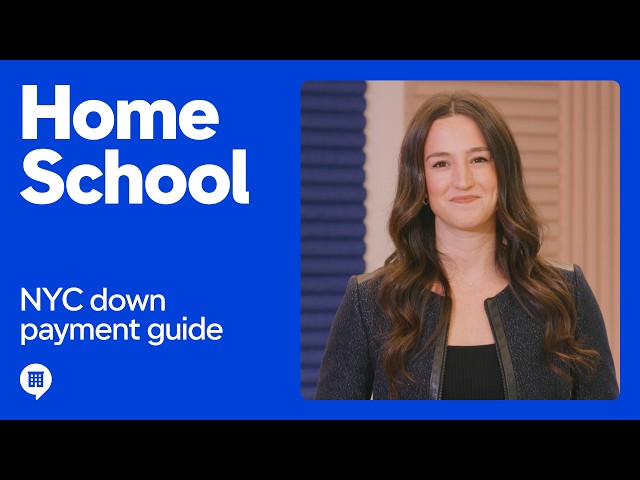
As you can see in this handy guide, you can put down a variety of sums for your down payment. But is there a “correct” figure? Well, according to Sarah Silva — a StreetEasy Expert and licensed real estate salesperson at Compass — it all depends on the type of home you’re eyeing.
“If you’re looking to purchase a condo, plan to make a down payment of at least 10%, as that will be the [minimum] down payment for the majority of condo buildings in New York City,” Silva says.
However, if you’re considering a co-op, Silva recommends preparing for a minimum of 20%. This is the most common percentage both in New York City and nationwide, as a 20% down payment signals to lenders that you’re less of a financial risk.

Silva also reminds prospective buyers to double-check the building-specific requirements to make sure they’re adhering to the building’s rules. “Of course, you can always choose to put down more than the requirement to offset your monthly payments on your mortgage,” she points out. Which brings us to…
Monthly mortgage payments
Your mortgage is a type of loan that is used to buy and finance a home. Typically, these loans are secured from banks, private companies, and/or credit unions, and paid off over time via a series of regular installments. Your mortgage payment is divided into two parts: principal and interest. Consistently paying your mortgage on time is crucial to building and maintaining a good credit score. When you obtain a mortgage, you’re locked into a payment plan over a set period of time — typically 30 years. Thus, when house hunting, it’s important to consider possible income fluctuations down the line. Of course, your mortgage payments could potentially decrease over time due to changes in your insurance policy, taxes, and your home’s value. But it’s best not to bank on that when you first purchase your home.
Brooklyn Homes Under $1M On StreetEasy Article continues below


Maintenance fees and common charges
Beyond your monthly mortgage payment, you may also be responsible for maintenance fees. These are monthly payments that shareholders must pay when they own a unit in a co-op building. They traditionally encompass any labor and services that contribute to the overall maintenance of the building — such as amenity upkeep and staff salaries — in addition to the building’s NYC property taxes. The specifics of maintenance fees are determined by the building’s governing body, also called a co-op board, so be sure to check in with the co-op board to get the clearest picture of what your monthly maintenance fees could be in your new home.
Maintenance fees are not to be confused with common charges, which are condo-specific operational costs. Common charges do not include property taxes, as condo owners pay their tax bill directly to the city or their mortgage lender. (Learn more about how property taxes are calculated for co-ops and condos.)

Closing costs
Other home-buying costs to consider are closing costs, which are fees that are paid — you guessed it — at the closing of the sale of a home. A good rule of thumb is to expect to pay around 4-6% of the purchase price in closing costs. While it’s true that sellers also pay closing costs, NYC buyers are typically responsible for things like title insurance and, if you’re purchasing a condo or townhouse, a mortgage recording tax.
Speaking of taxes, there are a few NYC-specific taxes you might also have to pay at closing, depending on the home you’ve set your sights on. In the comprehensive video about NYC home-buying costs included above, StreetEasy Concierge Carlo Romero breaks down what’s called the mansion tax: “If you are purchasing a property over $1 million, you will also be responsible for paying a mansion tax, which ranges from 1-3.9% depending on the purchase price of the home.” Romero also highlights city and state transfer taxes, which transfer the title of the home to you and “range from 1.4 to around 2% depending on the purchase price.” He notes that buyers may be responsible for paying these when purchasing in a new development, but in a resale, the transfer tax is typically paid by the seller.
Buying in NYC? Get a free consultation with our Concierge
SEND A MESSAGE NOWReal estate attorney fees
If you hadn’t previously accounted for lawyer fees when calculating home-buying costs in NYC, we don’t blame you. “In many states or countries, it’s not customary to use a real estate attorney,” Silva explains. “But in New York City, it’s highly recommended to retain one.” This is because of a state law that requires all real estate sale contracts to be drawn up by the principal (the buyer or seller) or their attorney. Silva estimates that “depending on the level of service you’d like, this fee can range from $3,000 to $5,000.”
Application fees
While relatively small compared to many of the above costs, some buildings might require you to pay an application fee. “Depending on the building, application fees can vary from $1,000 to $3,500 in total,” Silva estimates.
Manhattan Homes Under $1M On StreetEasy Article continues below





Inspection fees
Another small but mighty cost to remember are home inspection fees, which can range anywhere from $900 to $2,000. While an inspection is optional, “a good broker will always let you know if the type of home you are pursuing should have an inspection done or not,” Silva notes. So don’t be afraid to lean on an experienced real estate agent — more on this below.
Remember your rainy day fund
It’s always a good idea to have a financial safety net when entering in the home-buying process. Silva recommends that you “always have at least six months of your mortgage payments and building fees in the bank. There are some co-ops that will require 12-24 months of mortgage payments and building fees already in the bank during your application process.” These reserve funds are also known as post-closing liquidity.

How to reduce your home-buying costs
Phew! Now that you’ve gained a basic understanding of typical home-buying costs in NYC, we have some tips for how to potentially reduce your costs as a new homeowner.
Don’t sign on the first mortgage rate you encounter
A potentially cost-shrinking strategy is to shop around for the best possible mortgage before committing to one. As Romero suggests: “Don’t settle for one bank’s rates — you could be missing out on a better deal.”
Negotiate closing costs
In some cases, it may be possible to save a few bucks by negotiating your closing costs. Romero recommends having your broker “ask the seller to cover certain closing costs, such as the transfer taxes or mansion taxes if relevant.”
Silva echoes this piece of advice, calling attention to the possibility of certain buildings also taking on closing costs for buyers. “New developments often have certain defrayment costs specific to the building,” she explains. “Your broker should always request the building’s specific closing costs so when negotiating on your behalf, they can potentially try to get that covered for you.” It never hurts to ask!
Queens Homes Under $1M On StreetEasy Article continues below



First-time buyer programs can help
If you’re a first-time buyer, you might qualify for assistance via specialty programs designed to help new buyers purchase their first home in NYC. Romero advises researching government assistance like the HomeFirst Down Payment Assistance Program which “provides qualified first-time homebuyers with up to $100,000 toward the down payment or closing costs” on a 1-4 family home, condo, or co-op in the five boroughs. Wow!
Work with an experienced agent
The number one way to curb feelings of overwhelm when purchasing in NYC is connecting with an experienced buyer’s agent — someone like Silva. “As an experienced broker, I take the time to walk through my client’s finances with them and even refer them to mortgage lenders, attorneys, inspectors, who can give them a clearer picture of what they actually qualify for. Oftentimes, buyers try to guesstimate numbers based off social media gurus, and there’s nothing like actually finding out what your real numbers are,” she explains. “In the end, I always do what’s right by my clients and we discover together if they should buy now or later.”
Still unsure about working with a pro? Silva emphasizes that it’s well worth it. “Trust a professional at what they do and have been doing for years. Not only do we save you money, we also save you time. We know the inventory and market environment before the news knows. The last thing you want to happen to you is to lose out on a beautiful home because you were busy researching closing costs, something an experienced broker can answer right away.”
Looking to buy a home in NYC? Get in touch with our free, licensed Concierge to learn about the NYC buying market and get matched with a top agent.